Recovery from Abusive Groups Page 50
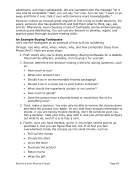
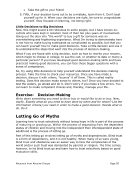
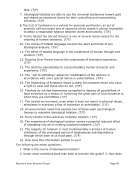
• Take the gift to your friend
5. Fifth, if your decision turns out to be a mistake, learn from it. Don't beat
yourself up for it. When your decisions are right, be sure to congratulate
yourself. Stay focused on learning, not being right.
Little Decisions to Big Decisions
Now, this might sound a bit ridiculous to some people, but I have known ex-
cultists who were kept in isolation most of their ten plus years of involvement.
Going out the door into "the world" to buy a gift for someone was an
overwhelming and frightening experience. What I'm trying to demonstrate here
is not how to make buying toothpaste as complicated as possible, but that you
can teach yourself how to make good decisions. Take a little decision and use it
to understand the steps that went into the process of decision-making.
What if you are faced with a big decision, such as how to rewrite your resume,
which major to choose in college, to sue the cult, or whether to date or marry a
particular person? If you have developed good decision-making skills and have
practiced making good decisions, you can face these bigger questions with a
sense of competence.
So, try using little decisions to help yourself understand the decision-making
process. Take the time to check your resources. Once you have made a
decision, discuss it with others, "bounce" it off them. This is called reality
testing. Does this decision make sense to others, too? Once you have decided to
test the waters, go ahead and do it. Don't worry if you make a few errors. You
can learn to make competent choices and, thereby, manage your life..
Exercise- Decision-Making
Write down something you need to do or buy or would like to do or buy. Now,
clarify. Exactly what do you need to have done by when and for whom? List the
information criteria) you need in order to make a good decision. Decide what to
do. Do it.
Letting Go of Myths
Learning how to trust selectively without losing hope in life is part of the process
of maturing or growing up. Within the process of separating from the dependent
status of children and moving into the independent then interdependent state of
adulthood is the process of letting go.
Part of this letting go involves letting go of myths and dependencies. Blind trust
is a form of dependency, and it is not healthy. When many of us were young,
blind trust and obedience was an easier way to face the complexities of the
world and/or such trust was demanded by parents or religion. The time comes,
however, to let blind trust go and learn how to trust selectively based on good
evaluation skills.
• Take the gift to your friend
5. Fifth, if your decision turns out to be a mistake, learn from it. Don't beat
yourself up for it. When your decisions are right, be sure to congratulate
yourself. Stay focused on learning, not being right.
Little Decisions to Big Decisions
Now, this might sound a bit ridiculous to some people, but I have known ex-
cultists who were kept in isolation most of their ten plus years of involvement.
Going out the door into "the world" to buy a gift for someone was an
overwhelming and frightening experience. What I'm trying to demonstrate here
is not how to make buying toothpaste as complicated as possible, but that you
can teach yourself how to make good decisions. Take a little decision and use it
to understand the steps that went into the process of decision-making.
What if you are faced with a big decision, such as how to rewrite your resume,
which major to choose in college, to sue the cult, or whether to date or marry a
particular person? If you have developed good decision-making skills and have
practiced making good decisions, you can face these bigger questions with a
sense of competence.
So, try using little decisions to help yourself understand the decision-making
process. Take the time to check your resources. Once you have made a
decision, discuss it with others, "bounce" it off them. This is called reality
testing. Does this decision make sense to others, too? Once you have decided to
test the waters, go ahead and do it. Don't worry if you make a few errors. You
can learn to make competent choices and, thereby, manage your life..
Exercise- Decision-Making
Write down something you need to do or buy or would like to do or buy. Now,
clarify. Exactly what do you need to have done by when and for whom? List the
information criteria) you need in order to make a good decision. Decide what to
do. Do it.
Letting Go of Myths
Learning how to trust selectively without losing hope in life is part of the process
of maturing or growing up. Within the process of separating from the dependent
status of children and moving into the independent then interdependent state of
adulthood is the process of letting go.
Part of this letting go involves letting go of myths and dependencies. Blind trust
is a form of dependency, and it is not healthy. When many of us were young,
blind trust and obedience was an easier way to face the complexities of the
world and/or such trust was demanded by parents or religion. The time comes,
however, to let blind trust go and learn how to trust selectively based on good
evaluation skills.