Recovery from Abusive Groups Page 2
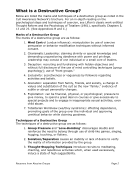
What is a Destructive Group?
Below are listed the marks and techniques of a destructive group as noted in the
Cult Awareness Network's brochure. For an in-depth reading on the
psychological steps and techniques of coercion, see Lifton's classic work entitled
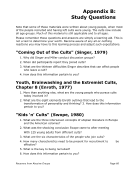
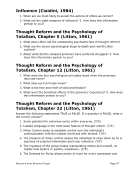
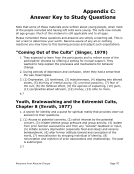
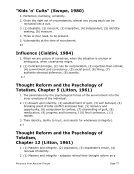
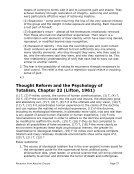
Thought Reform and the Psychology of Totalism (1961), specifically Chapters 5,
12 and 22. (See Appendices B and C.)
Marks of a Destructive Group
The marks of a destructive group are as follows:
1. Mind Control (undue influence): manipulation by use of coercive
persuasion or behavior modification techniques without informed
consent.
2. Charismatic Leadership: claiming divinity or special knowledge and
demanding unquestioning obedience with power and privilege.
Leadership may consist of one individual or a small core of leaders.
3. Deception: recruiting and fundraising with hidden objectives and
without full disclosure of the use of mind controlling techniques [group
psychology] use of "front groups."
4. Exclusivity: secretiveness or vagueness by followers regarding
activities and beliefs.
5. Alienation: separation from family, friends, and society, a change in
values and substitution of the cult as the new "family," evidence of
subtle or abrupt personality changes.
6. Exploitation: can be financial, physical, or psychological pressure to
give money, to spend a great deal on courses or give excessively to
special projects and to engage in inappropriate sexual activities, even
child abuse.
7. Totalitarian Worldview (we/they syndrome): effecting dependence,
promoting goals of the group over the individual and approving
unethical behavior while claiming goodness.
Techniques of a Destructive Group
The techniques of a destructive group are as follows:
1. Group Pressure and "Love-Bombing" discourages doubts and
reinforces the need to belong through use of child-like games, singing,
hugging, touching, or flattery.
2. Isolation/Separation causes an inability or lack of desire to verify
the reality of information provided by the group.
3. Thought-Stopping Techniques introduce recruits to meditating,
chanting, and repetitious activities which, when used excessively,
induce a state of high suggestibility.
What is a Destructive Group?
Below are listed the marks and techniques of a destructive group as noted in the
Cult Awareness Network's brochure. For an in-depth reading on the
psychological steps and techniques of coercion, see Lifton's classic work entitled
Thought Reform and the Psychology of Totalism (1961), specifically Chapters 5,
12 and 22. (See Appendices B and C.)
Marks of a Destructive Group
The marks of a destructive group are as follows:
1. Mind Control (undue influence): manipulation by use of coercive
persuasion or behavior modification techniques without informed
consent.
2. Charismatic Leadership: claiming divinity or special knowledge and
demanding unquestioning obedience with power and privilege.
Leadership may consist of one individual or a small core of leaders.
3. Deception: recruiting and fundraising with hidden objectives and
without full disclosure of the use of mind controlling techniques [group
psychology] use of "front groups."
4. Exclusivity: secretiveness or vagueness by followers regarding
activities and beliefs.
5. Alienation: separation from family, friends, and society, a change in
values and substitution of the cult as the new "family," evidence of
subtle or abrupt personality changes.
6. Exploitation: can be financial, physical, or psychological pressure to
give money, to spend a great deal on courses or give excessively to
special projects and to engage in inappropriate sexual activities, even
child abuse.
7. Totalitarian Worldview (we/they syndrome): effecting dependence,
promoting goals of the group over the individual and approving
unethical behavior while claiming goodness.
Techniques of a Destructive Group
The techniques of a destructive group are as follows:
1. Group Pressure and "Love-Bombing" discourages doubts and
reinforces the need to belong through use of child-like games, singing,
hugging, touching, or flattery.
2. Isolation/Separation causes an inability or lack of desire to verify
the reality of information provided by the group.
3. Thought-Stopping Techniques introduce recruits to meditating,
chanting, and repetitious activities which, when used excessively,
induce a state of high suggestibility.