Recovery from Abusive Groups Page 26
temptation can be to trust wholly and all at once. This can be like Russian
roulette. If the person is emotionally mature and trustworthy, you're pretty safe
trusting them. If they have some psychological problems and are not
trustworthy, then you will be hurt again and discouraged. Here is where you
need to learn to evaluate the person's trustworthiness.
Behavior and Words
What do you look for in order to evaluate someone's trustworthiness? Check to
see if the behavior matches the words. This is the first check. For example, if
you are meeting someone is he or she on time? If not, is he or she honest about
the reason for being late? Does he admit it is a bad habit or does he rationalize?
Often someone who rationalizes is not honest with himself and, therefore,
cannot be honest with you.
What happens when people are late because they got stuck in traffic. Is this
rationalization? If your cult taught, as mine did, that getting stuck in traffic is
your fault because you weren't listening to God (or whatever), then you might
find yourself reacting to your friend's reason for being late as if you were still in
the cult. You might discredit the person and tell yourself he is not very
trustworthy (he is too "weak"), when really what's needed is to untangle more
of the cult's teachings.
This is a pretty good example of how subtle recovery can get. Examining your
thinking and conclusions is what I mean by mental discipline.
Sometimes it's like untangling a ball of string the cat's been playing with-time-
consuming, frustrating, and exasperating.
Making new friends provides many opportunities not only for the love and
support of others, but also for the interactions that can help to highlight your
own faulty reasoning and residual ideological cobwebs.
Where Are They?
Where are these new friends? I found many in a community chorus I got
involved with after returning home. I'd always loved singing and needed to
reconnect with that part of myself. As I went to rehearsal every week, spoke
with people at break, and performed in concerts in the area, I began to feel part
of the local community. I would run into someone at the grocery store and say
"hi." Slowly, I didn't feel quite so isolated and lonely. (See Carnegie, 1936.)
As I got to know a few people, and would hear their life stories, I realized that
others have had great pain, too. Maybe a miscarriage, infidelity, lost job, death
of a child, assault, theft, and other misfortunes helped me to put my experience
in perspective. I tried never to minimize my experience, but was able to learn
from others how to cope with crisis, integrate it, learn from it, and then go on
with life.
Try Something New
Try a new hobby or sport. Take a course at the local community college. My
dancing or music or help out at a community theatre production. If you're not
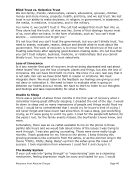
temptation can be to trust wholly and all at once. This can be like Russian
roulette. If the person is emotionally mature and trustworthy, you're pretty safe
trusting them. If they have some psychological problems and are not
trustworthy, then you will be hurt again and discouraged. Here is where you
need to learn to evaluate the person's trustworthiness.
Behavior and Words
What do you look for in order to evaluate someone's trustworthiness? Check to
see if the behavior matches the words. This is the first check. For example, if
you are meeting someone is he or she on time? If not, is he or she honest about
the reason for being late? Does he admit it is a bad habit or does he rationalize?
Often someone who rationalizes is not honest with himself and, therefore,
cannot be honest with you.
What happens when people are late because they got stuck in traffic. Is this
rationalization? If your cult taught, as mine did, that getting stuck in traffic is
your fault because you weren't listening to God (or whatever), then you might
find yourself reacting to your friend's reason for being late as if you were still in
the cult. You might discredit the person and tell yourself he is not very
trustworthy (he is too "weak"), when really what's needed is to untangle more
of the cult's teachings.
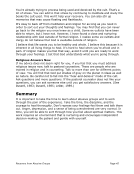
This is a pretty good example of how subtle recovery can get. Examining your
thinking and conclusions is what I mean by mental discipline.
Sometimes it's like untangling a ball of string the cat's been playing with-time-
consuming, frustrating, and exasperating.
Making new friends provides many opportunities not only for the love and
support of others, but also for the interactions that can help to highlight your
own faulty reasoning and residual ideological cobwebs.
Where Are They?
Where are these new friends? I found many in a community chorus I got
involved with after returning home. I'd always loved singing and needed to
reconnect with that part of myself. As I went to rehearsal every week, spoke
with people at break, and performed in concerts in the area, I began to feel part
of the local community. I would run into someone at the grocery store and say
"hi." Slowly, I didn't feel quite so isolated and lonely. (See Carnegie, 1936.)
As I got to know a few people, and would hear their life stories, I realized that
others have had great pain, too. Maybe a miscarriage, infidelity, lost job, death
of a child, assault, theft, and other misfortunes helped me to put my experience
in perspective. I tried never to minimize my experience, but was able to learn
from others how to cope with crisis, integrate it, learn from it, and then go on
with life.
Try Something New
Try a new hobby or sport. Take a course at the local community college. My
dancing or music or help out at a community theatre production. If you're not