Cultic Studies Journal, Vol. 18, 2001, Page 9
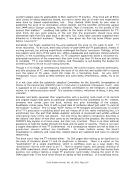
Of course, some think that all religions are hogwash, that the Heaven‘s Gate philosophy is
no more irrational than that of Christianity or Judaism. I believe these people are wrong.
Although all religions rest on assumptions about a transcendental reality that can‘t be
accessed scientifically, conceptual structures built on these assumptions can vary greatly
with regard to internal logical coherence and the degree to which they respond
constructively to human needs that are common across cultures.
Some theological critics might argue that cultic conceptual structures will undermine
attempts at reform because they lack logical coherence and don‘t adequately meet human
needs. Sometimes, the theology of a particular group may be so inconsistent and contrary
to human needs that adaptation to society will be impossible. As a psychologist, however, I
have come to have great faith in the human capacity to creatively rationalize contradictory
beliefs and behaviors, so I am more optimistic about reform for many groups, at least in the
short run. In the long run, however, reality always wins. So I advise against dismissing out
of hand theological critiques of groups‘ conceptual structures.
Important Not to Mix Up Concerns
People sometimes act as though a valid criticism in one of the four major areas of concern -
-psychological, ethical, legal, and theological --necessarily implies that potential concerns
in the other three areas must also be valid. If, for example, a group has an unorthodox
belief system (e.g., it follows an Indian guru), the group may be ―presumed‖ to be
psychologically harmful, unethical, and legally suspect. Drawing such conclusions, however,
is an unwarranted conceptual leap, the kind of false inference that encourages unthinking
polarization, rather than thoughtful dialogue. Although it may be the case that the socially
deviant group violates the law, behaves unethically, and harms people, it is not necessarily,
nor even probably the case. Evidence, not presumption, should rule.
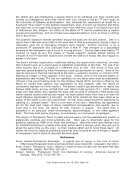
Conclusion
In closing, let me reiterate the proposition that I believe is central to the cult issue: Some
groups may harm some people sometimes, and some groups may be more likely to
harm people than other groups.
The so-called pro-cult-anti-cult debate really revolves around different judgment calls
people make with regard to how many groups are at risk for harm, how much harm they
contribute to, what causes the harm, and what should be done about it. We must make
judgment calls about such questions because we lack sufficient empirical data to resolve the
disputes.
If we are to avoid replacing the closed-mindedness of high control groups with another form
of closed-mindedness in which we treat our opinions as facts, people on both sides of the
cult dispute must acknowledge the following:
Despite the commendable scientific research that has been conducted, much, maybe
most, of what we think we know is opinion (however informed and reasonable it may
be), not scientific fact.
If we are to increase our scientific understanding of this phenomenon, we must put
substantial resources into studying it scientifically in a coordinated way, not the usual
academic route of each researcher working independently, chasing whatever question
happens to grab his or her fancy.
We must be willing to change our opinions as scientific knowledge increases.
As we struggle to increase our scientific knowledge, we must try to help hurting people and
forewarn those as yet unaffected, especially youth, as best we can. But we should do this
with a humility that permits us to continue to learn, even as we teach and counsel.
Of course, some think that all religions are hogwash, that the Heaven‘s Gate philosophy is
no more irrational than that of Christianity or Judaism. I believe these people are wrong.
Although all religions rest on assumptions about a transcendental reality that can‘t be
accessed scientifically, conceptual structures built on these assumptions can vary greatly
with regard to internal logical coherence and the degree to which they respond
constructively to human needs that are common across cultures.
Some theological critics might argue that cultic conceptual structures will undermine
attempts at reform because they lack logical coherence and don‘t adequately meet human
needs. Sometimes, the theology of a particular group may be so inconsistent and contrary
to human needs that adaptation to society will be impossible. As a psychologist, however, I
have come to have great faith in the human capacity to creatively rationalize contradictory
beliefs and behaviors, so I am more optimistic about reform for many groups, at least in the
short run. In the long run, however, reality always wins. So I advise against dismissing out
of hand theological critiques of groups‘ conceptual structures.
Important Not to Mix Up Concerns
People sometimes act as though a valid criticism in one of the four major areas of concern -
-psychological, ethical, legal, and theological --necessarily implies that potential concerns
in the other three areas must also be valid. If, for example, a group has an unorthodox
belief system (e.g., it follows an Indian guru), the group may be ―presumed‖ to be
psychologically harmful, unethical, and legally suspect. Drawing such conclusions, however,
is an unwarranted conceptual leap, the kind of false inference that encourages unthinking
polarization, rather than thoughtful dialogue. Although it may be the case that the socially
deviant group violates the law, behaves unethically, and harms people, it is not necessarily,
nor even probably the case. Evidence, not presumption, should rule.
Conclusion
In closing, let me reiterate the proposition that I believe is central to the cult issue: Some
groups may harm some people sometimes, and some groups may be more likely to
harm people than other groups.
The so-called pro-cult-anti-cult debate really revolves around different judgment calls
people make with regard to how many groups are at risk for harm, how much harm they
contribute to, what causes the harm, and what should be done about it. We must make
judgment calls about such questions because we lack sufficient empirical data to resolve the
disputes.
If we are to avoid replacing the closed-mindedness of high control groups with another form
of closed-mindedness in which we treat our opinions as facts, people on both sides of the
cult dispute must acknowledge the following:
Despite the commendable scientific research that has been conducted, much, maybe
most, of what we think we know is opinion (however informed and reasonable it may
be), not scientific fact.
If we are to increase our scientific understanding of this phenomenon, we must put
substantial resources into studying it scientifically in a coordinated way, not the usual
academic route of each researcher working independently, chasing whatever question
happens to grab his or her fancy.
We must be willing to change our opinions as scientific knowledge increases.
As we struggle to increase our scientific knowledge, we must try to help hurting people and
forewarn those as yet unaffected, especially youth, as best we can. But we should do this
with a humility that permits us to continue to learn, even as we teach and counsel.