Cultic Studies Journal, Vol. 18, 2001, Page 11
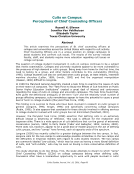
What Should We Do About Cults?
An Italian Perspective
Dr. Raffaella Di Marzio
Group of Research and Information about Sects,
Branch of Rome, Italy
Abstract
This paper is a revised version of a paper prepared in response to a program
on this subject organized by AFF (American Family Foundation) at its annual
conference in St. Paul, Minnesota, May 14 -16, 1999. The paper examines
the cult situation in Italy, explores various approaches on what we should do
about the cult problem, and offers suggestions about a possible common
research agenda for critics and sympathizers of cultic groups. The essay
attempts to provide a balanced response to an international problem that
raises a serious human rights question: How do we protect individuals and
societies from manipulative and destructive influences in religious and other
groups without violating fundamental rights and freedoms that are basic to
modern pluralistic societies?
This paper will examine first the cult situation in Italy, including certain official responses, in
order to give some context to the discussion. Next, Italian legal issues will be explored,
followed by a summary of certain key documents put forth by the Catholic Church in Italy.
The paper then presents the author's views on what should be done about cults. The paper
concludes by offering some suggestions concerning a common research agenda.
The Cult Situation in Italy
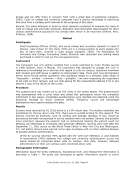
GRIS (Gruppo di Ricerca ed Informazione sulle Sette -Group of Research and Information
about Sects) is a cultural and religious association that requested and obtained the approval
of its Statute by the CEI (the Italian Bishops Conference) on September 25, 1990. It is now
operating in many Italian dioceses. Catholics founded it, but the organization is open to
anyone who can provide scientifically serious contributions regarding New Religious
Movements. GRIS publishes a scholarly quarterly journal, Religioni e Sette nel Mondo
(Religion and Cults in the World), and a newsletter, Movimenti Religiosi Alternativi
(Alternative Religious Movements). The main office is in Bologna, but volunteers work in
branches throughout Italy. I am a teacher in a Senior High School who volunteers with the
Rome branch. I set up a support and counseling center in Rome, for all those directly or
indirectly troubled by experiences associated with belonging to a cult.
The Rome branch of GRIS1 was constituted on Dec. 16th, 1997, and in 1998 got the
approval of His Eminence Card. Camillo Ruini. The Rome Branch of GRIS is operating in the
field of research and information about cults and new religions with a spirit of respect and
dialogue, but firm in the assertion of the truth, and in the exposure of any violation of
personal rights committed by any sort of organizations hiding behind the term ―religion.‖ As
the freedom to follow one‘s religion is an inalienable right of every human being, all GRIS
members are committed to the defense of this right against possible exploitation. Whenever
possible, members of GRIS try to develop a dialogue with people belonging to the various
religious movements and cults. GRIS studies and promotes various forms of pastoral, social,
and cultural intervention in this field.
In this document, I use the English word, ―cult,‖ to translate the Italian ―sette.‖ This is not
quite accurate, for in English usage ―cult‖ can sometimes refer to nonreligious groups.
What Should We Do About Cults?
An Italian Perspective
Dr. Raffaella Di Marzio
Group of Research and Information about Sects,
Branch of Rome, Italy
Abstract
This paper is a revised version of a paper prepared in response to a program
on this subject organized by AFF (American Family Foundation) at its annual
conference in St. Paul, Minnesota, May 14 -16, 1999. The paper examines
the cult situation in Italy, explores various approaches on what we should do
about the cult problem, and offers suggestions about a possible common
research agenda for critics and sympathizers of cultic groups. The essay
attempts to provide a balanced response to an international problem that
raises a serious human rights question: How do we protect individuals and
societies from manipulative and destructive influences in religious and other
groups without violating fundamental rights and freedoms that are basic to
modern pluralistic societies?
This paper will examine first the cult situation in Italy, including certain official responses, in
order to give some context to the discussion. Next, Italian legal issues will be explored,
followed by a summary of certain key documents put forth by the Catholic Church in Italy.
The paper then presents the author's views on what should be done about cults. The paper
concludes by offering some suggestions concerning a common research agenda.
The Cult Situation in Italy
GRIS (Gruppo di Ricerca ed Informazione sulle Sette -Group of Research and Information
about Sects) is a cultural and religious association that requested and obtained the approval
of its Statute by the CEI (the Italian Bishops Conference) on September 25, 1990. It is now
operating in many Italian dioceses. Catholics founded it, but the organization is open to
anyone who can provide scientifically serious contributions regarding New Religious
Movements. GRIS publishes a scholarly quarterly journal, Religioni e Sette nel Mondo
(Religion and Cults in the World), and a newsletter, Movimenti Religiosi Alternativi
(Alternative Religious Movements). The main office is in Bologna, but volunteers work in
branches throughout Italy. I am a teacher in a Senior High School who volunteers with the
Rome branch. I set up a support and counseling center in Rome, for all those directly or
indirectly troubled by experiences associated with belonging to a cult.
The Rome branch of GRIS1 was constituted on Dec. 16th, 1997, and in 1998 got the
approval of His Eminence Card. Camillo Ruini. The Rome Branch of GRIS is operating in the
field of research and information about cults and new religions with a spirit of respect and
dialogue, but firm in the assertion of the truth, and in the exposure of any violation of
personal rights committed by any sort of organizations hiding behind the term ―religion.‖ As
the freedom to follow one‘s religion is an inalienable right of every human being, all GRIS
members are committed to the defense of this right against possible exploitation. Whenever
possible, members of GRIS try to develop a dialogue with people belonging to the various
religious movements and cults. GRIS studies and promotes various forms of pastoral, social,
and cultural intervention in this field.
In this document, I use the English word, ―cult,‖ to translate the Italian ―sette.‖ This is not
quite accurate, for in English usage ―cult‖ can sometimes refer to nonreligious groups.