Cultic Studies Journal, Vol. 18, 2001, Page 19
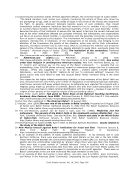
new and stressful family situation without succumbing to aggression or violent
discussions, which can rupture family bonds. This is especially important when children
or young children are involved. When a loved one joins a group that is not destructive,
informed and supportive relatives are better able to learn to live in peace with their
relative's new beliefs. On the other hand, if the youngster gets involved with a
destructive group, the family will be less likely to remain passive if the leader's demands
tend to isolate the member from his or her family. Thus, a prepared and supportive
family can be an antidote against cults that may be inclined to degenerate toward
destructive forms of influence. If members maintain contact with their loved ones
outside the group, they will be less likely to submit passively to the four forms of control
elaborated upon by Hassan (behavior, information, thought, and emotional control --
B.I.T.E.).
Persons who are having difficulty leaving a group or who have left and need help in
recovering the balance and individuality that were damaged by the group experience.
In conclusion, I must unfortunately lament the fact that in Italy such a center does not
exist. A few individuals associated with GRIS will talk to people seeking help and
information. A few psychologists and psychiatrists help people affected by the cult
phenomenon, but they work in isolation. Centers specializing in helping ex-members do not
exist. In summary, many who seek help and contact us by phone or fax, unfortunately,
receive no help.
Multidisciplinary Research Agenda on Cults: Goals and Issues
I believe it is advisable to state in advance of what I will say below that those who wish to
participate in a common effort to study objectively all the questions involved in the diffusion
of new cults must keep this important point in mind, at minimum as a theoretical possibility:
some groups may perpetrate various types of abuses on members by taking advantage of
their psychological suggestibility in regard to the leader or the group itself. I do not believe
it is possible to initiate a common research agenda unless the so-called ―cult sympathizers‖
overcome their knee-jerk tendency to ―veto‖ this question. I think they should accept the
reality of the facts that clearly demonstrate how abuses of persons may sometimes be not
only physical, nor only tied to trickery and deceit, but also psychological, even if of different
intensity and nature from case to case.
So-called ―cult critics,‖ on their part, should overcome the tendency to criticize all cults all
the time. They should keep in mind and accept the reality that there are groups that are
absolutely innocuous and not deserving of the epithet ―cult.‖ Cult critics should avoid
overemphasizing the reach of ―mind control,‖ even in those groups where it may be
effectively carried out. It is very difficult for a leader to exercise total control over a person's
mind so as to reduce him to a state of total dependence and to annihilate totally his
personality. Mind control may be exercised on different levels, and the same type of mind
control will not obtain the same effect on all persons because the dispositions of individuals
also play an important role.
If either party doesn't overcome its extreme and prejudicial positions, I do not
believe that a real dialogue will be possible, and this will certainly be unfortunate for
affected persons and religious liberty. It will, however, play to the advantage of destructive
groups and will leave undeterred those people who will continue to harm victims.
Some Goals for a Common Research Agenda on Cults
I believe that there are several common goals, which do not strictly concern scientific
matters, but which to me appear to be based on common values on which the purely
scientific goals of research ultimately rest. I mean to say that if one does not consent to
these general goals, it seems to me that it is not possible to acknowledge the objectives
new and stressful family situation without succumbing to aggression or violent
discussions, which can rupture family bonds. This is especially important when children
or young children are involved. When a loved one joins a group that is not destructive,
informed and supportive relatives are better able to learn to live in peace with their
relative's new beliefs. On the other hand, if the youngster gets involved with a
destructive group, the family will be less likely to remain passive if the leader's demands
tend to isolate the member from his or her family. Thus, a prepared and supportive
family can be an antidote against cults that may be inclined to degenerate toward
destructive forms of influence. If members maintain contact with their loved ones
outside the group, they will be less likely to submit passively to the four forms of control
elaborated upon by Hassan (behavior, information, thought, and emotional control --
B.I.T.E.).
Persons who are having difficulty leaving a group or who have left and need help in
recovering the balance and individuality that were damaged by the group experience.
In conclusion, I must unfortunately lament the fact that in Italy such a center does not
exist. A few individuals associated with GRIS will talk to people seeking help and
information. A few psychologists and psychiatrists help people affected by the cult
phenomenon, but they work in isolation. Centers specializing in helping ex-members do not
exist. In summary, many who seek help and contact us by phone or fax, unfortunately,
receive no help.
Multidisciplinary Research Agenda on Cults: Goals and Issues
I believe it is advisable to state in advance of what I will say below that those who wish to
participate in a common effort to study objectively all the questions involved in the diffusion
of new cults must keep this important point in mind, at minimum as a theoretical possibility:
some groups may perpetrate various types of abuses on members by taking advantage of
their psychological suggestibility in regard to the leader or the group itself. I do not believe
it is possible to initiate a common research agenda unless the so-called ―cult sympathizers‖
overcome their knee-jerk tendency to ―veto‖ this question. I think they should accept the
reality of the facts that clearly demonstrate how abuses of persons may sometimes be not
only physical, nor only tied to trickery and deceit, but also psychological, even if of different
intensity and nature from case to case.
So-called ―cult critics,‖ on their part, should overcome the tendency to criticize all cults all
the time. They should keep in mind and accept the reality that there are groups that are
absolutely innocuous and not deserving of the epithet ―cult.‖ Cult critics should avoid
overemphasizing the reach of ―mind control,‖ even in those groups where it may be
effectively carried out. It is very difficult for a leader to exercise total control over a person's
mind so as to reduce him to a state of total dependence and to annihilate totally his
personality. Mind control may be exercised on different levels, and the same type of mind
control will not obtain the same effect on all persons because the dispositions of individuals
also play an important role.
If either party doesn't overcome its extreme and prejudicial positions, I do not
believe that a real dialogue will be possible, and this will certainly be unfortunate for
affected persons and religious liberty. It will, however, play to the advantage of destructive
groups and will leave undeterred those people who will continue to harm victims.
Some Goals for a Common Research Agenda on Cults
I believe that there are several common goals, which do not strictly concern scientific
matters, but which to me appear to be based on common values on which the purely
scientific goals of research ultimately rest. I mean to say that if one does not consent to
these general goals, it seems to me that it is not possible to acknowledge the objectives