Cultic Studies Journal, Vol. 18, 2001, Page 143
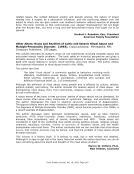
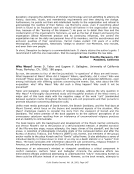
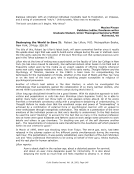
related issues, the contest between science and pseudo science, the nature of power
wielded over a subject by a persuasive influencer, and the continuing debate over the
extent to which one can gain control over another‘s behavior without exercise of physical
force. The book reminds us that controversies over alleged ―brainwashing‖ did not begin
after the Korean War, but have a long and well-documented history that ought not to be
ignored.
Herbert L. Rosedale, Esq., President
American Family Foundation
Other Altars: Roots and Realities of Cultic and Satanic Ritual Abuse and
Multiple Personality Disorder. (1993). Craig Lockwood. Minneapolis, MN:
Compcare Publishers. 255 pages.
This volume describes its author‘s views on cult experiences involving ritualistic abuse and
associated mental health problems. The book takes an historical perspective and gives a
scholarly account of how a variety of cultures and religions in diverse geographic locations
dealt with issues relating to torture, blood sacrifice, and ritual abuse. The author relates
this historical information to ritual abuse trends in the 1990s.
The author says that
The label ―ritual abuse‖ is commonly applied to behaviors involving multi-
offenders, multimotive sexual abuse, torture, programmed mind control,
blood sacrifice, infanticide, or cannibalism, combined with symbols and
artifacts of spiritual belief. (p. 1 of Introduction)
Although the definition of ritual abuse varies greatly and is affected by culture, religion,
political climate, and history, the author stresses the abusive aspect of ritual abuse. He
distinguishes ritual abuse, then, from ceremonies, religious rituals, or other activities that
do not involve abuse.
A major theme of the book is that survivors‘ stories of abuse should not be dismissed, for
these stories often show many similarities of symptoms, feelings, and emotional states.
The author emphasizes the need to examine survivors‘ experience of disassociation.
Throughout history there are many instances of abused people experiencing disassociation.
The diagnosis of Multiple Personality Disorder (MPD), which became popular in the 1990s, is
a recent example of disassociation.
The author discusses many pertinent contemporary issues, such as false memory
syndrome, PTSD (Post-Traumatic Stress Disorder), repression, flashbacks, childhood
amnesia, false accusations, and, of course, dissociation and MPD. These issues are
considered in light of the conflicting view points among political groups, religious groups,
scientists, educators, families, victims or survivors of ritualistic abuse, and the health
professionals who treat them. The author concludes that we can conclude that ritual abuse
occurs, that victims‘ accounts may be factual, and that the problem of ritual abuse should
be taken seriously.
This volume is a history book. It is tedious to read, but is well written and detailed.
Although it is easy to get lost in the many historical events the author describes, we can all
learn something about the depth and breadth of the ritual abuse problem.
Marvin W. Clifford, Ph.D.
New Orleans, Louisiana
related issues, the contest between science and pseudo science, the nature of power
wielded over a subject by a persuasive influencer, and the continuing debate over the
extent to which one can gain control over another‘s behavior without exercise of physical
force. The book reminds us that controversies over alleged ―brainwashing‖ did not begin
after the Korean War, but have a long and well-documented history that ought not to be
ignored.
Herbert L. Rosedale, Esq., President
American Family Foundation
Other Altars: Roots and Realities of Cultic and Satanic Ritual Abuse and
Multiple Personality Disorder. (1993). Craig Lockwood. Minneapolis, MN:
Compcare Publishers. 255 pages.
This volume describes its author‘s views on cult experiences involving ritualistic abuse and
associated mental health problems. The book takes an historical perspective and gives a
scholarly account of how a variety of cultures and religions in diverse geographic locations
dealt with issues relating to torture, blood sacrifice, and ritual abuse. The author relates
this historical information to ritual abuse trends in the 1990s.
The author says that
The label ―ritual abuse‖ is commonly applied to behaviors involving multi-
offenders, multimotive sexual abuse, torture, programmed mind control,
blood sacrifice, infanticide, or cannibalism, combined with symbols and
artifacts of spiritual belief. (p. 1 of Introduction)
Although the definition of ritual abuse varies greatly and is affected by culture, religion,
political climate, and history, the author stresses the abusive aspect of ritual abuse. He
distinguishes ritual abuse, then, from ceremonies, religious rituals, or other activities that
do not involve abuse.
A major theme of the book is that survivors‘ stories of abuse should not be dismissed, for
these stories often show many similarities of symptoms, feelings, and emotional states.
The author emphasizes the need to examine survivors‘ experience of disassociation.
Throughout history there are many instances of abused people experiencing disassociation.
The diagnosis of Multiple Personality Disorder (MPD), which became popular in the 1990s, is
a recent example of disassociation.
The author discusses many pertinent contemporary issues, such as false memory
syndrome, PTSD (Post-Traumatic Stress Disorder), repression, flashbacks, childhood
amnesia, false accusations, and, of course, dissociation and MPD. These issues are
considered in light of the conflicting view points among political groups, religious groups,
scientists, educators, families, victims or survivors of ritualistic abuse, and the health
professionals who treat them. The author concludes that we can conclude that ritual abuse
occurs, that victims‘ accounts may be factual, and that the problem of ritual abuse should
be taken seriously.
This volume is a history book. It is tedious to read, but is well written and detailed.
Although it is easy to get lost in the many historical events the author describes, we can all
learn something about the depth and breadth of the ritual abuse problem.
Marvin W. Clifford, Ph.D.
New Orleans, Louisiana