Cultic Studies Journal, Vol. 18, 2001, Page 136
Wilder, D. A., &Allen, V. L. (1977). Social support, extreme social support and conformity.
Representative Research in Social Psychology, 8, 33-41.
Wilder, D. A., &Shapiro, P. (1988). Effects of anxiety on impression formation in a group
context: An anxiety-assimilation hypothesis. Journal of Experimental and Social
Psychology, 25, 481-499.
Wilder, D. A., &Shapiro, P. N. (1989). Role of competition-induced anxiety in limiting the
beneficial impact of positive behavior by an out-group member. Journal of Personality &
Social Psychology, 56, 60-69.
Wood, W., Pool, G. J., Leck, K., &Purvis, D. (1996). Self-definition, defensive processing,
and influence: The normative impact of majority and minority groups. Journal of
Personality and Social Psychology, 71, 1181-1193.
Zimbardo, P. (1997). What messages are behind today’s cults? Washington, D.C.:
American Psychological Association.
Acknowledgments
Earlier versions of this article were presented at the groups preconference at the meetings
of the Society of Experimental Social Psychology, Toronto, Ontario, October 1997, and at
the Utah Winter Conference in Social Psychology, Park City, Utah, January 1996.
I thank Joel Cooper, Russell Fazio, Tory Higgins, Arie Kruglanski, Fred Rhodewalt, David
Sanbonmatsu, and Kip Williams for their comments.
This article first appeared in Personality and Social Psychology Review, 2000, Vol. 4, No. 3,
238-254. It is reprinted with permission. Slight editorial changes have been made at the
author‘s request.
**********
Robert S. Baron, Ph.D. is Professor of Psychology at the University of Iowa. Requests for
reprints should be sent to Robert S. Baron, Department of Psychology, E 11 SSH, University
of Iowa, Iowa City, Iowa 52242-1407. E-mail: Robert-baron@uiowa.edu
This article is an electronic version of an article originally published in Cultic Studies Journal, 2001, Volume 18, Part
2, pages 172-207. Please keep in mind that the pagination of this electronic reprint differs from that of the bound
volume. This fact could affect how you enter bibliographic information in papers that you may write.
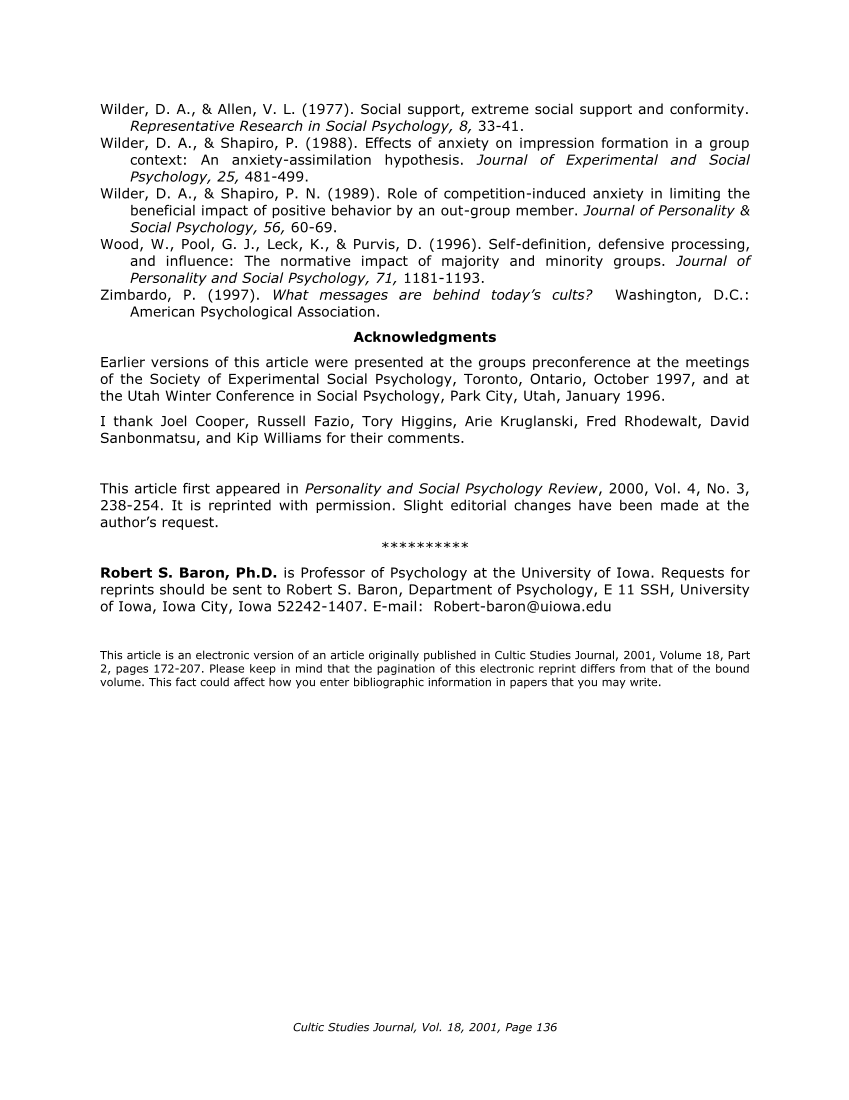
Wilder, D. A., &Allen, V. L. (1977). Social support, extreme social support and conformity.
Representative Research in Social Psychology, 8, 33-41.
Wilder, D. A., &Shapiro, P. (1988). Effects of anxiety on impression formation in a group
context: An anxiety-assimilation hypothesis. Journal of Experimental and Social
Psychology, 25, 481-499.
Wilder, D. A., &Shapiro, P. N. (1989). Role of competition-induced anxiety in limiting the
beneficial impact of positive behavior by an out-group member. Journal of Personality &
Social Psychology, 56, 60-69.
Wood, W., Pool, G. J., Leck, K., &Purvis, D. (1996). Self-definition, defensive processing,
and influence: The normative impact of majority and minority groups. Journal of
Personality and Social Psychology, 71, 1181-1193.
Zimbardo, P. (1997). What messages are behind today’s cults? Washington, D.C.:
American Psychological Association.
Acknowledgments
Earlier versions of this article were presented at the groups preconference at the meetings
of the Society of Experimental Social Psychology, Toronto, Ontario, October 1997, and at
the Utah Winter Conference in Social Psychology, Park City, Utah, January 1996.
I thank Joel Cooper, Russell Fazio, Tory Higgins, Arie Kruglanski, Fred Rhodewalt, David
Sanbonmatsu, and Kip Williams for their comments.
This article first appeared in Personality and Social Psychology Review, 2000, Vol. 4, No. 3,
238-254. It is reprinted with permission. Slight editorial changes have been made at the
author‘s request.
**********
Robert S. Baron, Ph.D. is Professor of Psychology at the University of Iowa. Requests for
reprints should be sent to Robert S. Baron, Department of Psychology, E 11 SSH, University
of Iowa, Iowa City, Iowa 52242-1407. E-mail: Robert-baron@uiowa.edu
This article is an electronic version of an article originally published in Cultic Studies Journal, 2001, Volume 18, Part
2, pages 172-207. Please keep in mind that the pagination of this electronic reprint differs from that of the bound
volume. This fact could affect how you enter bibliographic information in papers that you may write.