Cultic Studies Journal, Vol. 18, 2001, Page 16
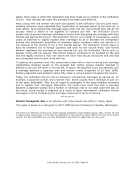
Despite those denying the existence of the problem, even in the Church, the pastoral
memorandum, on the contrary, states, faithful to its spirit and honesty:
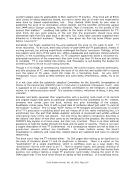
It must also be stated that the ―sectarian spirit,‖ i.e., the intolerant behavior
united to aggressive proselytism, is not necessarily the constitutive element
of a ―cult‖ and is not sufficient to characterize it. A spirit of this kind can also
be found in groups of believers belonging to churches or church
communities.18
This issue was already noted in the Interim Report where it says:
These Christian groups with sectarian spirit can evolve thanks to the
enrichment of their cultural background and by establishing contacts with
other Christians, hence assuming a more ―ecclesiastical‖ behavior.19
Should the group in question continue with its sectarian and intolerant behavior and
eventually come to border on heresy, it may come to assume over time all the negative
characteristics outlined above. Unfortunately, this phenomenon has occurred in the past and
still occurs today. These groups are generally called ―pseudo-Catholic cults‖ or ―Fringe
Catholic Movements,‖ and many local Bishops have already issued official statements on the
phenomenon. This situation requires that the Catholic community commit itself to seeking
the necessary means to prevent it.
The Church's commitment to express its opinion clearly to those who freely choose to
abandon the Church communion does not exempt us from respecting those who freely
decide to leave the Church and embrace another form of ―spirituality‖ or join an NRM.
The criteria set by the Vatican II Council for religious freedom hold true also for cults and
NRMs:
as long as freedom of conscience is not violated within them ...However,
those spreading these new religious forms are called upon to respect other‘s
freedom of conscience and to be open to a sincere dialogue‖.20
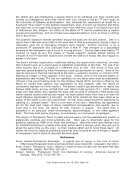
According to this document, it is clear that freedom of religion is not to be understood as an
―absolute‖ value, but it must be proportional to and assessed on the basis of other‘s
―freedom of religion‖ and must not violate the inalienable rights and the dignity of other
human beings.
Furthermore, detailed initiatives to face the problems posed by new religious forms are
illustrated, for example, the creation of specialized diocesan groups studying the
phenomenon according to their areas of competence and making suggestions on how to
face them. A note indicates two already existing specialized centers ―for the study of the
phenomenon and for stepping up community awareness such as the Center for Studies on
New Religions (CESNUR) and the Group or Research and Information on Sects (GRIS)‖.21
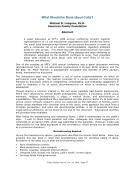
What Should be Done?
In order to adequately confront the phenomenon of membership in various kinds of cults it
is necessary to provide a range of interventions that involve diverse organizations and
subjects in the educational, religious, and cultural fields. In my opinion, the actions that
should be undertaken may be grouped in three categories:
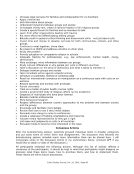
1. Inform in order to prevent
2. Research in order to understand
3. Intervene in order to help.
Despite those denying the existence of the problem, even in the Church, the pastoral
memorandum, on the contrary, states, faithful to its spirit and honesty:
It must also be stated that the ―sectarian spirit,‖ i.e., the intolerant behavior
united to aggressive proselytism, is not necessarily the constitutive element
of a ―cult‖ and is not sufficient to characterize it. A spirit of this kind can also
be found in groups of believers belonging to churches or church
communities.18
This issue was already noted in the Interim Report where it says:
These Christian groups with sectarian spirit can evolve thanks to the
enrichment of their cultural background and by establishing contacts with
other Christians, hence assuming a more ―ecclesiastical‖ behavior.19
Should the group in question continue with its sectarian and intolerant behavior and
eventually come to border on heresy, it may come to assume over time all the negative
characteristics outlined above. Unfortunately, this phenomenon has occurred in the past and
still occurs today. These groups are generally called ―pseudo-Catholic cults‖ or ―Fringe
Catholic Movements,‖ and many local Bishops have already issued official statements on the
phenomenon. This situation requires that the Catholic community commit itself to seeking
the necessary means to prevent it.
The Church's commitment to express its opinion clearly to those who freely choose to
abandon the Church communion does not exempt us from respecting those who freely
decide to leave the Church and embrace another form of ―spirituality‖ or join an NRM.
The criteria set by the Vatican II Council for religious freedom hold true also for cults and
NRMs:
as long as freedom of conscience is not violated within them ...However,
those spreading these new religious forms are called upon to respect other‘s
freedom of conscience and to be open to a sincere dialogue‖.20
According to this document, it is clear that freedom of religion is not to be understood as an
―absolute‖ value, but it must be proportional to and assessed on the basis of other‘s
―freedom of religion‖ and must not violate the inalienable rights and the dignity of other
human beings.
Furthermore, detailed initiatives to face the problems posed by new religious forms are
illustrated, for example, the creation of specialized diocesan groups studying the
phenomenon according to their areas of competence and making suggestions on how to
face them. A note indicates two already existing specialized centers ―for the study of the
phenomenon and for stepping up community awareness such as the Center for Studies on
New Religions (CESNUR) and the Group or Research and Information on Sects (GRIS)‖.21
What Should be Done?
In order to adequately confront the phenomenon of membership in various kinds of cults it
is necessary to provide a range of interventions that involve diverse organizations and
subjects in the educational, religious, and cultural fields. In my opinion, the actions that
should be undertaken may be grouped in three categories:
1. Inform in order to prevent
2. Research in order to understand
3. Intervene in order to help.