Cultic Studies Journal, Vol. 18, 2001, Page 126
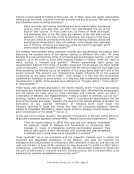
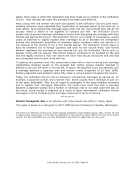
perspective, such results should not occur. Also relevant is a study by Gleicher and Petty
(1992), who found that a manipulation of moderate fear lowered careful message
processing provided that the message contained an early, prominent peripheral cue (a
strong summary recommendation by the expert source). More interesting, however, when
this cue was absent, the fearful participants processed the message as carefully as low-fear
participants. In short, the study by Gleicher and Petty, as well as that of Baron et al.
(1994), suggests that fearful individuals can be induced to process carefully under certain
key conditions contrary to the physiological perspective.
It is premature, however, to completely discount the physiological perspective. First, both
attention allocation and physiological mechanisms may influence information processing. For
example, it is possible that a moderate level of emotional arousal only partially depletes
attentional capacity. If so, under moderate arousal there may be enough residual capacity
to process necessary tasks, but the individual may be more reluctant to do so because this
processing would now require using a greater percentage of remaining available capacity.
This should entail greater psychological effort and therefore may be resisted unless
motivation is quite high or other cognitive shortcuts are unavailable. Gleicher and Petty‘s
(1992) results may reflect such a dynamic. Moderate fear led to a greater reliance on
available peripheral cues (indicating a motivational reluctance), but when peripheral cues
were absent, careful processing was possible.
However, if one assumes that emotion depletes capacity it follows that if emotion becomes
extreme enough, it may so deplete total capacity that even well motivated processing may
suffer. One recent study by Meijnders (1998) reported such data. Fear was created by
varying the explicitness of information regarding the substantial dangers of global warming
(e.g., starvation, flooding), and then the (nonstudent) participants reacted to a message
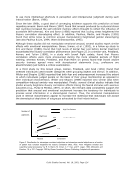
relevant to that problem (regarding an energy-efficient light bulb). Meijinders found that
moderate levels of (integral) fear increased participants‘ sensitivity to message quality
differences (replicating Baron et al., 1994) but that at very high levels of fear, such careful
processing was not apparent (i.e., both high- and low-quality messages produced equivalent
amounts of persuasion). These results suggest that even when people are motivated to
process carefully, superficial message processing may occur if fear levels are intense
enough. This may be even more likely in cases of intense indoctrination in which other
Low Fear High Fear
High Quality Message
Low Quality Message
Persuasion
7.5
7.2
7.4
6.1
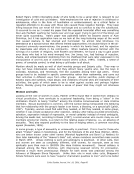
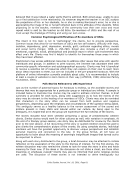
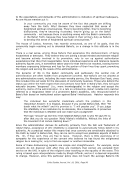
Figure 3. Persuasion scores as a function of fear and message quality: Fear heightens careful message
processing. Note. From “Negative emotion and message processing,” by R. S. Baron, H. Logan, J. Lilly,
M. Inman, and M. Brennan, 1994, Journal of Experimental Social Psychology, 30, p.192, Copyright 1994
by Academic Press. Adapted with permission.
perspective, such results should not occur. Also relevant is a study by Gleicher and Petty
(1992), who found that a manipulation of moderate fear lowered careful message
processing provided that the message contained an early, prominent peripheral cue (a
strong summary recommendation by the expert source). More interesting, however, when
this cue was absent, the fearful participants processed the message as carefully as low-fear
participants. In short, the study by Gleicher and Petty, as well as that of Baron et al.
(1994), suggests that fearful individuals can be induced to process carefully under certain
key conditions contrary to the physiological perspective.
It is premature, however, to completely discount the physiological perspective. First, both
attention allocation and physiological mechanisms may influence information processing. For
example, it is possible that a moderate level of emotional arousal only partially depletes
attentional capacity. If so, under moderate arousal there may be enough residual capacity
to process necessary tasks, but the individual may be more reluctant to do so because this
processing would now require using a greater percentage of remaining available capacity.
This should entail greater psychological effort and therefore may be resisted unless
motivation is quite high or other cognitive shortcuts are unavailable. Gleicher and Petty‘s
(1992) results may reflect such a dynamic. Moderate fear led to a greater reliance on
available peripheral cues (indicating a motivational reluctance), but when peripheral cues
were absent, careful processing was possible.
However, if one assumes that emotion depletes capacity it follows that if emotion becomes
extreme enough, it may so deplete total capacity that even well motivated processing may
suffer. One recent study by Meijnders (1998) reported such data. Fear was created by
varying the explicitness of information regarding the substantial dangers of global warming
(e.g., starvation, flooding), and then the (nonstudent) participants reacted to a message
relevant to that problem (regarding an energy-efficient light bulb). Meijinders found that
moderate levels of (integral) fear increased participants‘ sensitivity to message quality
differences (replicating Baron et al., 1994) but that at very high levels of fear, such careful
processing was not apparent (i.e., both high- and low-quality messages produced equivalent
amounts of persuasion). These results suggest that even when people are motivated to
process carefully, superficial message processing may occur if fear levels are intense
enough. This may be even more likely in cases of intense indoctrination in which other
Low Fear High Fear
High Quality Message
Low Quality Message
Persuasion
7.5
7.2
7.4
6.1
Figure 3. Persuasion scores as a function of fear and message quality: Fear heightens careful message
processing. Note. From “Negative emotion and message processing,” by R. S. Baron, H. Logan, J. Lilly,
M. Inman, and M. Brennan, 1994, Journal of Experimental Social Psychology, 30, p.192, Copyright 1994
by Academic Press. Adapted with permission.