Cultic Studies Journal, Vol. 18, 2001, Page 103
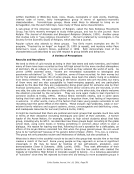
greater care must now be exercised to ensure its protection against the
malice of the ignorant and the unwisdom of its friends.34
The fear of external enemies has also been fed by the Baha‘i Faith‘s history of persecution in
Iran. Concern over the safety of the Baha‘is in that country has been cited by defenders of
the administration as a reason for being cautious in its public presentations.
Besides the policy of prepublication review, Baha‘i scholars have also complained about lack
of access to primary materials, the discouragement of and interference with academic
projects,35 and, in one particular case, the deletion of passages from an important primary
source prior to publication36. While Baha‘i scriptures ostensibly support scholarship, and the
UHJ itself has made several statements about its importance, it has also has condemned
academic methods in current use as ―materialistic‖ and ―designed to ignore the truths that
make religion what it is‖37 Rank-and-file Baha‘is tend to be anti-intellectual, with little
understanding or sympathy for the problems academics face within the Baha‘i structure.
The nature of academic writing is also misunderstood, and Baha‘i scholars have attracted
criticism for failing to attribute events in Baha‘i history to divine intervention, or taking into
account contextual influences on the Faith‘s central figures.38
Another problem for those who study the Faith, but are unable to read Persian or Arabic is
that Haifa has been slow in producing English translations of Baha‘u‘llah‘s voluminous
writings. Unofficial translations are becoming increasingly available on the Internet,
however, and the UHJ has recently announced that more official versions will be
forthcoming.39
The Youth Influx and Baha’i Intellectuals
The composition of the Baha‘i Faith underwent a massive demographic shift during the
decade of the 70s. About 13,000 Baha‘is were on the rolls in 1969 compared to 75,000 ten
years later, with the bulk of the converts being young.40 Anecdotal evidence suggests that
the older generation viewed these newcomers with dismay and some suspicion, since they
brought with them a youth culture that was alien and threatening to them. Baby Boom
Baha‘is remember this time with fondness, however, and some of their drives toward reform
stem from disappointment that this energetic expansion could not be maintained.41
One of the first aspects of Baha‘i life that disillusioned the newcomers was that, although
the Baha‘i Faith proclaims several social concerns among its principles, any sort of political
involvement is completely forbidden to members. This left these young activists no outlet to
work towards achieving their ideals in any practical way, other than serving the goals of the
administration for the long-term Baha‘i future, One Baby Boom-era convert put it this way:
For Baha‘is of my generation, we became believers during the exciting and
turbulent Vietnam War years because we saw that Baha‘u‘llah offers humanity
the clearest direction for our inner spiritual growth and our work for saving
the planet. Most of my Baha‘i friends of my youth have left the Faith. Not
because they lost faith in Baha‘u‘llah or the teachings, but because they were
not allowed to express their ideals and activism as Baha‘is. And today, over
and over again, I hear from friends who are quietly leaving the Faith to
pursue their ideals in the peace movement, in the women‘s movement, in the
field of ecology, in music and dance, in religious discipline, because they are
not allowed to express their commitment to social change, artistic expression,
or a mystical path within a Baha‘i context.42
The UHJ replied:
It is not unusual for people to be drawn to the Faith because they see in it the
fulfilment of the ideals which are dear to their hearts. But, if a soul truly
greater care must now be exercised to ensure its protection against the
malice of the ignorant and the unwisdom of its friends.34
The fear of external enemies has also been fed by the Baha‘i Faith‘s history of persecution in
Iran. Concern over the safety of the Baha‘is in that country has been cited by defenders of
the administration as a reason for being cautious in its public presentations.
Besides the policy of prepublication review, Baha‘i scholars have also complained about lack
of access to primary materials, the discouragement of and interference with academic
projects,35 and, in one particular case, the deletion of passages from an important primary
source prior to publication36. While Baha‘i scriptures ostensibly support scholarship, and the
UHJ itself has made several statements about its importance, it has also has condemned
academic methods in current use as ―materialistic‖ and ―designed to ignore the truths that
make religion what it is‖37 Rank-and-file Baha‘is tend to be anti-intellectual, with little
understanding or sympathy for the problems academics face within the Baha‘i structure.
The nature of academic writing is also misunderstood, and Baha‘i scholars have attracted
criticism for failing to attribute events in Baha‘i history to divine intervention, or taking into
account contextual influences on the Faith‘s central figures.38
Another problem for those who study the Faith, but are unable to read Persian or Arabic is
that Haifa has been slow in producing English translations of Baha‘u‘llah‘s voluminous
writings. Unofficial translations are becoming increasingly available on the Internet,
however, and the UHJ has recently announced that more official versions will be
forthcoming.39
The Youth Influx and Baha’i Intellectuals
The composition of the Baha‘i Faith underwent a massive demographic shift during the
decade of the 70s. About 13,000 Baha‘is were on the rolls in 1969 compared to 75,000 ten
years later, with the bulk of the converts being young.40 Anecdotal evidence suggests that
the older generation viewed these newcomers with dismay and some suspicion, since they
brought with them a youth culture that was alien and threatening to them. Baby Boom
Baha‘is remember this time with fondness, however, and some of their drives toward reform
stem from disappointment that this energetic expansion could not be maintained.41
One of the first aspects of Baha‘i life that disillusioned the newcomers was that, although
the Baha‘i Faith proclaims several social concerns among its principles, any sort of political
involvement is completely forbidden to members. This left these young activists no outlet to
work towards achieving their ideals in any practical way, other than serving the goals of the
administration for the long-term Baha‘i future, One Baby Boom-era convert put it this way:
For Baha‘is of my generation, we became believers during the exciting and
turbulent Vietnam War years because we saw that Baha‘u‘llah offers humanity
the clearest direction for our inner spiritual growth and our work for saving
the planet. Most of my Baha‘i friends of my youth have left the Faith. Not
because they lost faith in Baha‘u‘llah or the teachings, but because they were
not allowed to express their ideals and activism as Baha‘is. And today, over
and over again, I hear from friends who are quietly leaving the Faith to
pursue their ideals in the peace movement, in the women‘s movement, in the
field of ecology, in music and dance, in religious discipline, because they are
not allowed to express their commitment to social change, artistic expression,
or a mystical path within a Baha‘i context.42
The UHJ replied:
It is not unusual for people to be drawn to the Faith because they see in it the
fulfilment of the ideals which are dear to their hearts. But, if a soul truly