Cultic Studies Journal, Vol. 18, 2001, Page 68
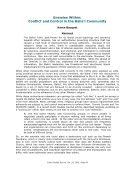
Cults on Campus:
Perceptions of Chief Counseling Officers
Russell K. Elleven
Jennifer Van Veldhuizen
Elizabeth Taylor
Texas Christian University
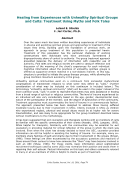
Abstract
This article examines the perceptions of 81 chief counseling officers at
colleges and universities across the United States with regard to cult activity.
Chief Counseling Officers are in a unique position on college campuses to
assist students and confront cult issues. The results of the survey indicate
faculty, staff, and students require more education regarding cult issues on
college campuses.
The question of college student involvement in cults on campus continues to be a subject
that merits examination. Colleges and university students appear to be more vulnerable to
the pressures of high demand or cultic groups. Being away from home for the first time, the
need to belong to a group, and other factors contribute to this vulnerability (Blimling,
1995). College students can also be confused when cultic groups, at least initially, resemble
mainline churches (LeBar, 1989 Enroth, 1992) and find the organized manipulation
(Hassan, 1990) difficult to recognize.
In 1998 the Maryland General Assembly created a task force to examine the issues of cults
on their state run campuses. The "Task Force to Study the Effects of Cult Activities on Public
Senior Higher Education Institutions" created a great deal of interest and controversy
regarding the issue of cults on college and university campuses. The task force found that,
even given the definitional ambiguity of the term ―cult‖ and the relatively small number of
groups affecting campuses, cults nonetheless appear to have the potential to cause a great
deal of harm to college students (Maryland Task Force, 1998).
This finding is no surprise to those who have been involved in research on cultic groups in
general (Langone, 1993 Singer, 1995) and specifically concerning college campuses
(Rudin, 1996). It also appears that caseloads for those directly involved in offering services
to college students involved with cultic groups has not diminished (Mansfield, 2001).
However, the Maryland Task Force (1998) assertion that defining cults is an extremely
difficult charge is deserving of reflection. This task is difficult for the researcher and
layperson alike. There is a wide spectrum of cult definitions that run the gamut of extremely
conservative (Larson, 1989) to fairly liberal (Tabor and Gallagher, 1995 Jenkins, 2000).
There does not, however, appear to be a great deal of middle ground in the act of defining
cultic groups, and two ―camps‖ have formed, each at opposite ends of the spectrum.
Langone (2000) has recently called for a greater dialogue between the two camps. In fact,
Langone calls for the two camps to acknowledge possible similarities in the two camps and
the difficulties in empirical realities with regard to cultic studies research. The two camps
are commonly labeled ―pro-cultists,‖ which may be seen as having a more liberal definition
of cults, and ―anti-cultists,‖ who may be seen as having a more conservative definition of
cults.
This study attempts to do two things. First, the study attempts to discern to which ―camp‖
Chief Counseling Officers (CCOs) on college campuses belong when defining cults.
Counselors often have a tremendous opportunity to work with people involved in cultic
Cults on Campus:
Perceptions of Chief Counseling Officers
Russell K. Elleven
Jennifer Van Veldhuizen
Elizabeth Taylor
Texas Christian University
Abstract
This article examines the perceptions of 81 chief counseling officers at
colleges and universities across the United States with regard to cult activity.
Chief Counseling Officers are in a unique position on college campuses to
assist students and confront cult issues. The results of the survey indicate
faculty, staff, and students require more education regarding cult issues on
college campuses.
The question of college student involvement in cults on campus continues to be a subject
that merits examination. Colleges and university students appear to be more vulnerable to
the pressures of high demand or cultic groups. Being away from home for the first time, the
need to belong to a group, and other factors contribute to this vulnerability (Blimling,
1995). College students can also be confused when cultic groups, at least initially, resemble
mainline churches (LeBar, 1989 Enroth, 1992) and find the organized manipulation
(Hassan, 1990) difficult to recognize.
In 1998 the Maryland General Assembly created a task force to examine the issues of cults
on their state run campuses. The "Task Force to Study the Effects of Cult Activities on Public
Senior Higher Education Institutions" created a great deal of interest and controversy
regarding the issue of cults on college and university campuses. The task force found that,
even given the definitional ambiguity of the term ―cult‖ and the relatively small number of
groups affecting campuses, cults nonetheless appear to have the potential to cause a great
deal of harm to college students (Maryland Task Force, 1998).
This finding is no surprise to those who have been involved in research on cultic groups in
general (Langone, 1993 Singer, 1995) and specifically concerning college campuses
(Rudin, 1996). It also appears that caseloads for those directly involved in offering services
to college students involved with cultic groups has not diminished (Mansfield, 2001).
However, the Maryland Task Force (1998) assertion that defining cults is an extremely
difficult charge is deserving of reflection. This task is difficult for the researcher and
layperson alike. There is a wide spectrum of cult definitions that run the gamut of extremely
conservative (Larson, 1989) to fairly liberal (Tabor and Gallagher, 1995 Jenkins, 2000).
There does not, however, appear to be a great deal of middle ground in the act of defining
cultic groups, and two ―camps‖ have formed, each at opposite ends of the spectrum.
Langone (2000) has recently called for a greater dialogue between the two camps. In fact,
Langone calls for the two camps to acknowledge possible similarities in the two camps and
the difficulties in empirical realities with regard to cultic studies research. The two camps
are commonly labeled ―pro-cultists,‖ which may be seen as having a more liberal definition
of cults, and ―anti-cultists,‖ who may be seen as having a more conservative definition of
cults.
This study attempts to do two things. First, the study attempts to discern to which ―camp‖
Chief Counseling Officers (CCOs) on college campuses belong when defining cults.
Counselors often have a tremendous opportunity to work with people involved in cultic