Cultic Studies Journal, Vol. 18, 2001, Page 20
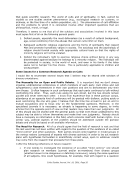
that guide scientific research. The world of cults and of spirituality, in fact, cannot be
studied as one studies another phenomenon (e.g., sociological research on customs, or
sickness, or the free time of a certain population, etc.). The phenomenon of cult affiliation
and the problems to which it is connected involve other important questions that are
philosophical, moral, or legal.
Therefore, it seems to me that all of the scholars and associations involved in this issue
must agree first of all on the following general goals:
1. Defend people, especially the most defenseless (as a result of cultural background,
age, social conditions) from the abuses that certain cults inflict on them.
2. Safeguard authentic religious experience and the forms of spirituality that respect
Man and promote humanistic values in society. The sociology and the psychology of
religion should furnish society with appropriate cultural tools so that the rights of
minority religions will not be violated.
3. Defend the individual's right to exercise religious choice without being in any way
discriminated against because he belongs to a minority religion. The individual will
be protected in society, in the world of work, and even in his family if the latter
seeks not to hamper his free choice. This is particularly applicable to children and
young people.
Some Issues for a Common Research Agenda on Cults
I would like to enumerate several issues that I believe may be shared with scholars of
diverse orientations.
The Necessity for an Open and Public Debate. It is important that we don't always
organize unidirectional conferences in which members of each party (cult critics and cult
sympathizers) close themselves in their own positions and aim to demonstrate only their
own theses. It often happens in such conferences that each party continues to talk without
confronting the other. Thus, each runs along his own street, but the two streets remain
parallel and never meet each other. I know from experience that in these partisan camps,
attendance at an opposite kind of conference will be greeted with disfavor, putting aside or
even sanctioning the one who goes. I believe that the time has arrived to put an end to
mutual accusations and to focus only on the fundamental questions. Moreover, in the
specialized journals it is necessary, as already is happening to some degree, to invite
articles from the opposite point of view so that readers may make their own judgments. All
of this should also be shared with the general public so that even those unattached to this
subject may be able to inform themselves and make their own judgments. Nobody should
have a monopoly on information in this field, which concerns itself with human rights. In a
similar way, political aspects of the problem should be addressed outside the partisan
debate and should be based on all available information.
The Need for Research. All of us should agree that the field of research is vast and that
the last word has not been written with regard to the question of the existence of so-called
―mind control‖ and other questions. Both parties should come together in mixed groups in
the various nations (composed of experts with diverse opinions) in order to lay out research
plans with hypotheses formulated in scientifically correct ways, open to whatever results
may come from the research that proceeds from these plans.
I offer the following reflections on future research:
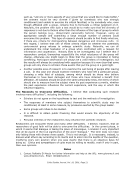
If one wishes to investigate the existence of so-called ―mind control,‖ one should
plan research on members (current and/or ex-members) from diverse groups
(whether known to be dangerous or definitely innocuous), asking the same questions
of all subjects. One could hypothesize, for example, that with regard to a question
that guide scientific research. The world of cults and of spirituality, in fact, cannot be
studied as one studies another phenomenon (e.g., sociological research on customs, or
sickness, or the free time of a certain population, etc.). The phenomenon of cult affiliation
and the problems to which it is connected involve other important questions that are
philosophical, moral, or legal.
Therefore, it seems to me that all of the scholars and associations involved in this issue
must agree first of all on the following general goals:
1. Defend people, especially the most defenseless (as a result of cultural background,
age, social conditions) from the abuses that certain cults inflict on them.
2. Safeguard authentic religious experience and the forms of spirituality that respect
Man and promote humanistic values in society. The sociology and the psychology of
religion should furnish society with appropriate cultural tools so that the rights of
minority religions will not be violated.
3. Defend the individual's right to exercise religious choice without being in any way
discriminated against because he belongs to a minority religion. The individual will
be protected in society, in the world of work, and even in his family if the latter
seeks not to hamper his free choice. This is particularly applicable to children and
young people.
Some Issues for a Common Research Agenda on Cults
I would like to enumerate several issues that I believe may be shared with scholars of
diverse orientations.
The Necessity for an Open and Public Debate. It is important that we don't always
organize unidirectional conferences in which members of each party (cult critics and cult
sympathizers) close themselves in their own positions and aim to demonstrate only their
own theses. It often happens in such conferences that each party continues to talk without
confronting the other. Thus, each runs along his own street, but the two streets remain
parallel and never meet each other. I know from experience that in these partisan camps,
attendance at an opposite kind of conference will be greeted with disfavor, putting aside or
even sanctioning the one who goes. I believe that the time has arrived to put an end to
mutual accusations and to focus only on the fundamental questions. Moreover, in the
specialized journals it is necessary, as already is happening to some degree, to invite
articles from the opposite point of view so that readers may make their own judgments. All
of this should also be shared with the general public so that even those unattached to this
subject may be able to inform themselves and make their own judgments. Nobody should
have a monopoly on information in this field, which concerns itself with human rights. In a
similar way, political aspects of the problem should be addressed outside the partisan
debate and should be based on all available information.
The Need for Research. All of us should agree that the field of research is vast and that
the last word has not been written with regard to the question of the existence of so-called
―mind control‖ and other questions. Both parties should come together in mixed groups in
the various nations (composed of experts with diverse opinions) in order to lay out research
plans with hypotheses formulated in scientifically correct ways, open to whatever results
may come from the research that proceeds from these plans.
I offer the following reflections on future research:
If one wishes to investigate the existence of so-called ―mind control,‖ one should
plan research on members (current and/or ex-members) from diverse groups
(whether known to be dangerous or definitely innocuous), asking the same questions
of all subjects. One could hypothesize, for example, that with regard to a question