Cultic Studies Journal, Vol. 18, 2001, Page 127
sources of cognitive debilitation (in addition to fear) are commonly present. Clearly, this is
a topic that requires more research attention.
Interactive Dynamics During Consolidation
Fear, arousal, and dissonance. Returning to the discussion of interactive dynamics, a
common feature of intense indoctrination is that indoctrinees are enticed into making a
variety of costly behavioral decisions regarding the group. For example, it is common to
have indoctrinees make public statements that espouse group doctrine. Such statements
are also often self-critical. Thus, for example, American prisoners of war in Korea were
pressured to make written and then newsreel confessions of supposed misdeeds (Schein et
al., 1961). These procedures, of course, correspond closely to the well-known cognitive
dissonance induced-compliance procedure. In the same vein, dissonance mechanisms fit
nicely with the frequent use of escalated commitment (e.g., Schwartz, 1970) as an
indoctrination feature. Even more relevant to this discussion of interactive dynamics,
however, are data indicating that dissonance mechanisms may be enhanced by the fear,
arousal, and confusion that characterize indoctrination.
Dissonance theory assumes that people change their attitudes after expressing propaganda
because they feel unpleasant arousal. In accord with this notion, several researchers have
shown that irrelevant sources of arousal can heighten dissonance reactions. Thane Pittman
(1975), for example, threatened some students with electric shock just before having them
write an essay favoring raising tuition. In one condition, he had a confederate state that this
essay writing was causing him to feel aroused. Presumably, individuals hearing this
statement were more likely to interpret any fear-induced arousal they experienced as
feelings of dissonance. As predicted, these frightened participants were more persuaded by
their essay than were nonfrightened participants. Similarly, Cooper, Zanna, and Taves
(1978) found that dissonance effects were enhanced by amphetamine-produced arousal,
whereas Fazio and Martin (reported in Fazio &Cooper, 1983) found similar effects using
exercise-induced arousal. In short, there is good reason to assume that the fear and arousal
generated by intense indoctrination will often be rechanneled and experienced as
dissonance.
Attentional capacity and perception of choice. One argument against applying
dissonance and self-perception views to indoctrination is that the mechanisms described by
these theories are presumably unlikely to affect attitudes if individuals feel they had little
choice about their initial compliance. For instance, a person could make sense out of
donating all of his or her worldly possessions to the People‘s Temple by deciding that act
was coerced by such forces as peer pressure, fear of humiliation, or threats to family
members. However, in many settings in which coercion exists, that coercion may be
ignored, deemphasized, or forgotten by the indoctrinee, particularly if his or her attentional
capacity is impaired and coercive pressures are psychological rather than physical or
material.
As most cognitive dissonance researchers are well aware, a variety of subtle social and
situational forces can reliably elicit dissonant behavior from individuals while generally
preserving the perception of free choice among most respondents. In these settings, it
takes a particularly perceptive and attentive individual to detect the subtle forces that
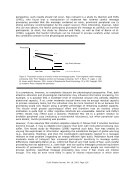
provoked the behavior. In accord with this view, Stalder and Baron (1998) reported that
individuals who had sophisticated and complex attributional styles did not show standard
dissonance-produced attitude change in an induced compliance (essay writing) study (see
Figure 4). One extrapolation from the Stalder and Baron results is that when attentional
capacity is impaired, the ability to avoid or reduce dissonance by making an (accurate)
external attribution for one‘s actions will be compromised. If so, when capacity is reduced, it
is likely that even moderately coercive pressures may be overlooked, leaving the individual
sources of cognitive debilitation (in addition to fear) are commonly present. Clearly, this is
a topic that requires more research attention.
Interactive Dynamics During Consolidation
Fear, arousal, and dissonance. Returning to the discussion of interactive dynamics, a
common feature of intense indoctrination is that indoctrinees are enticed into making a
variety of costly behavioral decisions regarding the group. For example, it is common to
have indoctrinees make public statements that espouse group doctrine. Such statements
are also often self-critical. Thus, for example, American prisoners of war in Korea were
pressured to make written and then newsreel confessions of supposed misdeeds (Schein et
al., 1961). These procedures, of course, correspond closely to the well-known cognitive
dissonance induced-compliance procedure. In the same vein, dissonance mechanisms fit
nicely with the frequent use of escalated commitment (e.g., Schwartz, 1970) as an
indoctrination feature. Even more relevant to this discussion of interactive dynamics,
however, are data indicating that dissonance mechanisms may be enhanced by the fear,
arousal, and confusion that characterize indoctrination.
Dissonance theory assumes that people change their attitudes after expressing propaganda
because they feel unpleasant arousal. In accord with this notion, several researchers have
shown that irrelevant sources of arousal can heighten dissonance reactions. Thane Pittman
(1975), for example, threatened some students with electric shock just before having them
write an essay favoring raising tuition. In one condition, he had a confederate state that this
essay writing was causing him to feel aroused. Presumably, individuals hearing this
statement were more likely to interpret any fear-induced arousal they experienced as
feelings of dissonance. As predicted, these frightened participants were more persuaded by
their essay than were nonfrightened participants. Similarly, Cooper, Zanna, and Taves
(1978) found that dissonance effects were enhanced by amphetamine-produced arousal,
whereas Fazio and Martin (reported in Fazio &Cooper, 1983) found similar effects using
exercise-induced arousal. In short, there is good reason to assume that the fear and arousal
generated by intense indoctrination will often be rechanneled and experienced as
dissonance.
Attentional capacity and perception of choice. One argument against applying
dissonance and self-perception views to indoctrination is that the mechanisms described by
these theories are presumably unlikely to affect attitudes if individuals feel they had little
choice about their initial compliance. For instance, a person could make sense out of
donating all of his or her worldly possessions to the People‘s Temple by deciding that act
was coerced by such forces as peer pressure, fear of humiliation, or threats to family
members. However, in many settings in which coercion exists, that coercion may be
ignored, deemphasized, or forgotten by the indoctrinee, particularly if his or her attentional
capacity is impaired and coercive pressures are psychological rather than physical or
material.
As most cognitive dissonance researchers are well aware, a variety of subtle social and
situational forces can reliably elicit dissonant behavior from individuals while generally
preserving the perception of free choice among most respondents. In these settings, it
takes a particularly perceptive and attentive individual to detect the subtle forces that
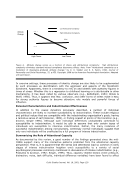
provoked the behavior. In accord with this view, Stalder and Baron (1998) reported that
individuals who had sophisticated and complex attributional styles did not show standard
dissonance-produced attitude change in an induced compliance (essay writing) study (see
Figure 4). One extrapolation from the Stalder and Baron results is that when attentional
capacity is impaired, the ability to avoid or reduce dissonance by making an (accurate)
external attribution for one‘s actions will be compromised. If so, when capacity is reduced, it
is likely that even moderately coercive pressures may be overlooked, leaving the individual