Cultic Studies Journal, Vol. 18, 2001, Page 123
Low
Importance
High
Importance
Moderately
Difficult
Judgment
Easy Judgment
55%
35%
33%
16%
Percent
conformity
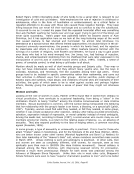
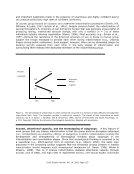
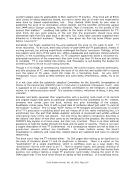
and important judgments made in the presence of unanimous and highly confident peers)
can produce particularly high rates of confident conformity.
Of course, group factors on occasion can undermine indoctrination procedures (Schein, Hill,
Williams, &Lubin, 1957 Schein et al., 1961). Despite common belief, the indoctrination of
several thousand U.S. prisoners of war during the Korean War was generally unsuccessful at
producing lasting, internalized attitude change, with only a handful (n =21) of these
individuals actually refusing repatriation (Myers, 1998). Most accounts (e.g., Schein et al.,
1957) attribute the resistance of the American prisoners of war in Korea to mutual group
support the troops managed to provide each other during indoctrination (e.g., crossing
fingers during public confession). Such support, however, often can be eliminated simply by
keeping recruits separate from each other in the early stages of indoctrination and
surrounding them instead with dedicated members of the indoctrinating group.
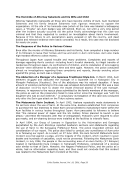
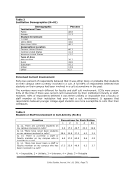
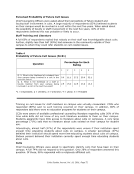
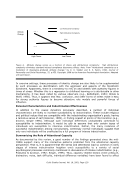
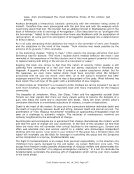
Figure 1. The percentage of critical trials in which conformity occurred as a function of task difficulty and judgment
importance. Note. From ―The forgotten variable in conformity research: The impact of task importance on social
influence,‖ by R. S. Baron, J. Vandello, and B. Brunsman, 1996, Journal of Personality and Social Psychology, 71,
p. 919. Copyright 1996 by the American Psychological Association. Adapted with permission.
Arousal, attentional capacity, and the stereotyping of outgroups. A key feature of
most groups that use intense indoctrination is that the group doctrine derogates outgroups
(i.e., nonmembers) as unworthy, inferior, or dangerous. In short, indoctrination involves the
development and strengthening of stereotypical thinking about outgroups in the
internalization and consolidation stages. Given that stereotypical thinking is assumed to be
a superficial (i.e., effort-saving) form of cognition (e.g., Allport, 1954), the same logic
discussed in the preceding section suggests that the emotional arousal present in intense
indoctrination should heighten such stereotypical tendencies (cf. Baron, 1986 Wilder &
Shapiro, 1988). That is, if intense indoctrination depletes attentional capacity through
arousal, lack of sleep, and high rates of regimented activity, one should expect individuals
Low
Importance
High
Importance
Moderately
Difficult
Judgment
Easy Judgment
55%
35%
33%
16%
Percent
conformity
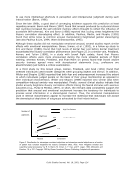
and important judgments made in the presence of unanimous and highly confident peers)
can produce particularly high rates of confident conformity.
Of course, group factors on occasion can undermine indoctrination procedures (Schein, Hill,
Williams, &Lubin, 1957 Schein et al., 1961). Despite common belief, the indoctrination of
several thousand U.S. prisoners of war during the Korean War was generally unsuccessful at
producing lasting, internalized attitude change, with only a handful (n =21) of these
individuals actually refusing repatriation (Myers, 1998). Most accounts (e.g., Schein et al.,
1957) attribute the resistance of the American prisoners of war in Korea to mutual group
support the troops managed to provide each other during indoctrination (e.g., crossing
fingers during public confession). Such support, however, often can be eliminated simply by
keeping recruits separate from each other in the early stages of indoctrination and
surrounding them instead with dedicated members of the indoctrinating group.
Figure 1. The percentage of critical trials in which conformity occurred as a function of task difficulty and judgment
importance. Note. From ―The forgotten variable in conformity research: The impact of task importance on social
influence,‖ by R. S. Baron, J. Vandello, and B. Brunsman, 1996, Journal of Personality and Social Psychology, 71,
p. 919. Copyright 1996 by the American Psychological Association. Adapted with permission.
Arousal, attentional capacity, and the stereotyping of outgroups. A key feature of
most groups that use intense indoctrination is that the group doctrine derogates outgroups
(i.e., nonmembers) as unworthy, inferior, or dangerous. In short, indoctrination involves the
development and strengthening of stereotypical thinking about outgroups in the
internalization and consolidation stages. Given that stereotypical thinking is assumed to be
a superficial (i.e., effort-saving) form of cognition (e.g., Allport, 1954), the same logic
discussed in the preceding section suggests that the emotional arousal present in intense
indoctrination should heighten such stereotypical tendencies (cf. Baron, 1986 Wilder &
Shapiro, 1988). That is, if intense indoctrination depletes attentional capacity through
arousal, lack of sleep, and high rates of regimented activity, one should expect individuals