Cultic Studies Journal, Vol. 18, 2001, Page 117
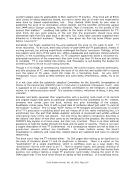
In other cases, compliance occurs in response to social pressure. Although curiosity and
politeness account for some acts of compliance, other instances are induced by well-known
compliance techniques, such as reciprocal concessions procedures, appeals to authority, and
group pressure (Cialdini, 1993). Finally, in coercive settings, individuals often comply in an
attempt to reduce threatening or aversive aspects of the situation.
Stage 3. In the internalization stage, the recruit starts to consider aspects of the group
belief system. This can be triggered by various mechanisms including curiosity, persistent
social pressure, and the need to justify prior compliance. This stage, analogous to Schein et
al.‘s (1961) changing stage, can be completed within a week in some cases. In this stage,
standard theories of social influence and persuasion (e.g., Cialdini, 1993 Petty &Cacioppo,
1986) became applicable in that the individual reevaluates old beliefs and considers new
ones.
Stage 4. In the consolidation stage, the recruit solidifies his or her newly acquired
allegiance to the group. This may entail making various costly behavioral commitments that
are hard to undo (e.g., donating one‘s personal possessions to the group or recruiting new
members), isolating oneself from nongroup members, or selective exposure to information.
This final stage of indoctrination is marked by the recruit‘s total acceptance of group
doctrine and policy with a minimum of close examination. In this stage, the primary reaction
of the recruit to negative information about the group is denial and rationalization. Thus,
events and information are selectively interpreted and attended to. As this implies, cognitive
dissonance mechanisms appear to be highly relevant in this stage. Individuals at this stage
are dominated by what Chaiken, Liberman, and Eagly (1989) referred to as defense
motivation, when they process attitude-relevant information (i.e., the desire to hold or
defend a specific attitudinal position). For this reason, the indoctrinee who reaches the
consolidation stage will be highly resistant to persuasion from those outside the group.
Comments. The four stages outlined here obviously draw heavily from prior analyses. For
example, Sargant (1957) discussed the consolidation notion as early as 1957. Similarly,
Schein et al.‘s (1961) three stages of unfreezing, changing, and refreezing are very similar
to the four-stage framework. The major difference between the two is that Schein et al.‘s
(1961) unfreezing stage is subdivided by the four-stage framework into the softening-up
and compliance stages to more explicitly reflect the activities and processes present in the
early phases of indoctrination. An important caveat in this discussion of stages is that they
are intended to serve as guidelines rather than inflexible and mutually exclusive partitions.
Stages will vary in duration from case to case, and each prior stage is thought to blend into
the next. Moreover, some rare individuals remain with their groups while never making the
transition into the consolidation stage or, alternatively, they may slip in and out of this
stage. This may lead such individuals to experience conflict and doubt akin to ―crises of
faith‖ seen in various religions.
Procedural Features of Intense Indoctrination
Standard reference works regarding indoctrination (e.g., Schein et al., 1961 Singer, 1995)
indicate that a series of procedural features are commonly observed. One subset of these
procedures appears to contribute directly to the softening-up stage described previously.
These include social disruption (i.e., separation from friends and family), physical stress
(especially sleep loss and altered diet), fear or guilt manipulations, regimented daily activity
schedules, alteration in appearance (clothing, posture, hairstyle), and carefully orchestrated
social pressure. Additional procedural features include public self-criticism or confession,
repetitive mental activity (e.g., meditation, memorizing doctrine), the presence of strong
authority figures, a ―messianic‖ group purpose (from which group members can derive a
sense of importance), stereotypical depiction of nonmembers as evil or misguided,
escalation of commitment in which the recruit is asked to engage in increasingly costly
In other cases, compliance occurs in response to social pressure. Although curiosity and
politeness account for some acts of compliance, other instances are induced by well-known
compliance techniques, such as reciprocal concessions procedures, appeals to authority, and
group pressure (Cialdini, 1993). Finally, in coercive settings, individuals often comply in an
attempt to reduce threatening or aversive aspects of the situation.
Stage 3. In the internalization stage, the recruit starts to consider aspects of the group
belief system. This can be triggered by various mechanisms including curiosity, persistent
social pressure, and the need to justify prior compliance. This stage, analogous to Schein et
al.‘s (1961) changing stage, can be completed within a week in some cases. In this stage,
standard theories of social influence and persuasion (e.g., Cialdini, 1993 Petty &Cacioppo,
1986) became applicable in that the individual reevaluates old beliefs and considers new
ones.
Stage 4. In the consolidation stage, the recruit solidifies his or her newly acquired
allegiance to the group. This may entail making various costly behavioral commitments that
are hard to undo (e.g., donating one‘s personal possessions to the group or recruiting new
members), isolating oneself from nongroup members, or selective exposure to information.
This final stage of indoctrination is marked by the recruit‘s total acceptance of group
doctrine and policy with a minimum of close examination. In this stage, the primary reaction
of the recruit to negative information about the group is denial and rationalization. Thus,
events and information are selectively interpreted and attended to. As this implies, cognitive
dissonance mechanisms appear to be highly relevant in this stage. Individuals at this stage
are dominated by what Chaiken, Liberman, and Eagly (1989) referred to as defense
motivation, when they process attitude-relevant information (i.e., the desire to hold or
defend a specific attitudinal position). For this reason, the indoctrinee who reaches the
consolidation stage will be highly resistant to persuasion from those outside the group.
Comments. The four stages outlined here obviously draw heavily from prior analyses. For
example, Sargant (1957) discussed the consolidation notion as early as 1957. Similarly,
Schein et al.‘s (1961) three stages of unfreezing, changing, and refreezing are very similar
to the four-stage framework. The major difference between the two is that Schein et al.‘s
(1961) unfreezing stage is subdivided by the four-stage framework into the softening-up
and compliance stages to more explicitly reflect the activities and processes present in the
early phases of indoctrination. An important caveat in this discussion of stages is that they
are intended to serve as guidelines rather than inflexible and mutually exclusive partitions.
Stages will vary in duration from case to case, and each prior stage is thought to blend into
the next. Moreover, some rare individuals remain with their groups while never making the
transition into the consolidation stage or, alternatively, they may slip in and out of this
stage. This may lead such individuals to experience conflict and doubt akin to ―crises of
faith‖ seen in various religions.
Procedural Features of Intense Indoctrination
Standard reference works regarding indoctrination (e.g., Schein et al., 1961 Singer, 1995)
indicate that a series of procedural features are commonly observed. One subset of these
procedures appears to contribute directly to the softening-up stage described previously.
These include social disruption (i.e., separation from friends and family), physical stress
(especially sleep loss and altered diet), fear or guilt manipulations, regimented daily activity
schedules, alteration in appearance (clothing, posture, hairstyle), and carefully orchestrated
social pressure. Additional procedural features include public self-criticism or confession,
repetitive mental activity (e.g., meditation, memorizing doctrine), the presence of strong
authority figures, a ―messianic‖ group purpose (from which group members can derive a
sense of importance), stereotypical depiction of nonmembers as evil or misguided,
escalation of commitment in which the recruit is asked to engage in increasingly costly