Cultic Studies Journal, Vol. 18, 2001, Page 113
Arousal, Capacity, and Intense Indoctrination
Robert S. Baron
Department of Psychology
The University of Iowa
Abstract
This article considers the process of intense indoctrination, specifying
procedural conditions, internal states, mechanisms of social influence, and
key output behaviors associated with extremely manipulative and coercive
programs of attitude and value change. Most descriptions of intense
indoctrination point out that emotional arousal and stress are integral
features of such programs of systematic persuasion. This article focuses on
the hypothesis that this arousal, coupled with other features of the
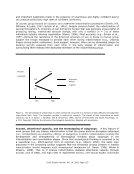
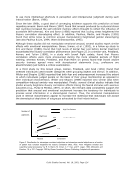
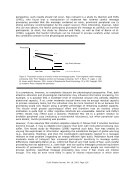
indoctrination process, compromise the attentional capacity of indoctrinees
and that this impairment of attentional capacity increases the impact of
several social influence mechanisms in such settings. The research evidence
relevant to this hypothesis is reviewed.
Changes came over me subtly … in time although I was not aware of it, they had
turned me around completely. I had thought I was humoring them by parroting
their clichés and buzz words without personally believing in them. Then … a sort of
numbed shock set in. To maintain my own sanity and equilibrium while living and
functioning day by day in this new environment, I had learned to act by rote …
suspending disbelief. (Hearst, 1982, p.185)
Background
In the last 20 years, the public has grown increasingly aware that certain religious and
philosophical groups have developed indoctrination procedures that have extraordinary
impact. These groups have persuaded young adults to cut off all contact with family to
accept vows of poverty to devote extremely long hours to prayer, meditation, fundraising
and recruitment and to forsake promising careers and educational opportunities (e.g.,
Galanter, 1989 Hassan, 1988 Singer, 1995). The most dramatic examples of the power of
such indoctrination undoubtedly are cases of group suicide that have punctuated the news
from time to time. Thus, one can point to the tragedy at the Jonestown settlement of the
People‘s Temple, which claimed 914 lives in 1978 the suicidal resistance at the Branch
Davidian compound in Waco, Texas, in 1992 and group suicides among members of the
Order of the Solar Temple and Heaven‘s Gate sects in the 1990s as indications of the
persuasive power of group indoctrination. The dramatic transformation of Patty Hearst after
being captured by the Symbionese Liberation Army (SLA) in February 1974 represents yet
another vivid example of effective indoctrination.
In this article I review classic instances of intense indoctrination, outlining procedural
events, intervening states, social influence processes, and output variables. The analysis
focuses particularly on the debilitating impact that indoctrination procedures have on
attentional capacity and how this, in turn, affects several basic social psychological and
cognitive processes integral to persuasion and behavior change. This approach complements
and updates early conceptualizations of intense indoctrination and provides the framework
for a systematic and in-depth discussion of research findings in the areas of attitude
change, group process, stereotyping, and human cognition. Moreover, in this discussion I
expand on earlier treatments of this process (e.g., Hassan, 1988 Pratkanis &Aronson,
1992 Singer, 1995) by carefully examining the extent to which the experimental evidence
Arousal, Capacity, and Intense Indoctrination
Robert S. Baron
Department of Psychology
The University of Iowa
Abstract
This article considers the process of intense indoctrination, specifying
procedural conditions, internal states, mechanisms of social influence, and
key output behaviors associated with extremely manipulative and coercive
programs of attitude and value change. Most descriptions of intense
indoctrination point out that emotional arousal and stress are integral
features of such programs of systematic persuasion. This article focuses on
the hypothesis that this arousal, coupled with other features of the
indoctrination process, compromise the attentional capacity of indoctrinees
and that this impairment of attentional capacity increases the impact of
several social influence mechanisms in such settings. The research evidence
relevant to this hypothesis is reviewed.
Changes came over me subtly … in time although I was not aware of it, they had
turned me around completely. I had thought I was humoring them by parroting
their clichés and buzz words without personally believing in them. Then … a sort of
numbed shock set in. To maintain my own sanity and equilibrium while living and
functioning day by day in this new environment, I had learned to act by rote …
suspending disbelief. (Hearst, 1982, p.185)
Background
In the last 20 years, the public has grown increasingly aware that certain religious and
philosophical groups have developed indoctrination procedures that have extraordinary
impact. These groups have persuaded young adults to cut off all contact with family to
accept vows of poverty to devote extremely long hours to prayer, meditation, fundraising
and recruitment and to forsake promising careers and educational opportunities (e.g.,
Galanter, 1989 Hassan, 1988 Singer, 1995). The most dramatic examples of the power of
such indoctrination undoubtedly are cases of group suicide that have punctuated the news
from time to time. Thus, one can point to the tragedy at the Jonestown settlement of the
People‘s Temple, which claimed 914 lives in 1978 the suicidal resistance at the Branch
Davidian compound in Waco, Texas, in 1992 and group suicides among members of the
Order of the Solar Temple and Heaven‘s Gate sects in the 1990s as indications of the
persuasive power of group indoctrination. The dramatic transformation of Patty Hearst after
being captured by the Symbionese Liberation Army (SLA) in February 1974 represents yet
another vivid example of effective indoctrination.
In this article I review classic instances of intense indoctrination, outlining procedural
events, intervening states, social influence processes, and output variables. The analysis
focuses particularly on the debilitating impact that indoctrination procedures have on
attentional capacity and how this, in turn, affects several basic social psychological and
cognitive processes integral to persuasion and behavior change. This approach complements
and updates early conceptualizations of intense indoctrination and provides the framework
for a systematic and in-depth discussion of research findings in the areas of attitude
change, group process, stereotyping, and human cognition. Moreover, in this discussion I
expand on earlier treatments of this process (e.g., Hassan, 1988 Pratkanis &Aronson,
1992 Singer, 1995) by carefully examining the extent to which the experimental evidence