Cultic Studies Journal, Vol. 18, 2001, Page 105
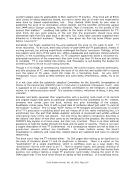
these reforms were fairly mild, with the most controversial from the Baha‘i perspective
being the abolition of prepublication review and the imposition of term limits on National
Assembly members.47 In response NSA conducted an investigation in which twelve people
associated with the magazine were questioned one by one. This so threatened the editors
and staff that they wrote frantic appeal letters to the UHJ. NSA member Firuz Kazemzadeh
denounced both A Modest Proposal and the dialogue editors on the floor of the 1988
National Convention and read aloud from these letters as proof of their disrespect for the
Institutions. This forced the closure of the magazine, since the Baha‘i community, with its
history of shunning internal enemies, would not support anything run by a group openly
named as dissidents by the NSA. Four of the editors were sanctioned, an unprecedented
move since none of them had broken any well-established Baha‘i law.48
By this time, those associated with ―the LA group‖ were clearly perceived by the Baha‘i
administration as dangerous subversives, with a political agenda. In a letter to one of the
editors the UHJ commented:
This incident was merely the latest episode in a history of problems going
back some twelve years, originating with the study groups in Los Angeles and
its promotion of the wide circulation of the records of its discussions,
continuing through some of the publications…and being developed through
certain of the articles appearing in ―dialogue.‖
It is clear that many different individuals were involved over the years in the
study group and ―dialogue.‖ However, certain believers have been
prominently associated with all three and form a connecting link in the minds
of many of the friends.
In the Baha‘i community methods and mechanisms are provided within the
Administrative Order to elicit and make the best use of the ideas and hopes of
individual believers in ways that enrich the pattern of Baha‘i life without
disrupting the community. There may be many occasions on which individual
believers are permitted or even encouraged by their Assembly to promote
their ideas, but independent attempts by individual Baha‘is to canvass
support for their views among their fellow believers are destructive of the
unity of the Cause. To attempt, in opposition to the institutions of the Faith,
to form constituencies for certain proposals and programmes may not
necessarily lead to Covenant-breaking, but it is a societal factor for disruption
against which the Covenant is designed to protect the Faith. It is the process
by which parties are formed and by which a religion is riven into contending
sects.
...we have highlighted two aspects which lie at the root of the problem: the
un-Baha‘i marshalling of a group working to bring pressure on the institutions
of the Cause, and the intemperate criticism employed.49
It is difficult to locate, in either the LA study class notes or dialogue exactly where or how
the ―criticism‖ becomes ―intemperate‖ or even how they put ―pressure‖ on the Institutions.
There was no campaign in the ordinary political sense, although the dialogue editors were
falsely charged with distributing A Modest Proposal to the delegates at the National
Convention.50 They were also accused, because the article was presented as a group effort,
with seven co-authors, of ―circulating a petition‖.51 The fact that a magazine, which never
published a single article that did not pass through the review system, and an unpublished
article concerning reform could arouse such a reaction from Baha‘i authorities reveals a
deep fear over the loss of control of the membership.
these reforms were fairly mild, with the most controversial from the Baha‘i perspective
being the abolition of prepublication review and the imposition of term limits on National
Assembly members.47 In response NSA conducted an investigation in which twelve people
associated with the magazine were questioned one by one. This so threatened the editors
and staff that they wrote frantic appeal letters to the UHJ. NSA member Firuz Kazemzadeh
denounced both A Modest Proposal and the dialogue editors on the floor of the 1988
National Convention and read aloud from these letters as proof of their disrespect for the
Institutions. This forced the closure of the magazine, since the Baha‘i community, with its
history of shunning internal enemies, would not support anything run by a group openly
named as dissidents by the NSA. Four of the editors were sanctioned, an unprecedented
move since none of them had broken any well-established Baha‘i law.48
By this time, those associated with ―the LA group‖ were clearly perceived by the Baha‘i
administration as dangerous subversives, with a political agenda. In a letter to one of the
editors the UHJ commented:
This incident was merely the latest episode in a history of problems going
back some twelve years, originating with the study groups in Los Angeles and
its promotion of the wide circulation of the records of its discussions,
continuing through some of the publications…and being developed through
certain of the articles appearing in ―dialogue.‖
It is clear that many different individuals were involved over the years in the
study group and ―dialogue.‖ However, certain believers have been
prominently associated with all three and form a connecting link in the minds
of many of the friends.
In the Baha‘i community methods and mechanisms are provided within the
Administrative Order to elicit and make the best use of the ideas and hopes of
individual believers in ways that enrich the pattern of Baha‘i life without
disrupting the community. There may be many occasions on which individual
believers are permitted or even encouraged by their Assembly to promote
their ideas, but independent attempts by individual Baha‘is to canvass
support for their views among their fellow believers are destructive of the
unity of the Cause. To attempt, in opposition to the institutions of the Faith,
to form constituencies for certain proposals and programmes may not
necessarily lead to Covenant-breaking, but it is a societal factor for disruption
against which the Covenant is designed to protect the Faith. It is the process
by which parties are formed and by which a religion is riven into contending
sects.
...we have highlighted two aspects which lie at the root of the problem: the
un-Baha‘i marshalling of a group working to bring pressure on the institutions
of the Cause, and the intemperate criticism employed.49
It is difficult to locate, in either the LA study class notes or dialogue exactly where or how
the ―criticism‖ becomes ―intemperate‖ or even how they put ―pressure‖ on the Institutions.
There was no campaign in the ordinary political sense, although the dialogue editors were
falsely charged with distributing A Modest Proposal to the delegates at the National
Convention.50 They were also accused, because the article was presented as a group effort,
with seven co-authors, of ―circulating a petition‖.51 The fact that a magazine, which never
published a single article that did not pass through the review system, and an unpublished
article concerning reform could arouse such a reaction from Baha‘i authorities reveals a
deep fear over the loss of control of the membership.