Cultic Studies Journal, Vol. 18, 2001, Page 129
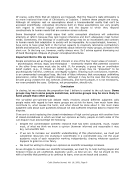
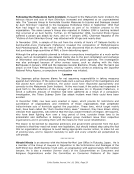
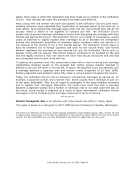
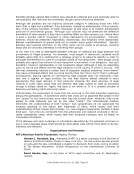
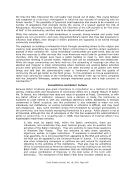
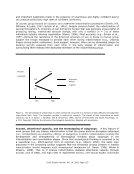
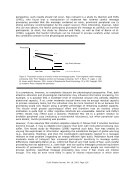
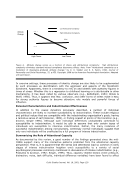
Figure 4. Attitude change scores as a function of choice and attributional complexity: High attributional
complexity eliminates standard induced compliance dissonance effects. Note. From ―Attributional complexity as a
moderator of dissonance-produced attitude change,‖ by D. R. Stalder and R. S. Baron, 1998, Journal of
Personality and Social Psychology, 75, p.453. Copyright 1998 by the American Psychological Association. Adapted
with permission.
In coercive settings, these processes of identity change are also likely to be supplemented
by such processes as identification with the aggressor and aspects of the Stockholm
Syndrome. Apparently, there is a tendency to rely on and identify with authority figures in
times of stress. Whether this is a regression to childhood learning or is attributable to other
mechanisms, it has been noted by various observers (e.g., Bettelheim, 1953 Hinkle &
Wolff, 1956). Thus, it appears that fear, confusion, and other forms of stress make it easy
for strong authority figures to become attractive role models and powerful forces of
influence.
Personal Characteristics and Indoctrination Effectiveness
In addition to the causal dynamics previously described, a number of individual
characteristics are likely to increase susceptibility to indoctrination. These include religious
and political values that are compatible with the indoctrinating organization‘s goals, having
a tentative sense of self (Galanter, 1989), or finding oneself at points of life transition (e.g.,
divorce Singer 1995). Although such individual differences undoubtedly contribute to
susceptibility to indoctrination, it would be glib to assume that only certain types of
individuals are susceptible to intensive indoctrination. Rather, the many instances of
successful indoctrination among nonvoluntary, seemingly normal individuals suggest that
only rare individuals will be unaffected by a full program of intense indoctrination.
Summarizing the Role of Attentional Capacity
As documented by this review, a good number of the findings generated since the mid-
1980s support many of the interactive patterns predicted from the attentional capacity
perspective. That is, it is apparent that the stress and attentional load so common in early
stages of intense indoctrination heighten one‘s susceptibility to a variety of social
psychological processes commonly mentioned in discussions of intense indoctrination (e.g.,
Pratkanis &Aronson, 1992 Singer, 1995). Thus, capacity-related factors (time pressure,
distraction, noise, task difficulty, individual difference variables) have been found to affect
High Choice Low Choice
Low Attributional Complexity
High Attributional Complexity
Attitude
Change
24.1
22.4
21.2
19.4
Figure 4. Attitude change scores as a function of choice and attributional complexity: High attributional
complexity eliminates standard induced compliance dissonance effects. Note. From ―Attributional complexity as a
moderator of dissonance-produced attitude change,‖ by D. R. Stalder and R. S. Baron, 1998, Journal of
Personality and Social Psychology, 75, p.453. Copyright 1998 by the American Psychological Association. Adapted
with permission.
In coercive settings, these processes of identity change are also likely to be supplemented
by such processes as identification with the aggressor and aspects of the Stockholm
Syndrome. Apparently, there is a tendency to rely on and identify with authority figures in
times of stress. Whether this is a regression to childhood learning or is attributable to other
mechanisms, it has been noted by various observers (e.g., Bettelheim, 1953 Hinkle &
Wolff, 1956). Thus, it appears that fear, confusion, and other forms of stress make it easy
for strong authority figures to become attractive role models and powerful forces of
influence.
Personal Characteristics and Indoctrination Effectiveness
In addition to the causal dynamics previously described, a number of individual
characteristics are likely to increase susceptibility to indoctrination. These include religious
and political values that are compatible with the indoctrinating organization‘s goals, having
a tentative sense of self (Galanter, 1989), or finding oneself at points of life transition (e.g.,
divorce Singer 1995). Although such individual differences undoubtedly contribute to
susceptibility to indoctrination, it would be glib to assume that only certain types of
individuals are susceptible to intensive indoctrination. Rather, the many instances of
successful indoctrination among nonvoluntary, seemingly normal individuals suggest that
only rare individuals will be unaffected by a full program of intense indoctrination.
Summarizing the Role of Attentional Capacity
As documented by this review, a good number of the findings generated since the mid-
1980s support many of the interactive patterns predicted from the attentional capacity
perspective. That is, it is apparent that the stress and attentional load so common in early
stages of intense indoctrination heighten one‘s susceptibility to a variety of social
psychological processes commonly mentioned in discussions of intense indoctrination (e.g.,
Pratkanis &Aronson, 1992 Singer, 1995). Thus, capacity-related factors (time pressure,
distraction, noise, task difficulty, individual difference variables) have been found to affect
High Choice Low Choice
Low Attributional Complexity
High Attributional Complexity
Attitude
Change
24.1
22.4
21.2
19.4