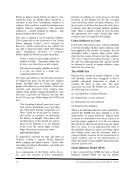
In 1983, I published an article entitled “Freedom
of the Mind As an International Human Rights
Issue.” I pointed out that while many
international conventions protect freedom of the
body from torture, precious few protect freedom
of the mind from undue exploitation or
manipulation. The First Amendment to the
United States Constitution protects freedom of
expression (“abridging the freedom of speech”).
But such protection is meaningless—indeed, it is
a cruel hoax—if a mind is not free to express its
own thoughts. The right to parrot another
person’s beliefs or to speak as his ventriloquist’s
dummy may not offend freedom of expression,
but it does offend freedom of mind, thought, and
conscience.
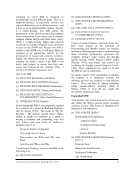
Significantly, the European Convention for the
Protection of Human Rights and Fundamental
Freedoms (1950) has one provision (Article 9)
that protects “freedom of thought, conscience
and religion,” and another provision (Article 10)
that protects freedom of expression. Partsch
(1981) pointed out that, under the European
Convention, “the right to freedom of opinion is a
private matter and is absolute with no
infringements allowed, whereas freedom of
expression, as a public matter of social
importance, has some limits by its very nature”
(p. 217).
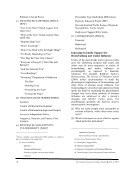
Those experts who seek to protect mental
autonomy by testifying in court about the
science of undue influence are fulfilling the
promises contained in the United Nations’
International Covenant on Civil and Political
Rights (ICCPR) (1966 1976). In particular, two
very important provisions are pertinent to the
admissibility of such testimony:
Article 18
2. No one shall be subject to coercion
which would impair his freedom to have
or to adopt a religion or belief of his
choice.
Article 19
1. Everyone shall have the right to hold
opinions without interference. (p. 178)
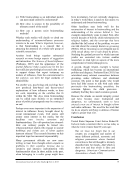
I agree with Lord Thomas Robert Dewar’s
marvelous observation that “Minds are like
parachutes: they only function when open.”
Along with memory, a person’s identity is
inextricably interwoven with a free mind and a
free conscience. Both are needed to answer the
fundamental existential question we must all
ask: “Who Am I?”
This thought has been expressed magnificently
by Oxford University professor Daniel N.
Robinson (1980), in one of his writings on
neuropsychology:
With Socrates, we witness the first
example in the entire history of recorded
thought of prolonged, patient, and
reasoned argument as a method of
arriving at “eternal” truths. The older
Orient, the Egyptians, the civilizations
of Minos and Mycenae all had highly
developed systems of thought. They
could boast of advanced technologies
and agricultural sciences. But none had
philosophy. Pharaoh told the masses the
law but never examined the meaning of
justice. Siddhartha Gautama, the
Buddha, urged India to join in ascetic
simplicity that it may know the good
life. But what is the end? What is good?
What is true? No argument is offered.
And even if the teachings could
somehow be established as facts, they
are not reasoned facts. With Socrates the
format changed. The opposition is given
a voice and the arguments are forced to
oblige an adversary. “I give you one
philosophy after another,” Socrates says
to Theatetus in the Phaedo, “in order
that you may come to know your own
mind.” Here is a statement of the
objective: not the happy life, not
immortality, not riches, not popular
regard, not practical success, but to
know one’s own mind. (p. 4)
The key to an open mind is doubt—the freedom
to agree or disagree with any idea or belief, even
one’s own, as one sees fit. Nearly seventy years
ago, Bergen Evans (1946) wisely observed that
“Freedom of speech and freedom of action are
meaningless without freedom to think. And there
is no freedom to think without doubt” (p. 275).
80 International Journal of Cultic Studies ■ Vol. 6, 2015
of the Mind As an International Human Rights
Issue.” I pointed out that while many
international conventions protect freedom of the
body from torture, precious few protect freedom
of the mind from undue exploitation or
manipulation. The First Amendment to the
United States Constitution protects freedom of
expression (“abridging the freedom of speech”).
But such protection is meaningless—indeed, it is
a cruel hoax—if a mind is not free to express its
own thoughts. The right to parrot another
person’s beliefs or to speak as his ventriloquist’s
dummy may not offend freedom of expression,
but it does offend freedom of mind, thought, and
conscience.
Significantly, the European Convention for the
Protection of Human Rights and Fundamental
Freedoms (1950) has one provision (Article 9)
that protects “freedom of thought, conscience
and religion,” and another provision (Article 10)
that protects freedom of expression. Partsch
(1981) pointed out that, under the European
Convention, “the right to freedom of opinion is a
private matter and is absolute with no
infringements allowed, whereas freedom of
expression, as a public matter of social
importance, has some limits by its very nature”
(p. 217).
Those experts who seek to protect mental
autonomy by testifying in court about the
science of undue influence are fulfilling the
promises contained in the United Nations’
International Covenant on Civil and Political
Rights (ICCPR) (1966 1976). In particular, two
very important provisions are pertinent to the
admissibility of such testimony:
Article 18
2. No one shall be subject to coercion
which would impair his freedom to have
or to adopt a religion or belief of his
choice.
Article 19
1. Everyone shall have the right to hold
opinions without interference. (p. 178)
I agree with Lord Thomas Robert Dewar’s
marvelous observation that “Minds are like
parachutes: they only function when open.”
Along with memory, a person’s identity is
inextricably interwoven with a free mind and a
free conscience. Both are needed to answer the
fundamental existential question we must all
ask: “Who Am I?”
This thought has been expressed magnificently
by Oxford University professor Daniel N.
Robinson (1980), in one of his writings on
neuropsychology:
With Socrates, we witness the first
example in the entire history of recorded
thought of prolonged, patient, and
reasoned argument as a method of
arriving at “eternal” truths. The older
Orient, the Egyptians, the civilizations
of Minos and Mycenae all had highly
developed systems of thought. They
could boast of advanced technologies
and agricultural sciences. But none had
philosophy. Pharaoh told the masses the
law but never examined the meaning of
justice. Siddhartha Gautama, the
Buddha, urged India to join in ascetic
simplicity that it may know the good
life. But what is the end? What is good?
What is true? No argument is offered.
And even if the teachings could
somehow be established as facts, they
are not reasoned facts. With Socrates the
format changed. The opposition is given
a voice and the arguments are forced to
oblige an adversary. “I give you one
philosophy after another,” Socrates says
to Theatetus in the Phaedo, “in order
that you may come to know your own
mind.” Here is a statement of the
objective: not the happy life, not
immortality, not riches, not popular
regard, not practical success, but to
know one’s own mind. (p. 4)
The key to an open mind is doubt—the freedom
to agree or disagree with any idea or belief, even
one’s own, as one sees fit. Nearly seventy years
ago, Bergen Evans (1946) wisely observed that
“Freedom of speech and freedom of action are
meaningless without freedom to think. And there
is no freedom to think without doubt” (p. 275).
80 International Journal of Cultic Studies ■ Vol. 6, 2015