actions and their escape from the religious
power structures.1 Authors also may have shared
narratives for various other reasons, such as
overcoming anguish and suffering, claiming
autonomy, or offering insights to other survivors
(such as the sexual stories that individuals told
sociologist Ken Plummer [1983, p. 34], and as
seems likely to be the case for Jallen Rix [2010],
who’s memoir was a self-help guide for
homosexual Christians [see also Andrews, Day
Sclater, Squire, &Tamoubou, 2004, p. 104
Smith &Watson, 2010, pp. 28, 219]).
Once disseminated through publishing
companies, memoirs vary from other narratives
because the authors convinced publishers to sell
their stories. The memoirs I analyzed were often
written with the aid of coauthors and others.
Cowriters, editors, and others assisted in the
production of these memoirs because of authors’
literacy levels and personal writing experience,
and the need to ensure marketability. To market
stories, some authors sensationalize their
memoirs in various ways (see Plummer, 1983,
p. 57). That said, authors who claim to love their
parents are less likely to embellish parental
abuses because doing so could further damage
familial relationships.
Similarly, the subjectivity of memories
influences the creation of memoirs. Despite
popular beliefs that human minds access
memories on demand (as though they contain an
all-seeing, panopticon scanner), each narration
can recreate memories (Bruner, 1995, p. 162).
Therefore, narratives are not simply a “factual”
account (Roberts 2002, p. 57) rather they are
“an account of a person’s life as seen by them
[sic] at that moment” (Plummer, 1983, p. 57).
Memories provide incredible detail of
relationships and emotions. Some authors’
understandings of their relationships with their
parents likely shifted between the times of their
disaffiliation and their memoir writing.2 The
1 In a rare example, author Elissa Wall’s court case against FLDS
prophet Warren Jeffs upset power relations because Jeffs was
charged with conspiracy to rape. The FLDS prophet now operates
from a prison cell and has been convicted for subsequent child
sexual-abuse charges (see Nye, 2013).
2 Martha Beck, for example, provided a very different perception
of her father in her earlier book Expecting Adam (1999). The
memoirs I analyzed represented memories of
subjective experiences that offer insights beyond
a description of facts. In fact, memoirs share
experiences that research (including this paper)
incompletely grasps. As one of the memoir
authors, Erin Prophet (2009, p. ix), stated in her
prelude, researchers can gain a reasonable
understanding, but they often miss the candid
assessment an “insider” would provide. As such,
rather than the nuanced expertise of an insider
that each memoir contains, my article offers a
comparison of one aspect of these memoirs.
Despite the subjectivity of narratives, tactics
exist to identify general trends from individual
narrations about similar social positions
(Denzin, 1981, p. 150). Memories of personal
experiences contain invaluable information
regarding the social, political, and economic
ethos in which the authors lived (Andrews,
2002, p. 11). Common occurrences (stock
images) emerge during the analysis of multiple
stories from a particular social position (Maynes
et al., 2008, p. 81). Through analyzing stock
images, the researcher can generalize beyond an
individual’s subjective experience and
understand how narrators from similar social
backgrounds represent their social relationships
(Maynes et al., 2008, p. 136).
Methods
Findings in this article are based on the memoirs
of three men and seven women the memoirs
met specific selection criteria. To find memoirs,
I conducted extensive searches and skimmed
any books that partially matched the selection
criteria. I included only memoirs published by
companies. Searches began by hand in the Kent
Collection on Alternative Religions, my
university’s library, and online through Google,
and then branched into searches on
Amazon.com, in book reviews, and within
annotated bibliographies. Searches involved
pairing such search terms as biography, memoir,
and autobiography with such search terms as
religion, faith, or the names of various religious
dynamics of this account compared to her latter account could
relate to various reasons, including the possible emergence of
repressed memories. As such, I avoid commenting on the accuracy
of her or other authors’ accounts.
18 International Journal of Cultic Studies ■ Vol. 6, 2015
power structures.1 Authors also may have shared
narratives for various other reasons, such as
overcoming anguish and suffering, claiming
autonomy, or offering insights to other survivors
(such as the sexual stories that individuals told
sociologist Ken Plummer [1983, p. 34], and as
seems likely to be the case for Jallen Rix [2010],
who’s memoir was a self-help guide for
homosexual Christians [see also Andrews, Day
Sclater, Squire, &Tamoubou, 2004, p. 104
Smith &Watson, 2010, pp. 28, 219]).
Once disseminated through publishing
companies, memoirs vary from other narratives
because the authors convinced publishers to sell
their stories. The memoirs I analyzed were often
written with the aid of coauthors and others.
Cowriters, editors, and others assisted in the
production of these memoirs because of authors’
literacy levels and personal writing experience,
and the need to ensure marketability. To market
stories, some authors sensationalize their
memoirs in various ways (see Plummer, 1983,
p. 57). That said, authors who claim to love their
parents are less likely to embellish parental
abuses because doing so could further damage
familial relationships.
Similarly, the subjectivity of memories
influences the creation of memoirs. Despite
popular beliefs that human minds access
memories on demand (as though they contain an
all-seeing, panopticon scanner), each narration
can recreate memories (Bruner, 1995, p. 162).
Therefore, narratives are not simply a “factual”
account (Roberts 2002, p. 57) rather they are
“an account of a person’s life as seen by them
[sic] at that moment” (Plummer, 1983, p. 57).
Memories provide incredible detail of
relationships and emotions. Some authors’
understandings of their relationships with their
parents likely shifted between the times of their
disaffiliation and their memoir writing.2 The
1 In a rare example, author Elissa Wall’s court case against FLDS
prophet Warren Jeffs upset power relations because Jeffs was
charged with conspiracy to rape. The FLDS prophet now operates
from a prison cell and has been convicted for subsequent child
sexual-abuse charges (see Nye, 2013).
2 Martha Beck, for example, provided a very different perception
of her father in her earlier book Expecting Adam (1999). The
memoirs I analyzed represented memories of
subjective experiences that offer insights beyond
a description of facts. In fact, memoirs share
experiences that research (including this paper)
incompletely grasps. As one of the memoir
authors, Erin Prophet (2009, p. ix), stated in her
prelude, researchers can gain a reasonable
understanding, but they often miss the candid
assessment an “insider” would provide. As such,
rather than the nuanced expertise of an insider
that each memoir contains, my article offers a
comparison of one aspect of these memoirs.
Despite the subjectivity of narratives, tactics
exist to identify general trends from individual
narrations about similar social positions
(Denzin, 1981, p. 150). Memories of personal
experiences contain invaluable information
regarding the social, political, and economic
ethos in which the authors lived (Andrews,
2002, p. 11). Common occurrences (stock
images) emerge during the analysis of multiple
stories from a particular social position (Maynes
et al., 2008, p. 81). Through analyzing stock
images, the researcher can generalize beyond an
individual’s subjective experience and
understand how narrators from similar social
backgrounds represent their social relationships
(Maynes et al., 2008, p. 136).
Methods
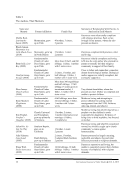
Findings in this article are based on the memoirs
of three men and seven women the memoirs
met specific selection criteria. To find memoirs,
I conducted extensive searches and skimmed
any books that partially matched the selection
criteria. I included only memoirs published by
companies. Searches began by hand in the Kent
Collection on Alternative Religions, my
university’s library, and online through Google,
and then branched into searches on
Amazon.com, in book reviews, and within
annotated bibliographies. Searches involved
pairing such search terms as biography, memoir,
and autobiography with such search terms as
religion, faith, or the names of various religious
dynamics of this account compared to her latter account could
relate to various reasons, including the possible emergence of
repressed memories. As such, I avoid commenting on the accuracy
of her or other authors’ accounts.
18 International Journal of Cultic Studies ■ Vol. 6, 2015