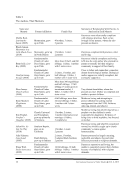
OPCA members. Perhaps as many as 500,000
tax protesters fight with the Internal Revenue
Service over payment issues, but by no means
are all of them related to extremist, violent
antigovernment OPCA litigants (Sovereign
Citizens Movement, 2013, p. 2).
Second, the Freemen-on-the-Land movement is
“strongly antigovernment, and has libertarian
and right-wing overtones. Christian rhetoric is
common” (Rooke, 2012, para. 171), and
(according to Rooke) it is a Canadian creation
that “spread to other common-law jurisdictions,”
which include the United Kingdom, Australia,
and New Zealand” (para. 173). Adherents
believe that “they can ‘opt out’ of societal
obligations and do as they like” (para. 174).
Many claim that “they have an unrestricted right
to possess and use firearms” (para. 175 see
O’Flanagan, 2012) and the Canadians
…parallel the American Sovereign Man
community. Both engage in a broad
range of OPCA activities directed
towards almost any government or
social obligation. Both habitually use
‘fee schedules’, and advance claims and
liens against state, police, and court
actors. Many apply the ‘everything is a
contract’ approach and so are extremely
uncooperative in and out of court.
(Rooke, 2012, para. 175)
“Fee schedules” are similar to fines that
Freemen and others attempt to impose upon
“state, government, and court actors” if “a
certain legal procedure or result occurs, or law
enforcement personnel engage in certain
conduct” (Rooke, 2012, para. 505). Claims that
“everything is a contract” refer to the argument
that an OPCA litigant may use, which claims
that “he or she has no obligation unless the
litigant has explicitly formed a contract for that
obligation” (para. 388).
Third, the “Sovereign Men/Sovereign Citizen
movement is the chief U.S. OPCA community,”
but they have appeared in the Canadian province
of Ontario (Rooke, 2012, para. 176). Sometimes
they call themselves “‘constitutionalists,’
‘freemen,’ and ‘state citizens’” (Anti-
Defamation League, 2010, p. 4). For these
people, governments are mere corporations
attempting to entangle them in unwanted
contracts (see Rooke, 2012, para. 178). They can
be violent (see Kent &Willey, 2013, pp. 320–
330), and they are noted for flooding courts with
their own pseudolegal documents—a technique
called “paper terrorism” (Fleishman, 2004
Rooke, 2012, para. 181 see Rosenfeld, 2011,
pp. 97–98).
Fourth, an Edmonton, Alberta religious group
called The Church of Ecumenical Redemption
International (CERI) claims a religious right to
use marijuana, and uses religious language to
justify its exemption from governmental and
court authority (Rooke, 2012, para. 183–186).
For example, in 2006, court officials had to drag
church member Karen Ponto out of a
Saskatchewan provincial court for refusing to
participate in a case involving two counts of her
violation of a child-custody order, after which
church members accused the judge of having
committed treason (Christian faith…, 2006).
Fifth and finally, some followers of the Moorish
Law community (in groups such as the Moorish
Nation,4 the United Mawshakh Nation of
Nuurs,5 and the Washitaw Nation6) exempt
themselves from governmental authority (Anti-
Defamation League, 2005, p. 8), and permit
themselves the right to engage in fraudulent
4 “The Moorish Nation is a collection of sovereign citizen
organizations, espousing the Islam religion, from the Moorish
Science Temple of America…. These organizations make up what
members refer to as the ‘Moorish Divine and National Movement
of the World.’ Members consider themselves a free people under
English ‘common law.’ Members of the Moorish Nation use this
perceived immunity to justify refusal to pay taxes, buy auto
insurance, and defraud banks” (ROCIC Special Research Report,
2009, p. 2).
5 I cannot find any information on this group other than a passing
reference to it that implies it borrows from “various New Age
philosophies” (Anti-Defamation League, 2005, p. 7).
6 The Washitaw Nation/Empire “emerged in Louisiana and Texas
in the mid-1990s and was most popular during that decade. It is
one of several sovereign citizen groups that are essentially Moorish
in nature but also claim ‘native’ status. Washitaw members claim
they are descendants of the ancient mound-builders of the
Mississippi Valley. Members have created license plates,
diplomatic identification cards and similar fictitious sovereign
citizen documents” (Anti-Defamation League, 2010, p. 23, see p.
28 on the fictitious tribe, the Little Shell Pembina Band of North
America, that both American and Canadian authorities shut down
for running a pyramid scheme). Sovereign Citizens exist within the
Asian, Hispanic, and native Hawaiian communities (Anti-
Defamation League, 2010, p. 11).
4 International Journal of Cultic Studies ■ Vol. 6, 2015
tax protesters fight with the Internal Revenue
Service over payment issues, but by no means
are all of them related to extremist, violent
antigovernment OPCA litigants (Sovereign
Citizens Movement, 2013, p. 2).
Second, the Freemen-on-the-Land movement is
“strongly antigovernment, and has libertarian
and right-wing overtones. Christian rhetoric is
common” (Rooke, 2012, para. 171), and
(according to Rooke) it is a Canadian creation
that “spread to other common-law jurisdictions,”
which include the United Kingdom, Australia,
and New Zealand” (para. 173). Adherents
believe that “they can ‘opt out’ of societal
obligations and do as they like” (para. 174).
Many claim that “they have an unrestricted right
to possess and use firearms” (para. 175 see
O’Flanagan, 2012) and the Canadians
…parallel the American Sovereign Man
community. Both engage in a broad
range of OPCA activities directed
towards almost any government or
social obligation. Both habitually use
‘fee schedules’, and advance claims and
liens against state, police, and court
actors. Many apply the ‘everything is a
contract’ approach and so are extremely
uncooperative in and out of court.
(Rooke, 2012, para. 175)
“Fee schedules” are similar to fines that
Freemen and others attempt to impose upon
“state, government, and court actors” if “a
certain legal procedure or result occurs, or law
enforcement personnel engage in certain
conduct” (Rooke, 2012, para. 505). Claims that
“everything is a contract” refer to the argument
that an OPCA litigant may use, which claims
that “he or she has no obligation unless the
litigant has explicitly formed a contract for that
obligation” (para. 388).
Third, the “Sovereign Men/Sovereign Citizen
movement is the chief U.S. OPCA community,”
but they have appeared in the Canadian province
of Ontario (Rooke, 2012, para. 176). Sometimes
they call themselves “‘constitutionalists,’
‘freemen,’ and ‘state citizens’” (Anti-
Defamation League, 2010, p. 4). For these
people, governments are mere corporations
attempting to entangle them in unwanted
contracts (see Rooke, 2012, para. 178). They can
be violent (see Kent &Willey, 2013, pp. 320–
330), and they are noted for flooding courts with
their own pseudolegal documents—a technique
called “paper terrorism” (Fleishman, 2004
Rooke, 2012, para. 181 see Rosenfeld, 2011,
pp. 97–98).
Fourth, an Edmonton, Alberta religious group
called The Church of Ecumenical Redemption
International (CERI) claims a religious right to
use marijuana, and uses religious language to
justify its exemption from governmental and
court authority (Rooke, 2012, para. 183–186).
For example, in 2006, court officials had to drag
church member Karen Ponto out of a
Saskatchewan provincial court for refusing to
participate in a case involving two counts of her
violation of a child-custody order, after which
church members accused the judge of having
committed treason (Christian faith…, 2006).
Fifth and finally, some followers of the Moorish
Law community (in groups such as the Moorish
Nation,4 the United Mawshakh Nation of
Nuurs,5 and the Washitaw Nation6) exempt
themselves from governmental authority (Anti-
Defamation League, 2005, p. 8), and permit
themselves the right to engage in fraudulent
4 “The Moorish Nation is a collection of sovereign citizen
organizations, espousing the Islam religion, from the Moorish
Science Temple of America…. These organizations make up what
members refer to as the ‘Moorish Divine and National Movement
of the World.’ Members consider themselves a free people under
English ‘common law.’ Members of the Moorish Nation use this
perceived immunity to justify refusal to pay taxes, buy auto
insurance, and defraud banks” (ROCIC Special Research Report,
2009, p. 2).
5 I cannot find any information on this group other than a passing
reference to it that implies it borrows from “various New Age
philosophies” (Anti-Defamation League, 2005, p. 7).
6 The Washitaw Nation/Empire “emerged in Louisiana and Texas
in the mid-1990s and was most popular during that decade. It is
one of several sovereign citizen groups that are essentially Moorish
in nature but also claim ‘native’ status. Washitaw members claim
they are descendants of the ancient mound-builders of the
Mississippi Valley. Members have created license plates,
diplomatic identification cards and similar fictitious sovereign
citizen documents” (Anti-Defamation League, 2010, p. 23, see p.
28 on the fictitious tribe, the Little Shell Pembina Band of North
America, that both American and Canadian authorities shut down
for running a pyramid scheme). Sovereign Citizens exist within the
Asian, Hispanic, and native Hawaiian communities (Anti-
Defamation League, 2010, p. 11).
4 International Journal of Cultic Studies ■ Vol. 6, 2015