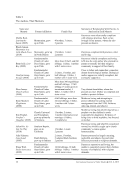
authors wrote about child abuse and/or
extremely controlling religious environments in
memoirs, which may have been written partly to
solidify the authors’ independence from their
prior religious affiliation. As such, the vast
majority of these authors represented their
parents’ religious commitment as having
negatively impacted their upbringing. Indeed,
only two memoirs lacked evidence of child
abuse. Jallen Rix (2010) claimed that, despite
the problems he and his family experienced
when he came out as homosexual, he had a
fairly “normal” childhood. Similarly, Rhoda
Janzen (2010) provided evidence that her family
was frugal and strict, but also loving and close.
I begin this article with an overview of narrative
analysis in relation to my analysis. Next, I detail
the sampling criteria that I used to select
memoirs. Then, I explain how understandings of
subjectivity, cultural contexts, and conceptions
of normality affected how authors represented
their families’ compliance and noncompliance to
religious beliefs. Finally, I describe how authors
represented their emotional responses to their
parents’ compliance, noncompliance, or abuse
and neglect of their children.
Narrative Analysis
Narratives often obscure the complexity of
subjectivity by implying that subjectivity has to
do with something that people are (i.e.,
subjective) rather than something that they do
(i.e., respond subjectively) (Bloom, 1998, p. 5).
Indeed, like religion and family, the self is
something that actors perform in relation to their
language, various experiences, and social
interactions (Bloom, 1998, p. 3). In this way,
subjectivities are created and conveyed through
social action. Despite this obscurity, narrative
analysis allows the researcher to observe
nonunitary aspects of authors’ and their family
members’ subjectivities (Bloom, 1996, 1998).
Subjectivities are nonunitary in that they are
inconsistent and often change over time in
relation to language, social interactions, and
experiences (Bloom, 1996, p. 178).
Narratives reflect personal experiences, which
are mediated through narration, memory, and
language. Any iteration of experience is an
interpretation of one’s past and place through a
culturally and historically specific present
(Smith &Watson, 2010, p. 31). During
narration, individuals actively reinterpret the
past, which they unintentionally recreate to
reflect genre requirements, which generally
include a unitary protagonist that is, they speak
of themselves as if their own character is
consistent and unchanging (Freeman, 2004, p.
82 Hankiss, 1981, p. 205). Similarly, narrative
analysis enables one to gain unique perspectives
about social relationships because the authors’
understandings of these relationships are
exposed in narration (Andrews, Day Sclater,
Rustin, Squire, &Treacher, 2004,
p. 1).
These narrations, however, are also subject to
genre requirements and widespread
understandings of common life experiences,
which shape authors’ understandings of their
relationships (for example, the assertion that
children’s current and latter personal stability
are based on their parents’—especially their
mother’s—nurturance [Andrews, 2002, p. 10]).
To fit within a narrative genre,
“Autobiographers typically write their life
stories within the framework of one or more
general plotlines drawn from among the limited
number of plausible ones available” (Maynes,
Pierce, &Laslett, 2008, p. 78 see also Plummer,
1995, pp. 34–42). Smith and Watson (2010)
claim that the motive for telling stories of
disaffiliation from family seems “to be scandal,
outing, and revenge on a parent for the failure of
love” (p. 155). Most authors in this study
seemed to seek disaffiliation from their religion
rather than their families. For instance, in this
study, memoirs conformed closest to
disaffiliation genre and plotlines—which
included childhood hardships (often mixed with
assertions of love for their families), attributing
those hardships to religion, and deconversion.
Disaffiliation narratives may involve escaping a
“self-sealed” fate, which had operated as an
instrument of cultural stability and offset
personal responsibility for one’s actions (Bruner,
1995, pp. 161–162). Some religious adherents
who view their fate as sealed pursue only
activities that they believe to be conducive to
their religion. By writing a memoir against a
sealed fate, authors claim control over their
International Journal of Cultic Studies ■ Vol. 6, 2015 17
extremely controlling religious environments in
memoirs, which may have been written partly to
solidify the authors’ independence from their
prior religious affiliation. As such, the vast
majority of these authors represented their
parents’ religious commitment as having
negatively impacted their upbringing. Indeed,
only two memoirs lacked evidence of child
abuse. Jallen Rix (2010) claimed that, despite
the problems he and his family experienced
when he came out as homosexual, he had a
fairly “normal” childhood. Similarly, Rhoda
Janzen (2010) provided evidence that her family
was frugal and strict, but also loving and close.
I begin this article with an overview of narrative
analysis in relation to my analysis. Next, I detail
the sampling criteria that I used to select
memoirs. Then, I explain how understandings of
subjectivity, cultural contexts, and conceptions
of normality affected how authors represented
their families’ compliance and noncompliance to
religious beliefs. Finally, I describe how authors
represented their emotional responses to their
parents’ compliance, noncompliance, or abuse
and neglect of their children.
Narrative Analysis
Narratives often obscure the complexity of
subjectivity by implying that subjectivity has to
do with something that people are (i.e.,
subjective) rather than something that they do
(i.e., respond subjectively) (Bloom, 1998, p. 5).
Indeed, like religion and family, the self is
something that actors perform in relation to their
language, various experiences, and social
interactions (Bloom, 1998, p. 3). In this way,
subjectivities are created and conveyed through
social action. Despite this obscurity, narrative
analysis allows the researcher to observe
nonunitary aspects of authors’ and their family
members’ subjectivities (Bloom, 1996, 1998).
Subjectivities are nonunitary in that they are
inconsistent and often change over time in
relation to language, social interactions, and
experiences (Bloom, 1996, p. 178).
Narratives reflect personal experiences, which
are mediated through narration, memory, and
language. Any iteration of experience is an
interpretation of one’s past and place through a
culturally and historically specific present
(Smith &Watson, 2010, p. 31). During
narration, individuals actively reinterpret the
past, which they unintentionally recreate to
reflect genre requirements, which generally
include a unitary protagonist that is, they speak
of themselves as if their own character is
consistent and unchanging (Freeman, 2004, p.
82 Hankiss, 1981, p. 205). Similarly, narrative
analysis enables one to gain unique perspectives
about social relationships because the authors’
understandings of these relationships are
exposed in narration (Andrews, Day Sclater,
Rustin, Squire, &Treacher, 2004,
p. 1).
These narrations, however, are also subject to
genre requirements and widespread
understandings of common life experiences,
which shape authors’ understandings of their
relationships (for example, the assertion that
children’s current and latter personal stability
are based on their parents’—especially their
mother’s—nurturance [Andrews, 2002, p. 10]).
To fit within a narrative genre,
“Autobiographers typically write their life
stories within the framework of one or more
general plotlines drawn from among the limited
number of plausible ones available” (Maynes,
Pierce, &Laslett, 2008, p. 78 see also Plummer,
1995, pp. 34–42). Smith and Watson (2010)
claim that the motive for telling stories of
disaffiliation from family seems “to be scandal,
outing, and revenge on a parent for the failure of
love” (p. 155). Most authors in this study
seemed to seek disaffiliation from their religion
rather than their families. For instance, in this
study, memoirs conformed closest to
disaffiliation genre and plotlines—which
included childhood hardships (often mixed with
assertions of love for their families), attributing
those hardships to religion, and deconversion.
Disaffiliation narratives may involve escaping a
“self-sealed” fate, which had operated as an
instrument of cultural stability and offset
personal responsibility for one’s actions (Bruner,
1995, pp. 161–162). Some religious adherents
who view their fate as sealed pursue only
activities that they believe to be conducive to
their religion. By writing a memoir against a
sealed fate, authors claim control over their
International Journal of Cultic Studies ■ Vol. 6, 2015 17