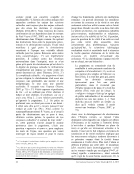
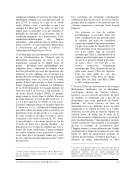
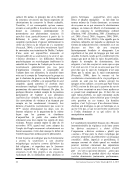
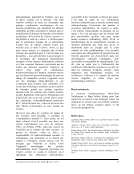
Cabassut, Jacques (2009). Petite grammaire lacanienne du collectif
institutionnel. L’institution parlante. Nîmes :Champ social.
Castel, Pierre-Henri (2011). Âmes scrupuleuses, vies d’angoisse,
tristes obsédés, t. 1 :obsessions et contrainte intérieure de
l’Antiquité à Freud. Paris :Ithaque.
Derrida, Jacques (2001). Foi et savoir. Paris :Seuil.
Détienne, Marcel (2006). Les Maîtres de Vérité dans la Grèce
archaïque. Paris :Livre de Poche.
Devereux, Georges (1970). Essais d’ethnopsychiatrie générale.
Paris :Gallimard.
Dumont, Louis (1985). Essais sur l’individualisme :une
perspective anthropologique sur l’idéologie moderne. Paris :Seuil.
Duval, Maurice (2005). Des peurs collectives :le discours anti-
secte comme support de l’idéologie néolibérale. Dans L’homme et
la société, n°155, 1.
Ehrenberg, Alain (2001). De la névrose à la dépression. Remarques
sur quelques changements de l’individualité contemporaine. Dans
Figures de la psychanalyse, n°4, 1, p. 25-41.
Ehrenberg, Alain, Mingasson, Lise, Vulbeau, Alain (2005).
L’autonomie, nouvelle règle sociale. Dans Informations sociales,
n°126, 6, p. 112-115.
Elias, Norbert (1998). La société des individus. Paris :Pocket.
Esquerre, Arnaud (2002). La manipulation mentale, cette mauvaise
soumission. Dans L’unebévue, n°20, p. 47-64.
Esquerre, Arnaud (2004). La psychique affaire de l’État. Dans Che
vuoi ?,n°22.
Esquerre, Arnaud (2009). La manipulation mentale. Sociologie des
sectes en France. Paris :Fayard.
Foucault, Michel (2004). Sécurité, territoire, population, Cours au
Collège de France [1977-1978]. Paris :Seuil/Gallimard.
Foucault, Michel (2008). Le gouvernement de soi et des autres,
Cours au Collège de France [1982-1983]. Paris :Seuil/Gallimard.
Foucault, Michel (2009). Le gouvernement de soi et des autres,
t. 2 :le courage de la vérité, Cours au Collège de France [1983-
1984]. Paris :Seuil/Gallimard.
Ham, Mohammed (2008). Ultralibéralisme, hypermodernité et
toute-puissance du père. Dans Cliniques méditerranéennes, n°72,
2.
Lacan, Jacques (1999). Séminaire XX, Encore [1972-1973]. Paris :
Seuil.
Legendre, Pierre (2001). De la société comme Texte. Linéaments
d’une Anthropologie dogmatique. Paris :Fayard.
Legendre, Pierre (2009). Leçons IX. L’autre Bible de l’Occident :
le Monument romano-canonique. Étude sur l’architecture
dogmatique des sociétés. Paris :Fayard.
Legendre, Pierre et col. (2013). Tour du monde des concepts.
Paris :Fayard.
Liogier, Raphaël (2004). Le bouddhisme mondialisé :une
perspective sociologique sur la globalisation du religieux. Paris :
Ellipses.
Mary, Arthur (2010). Un produit du sectarisme postmoderne :
l’identité dédialectisée. Dans Trickster, n°9.
Mary, Arthur (2011a). La fixion sectaire. Dans Recherches en
psychanalyse, n°12.
Mary, Arthur (2011b). Les effets de subjectivité induits par le
discours idéologique sectaire. Acte du colloque international :
Paradigma discursului ideologic, Universitatea Dunarea de Jos.
Galati :Editura Europlus, p. 389-397.
Mauriac, François (1928). Dieu et Mammon. Le Capitole.
Quine, Willard Van Orman (2003). Du point de vue logique. Neuf
essais logico-philosophiques. Paris :Vrin.
Scheid, John (2012-2013). La religion romaine d’après l’historien
Tite-Live. Cours au Collège de France. En ligne :
http://www.college-de-france.fr/site/john-scheid/course-2013-01-
10-14h30.htm [consulté le 5/02/13]
Thiessen, Elmer John (2011). The Ethics of Evangelism. A
philosophical Defense of Proselytizing and Persuasion. Downers
Grove (Illinois) :InterVarsity Press.
Veyne, Paul (1992). Les Grecs ont-ils cru à leurs mythes ?Essai
sur l’imagination constituante. Paris :Seuil.
Veyne, Paul (2007). Quand notre monde est devenu chrétien (312-
394). Paris: Albin Michel.
Auteur
Arthur Mary, psychologue clinicien, docteur en
psychologie clinique et psychopathologie
(Université de Nice Sophia Antipolis,
Laboratoire Interdisciplinaire Récits, Cultures et
Sociétés LIRCES, EA-3159), chargé de cours et
chercheur associé au Laboratoire des Cliniques
Pathologique et Interculturelle (LCPI, EA-4591,
Université de Toulouse Jean Jaurès), membre
bénévole de l’Association de Défense des
Familles et de l’Individu victimes de dérives
sectaires (ADFI), diplômé en philosophie et en
anthropologie. (a.mary@gmx.com)
68 International Journal of Cultic Studies ■ Vol. 6, 2015