Two examples of these perspectives are
provincialism and fundamentalism (I will let the
reader judge which category these examples fall
into). Provincialism occurs when you can pay
attention only to some trees without seeing other
trees or the entire forest. Fundamentalism occurs
when you can see only the forest and therefore
want to apply a theory to all cases, without
paying attention to the individuality of each tree.
We may speculate that the line that separates
pathological from nonpathological dissociation
lies in the difficulty or ease with which one can
reach this perceptual integration (this is at least
one of the lines that separates the two there will
surely be others). Thus, pathological dissociation
would be characterized by an incapacity or a
difficulty in being able to change one’s point of
view. Sticking to the example of the trees and
the forest, the person would be trapped in her
perception either of one part or of the whole,
without being able to swap her point of view
from one to the other, or to change viewpoint
without difficulty. In contrast, in
nonpathological dissociation, the person would
be able to easily change her perception of one
part for that of the whole, and vice versa, and
thus achieve perceptual integration.
Critical Thinking
Critical thinking is something we all understand,
and I do not see the need to expand on the
concept further. However, it is important to note
that the increase in dissociation and the decrease
of critical thinking are two sides of the same
coin. Each is enhanced by the other. That is to
say, the more evidence of dissociation, the less
critical thinking will be on display, and the less
critical thinking is evident, the more dissociation
there is. Here lies the essence of suggestion. Let
us look at an example.
A drug addict who has been able to abstain for
some months, and who is in what is considered,
according to Prochaska and Di Clemente (1983),
the maintenance phase, suddenly sees his drug
of preference and craves it (conditioned
abstinence). In the addict’s mind in those
moments, only the good experiences related with
the drug are being considered, despite the fact
that these experiences represent only a tiny
proportion of his story with the drug. In
accordance with our example, the addict sees
only some of the trees in that situation. This is
clearly a dissociation. He sees only a part, which
actually is the smallest part, and does not see the
rest: the long and painful history of disastrous
consequences of his addiction. This high level of
dissociation stimulates a very low level of
critical thinking, since he will derive no
evaluation of the negative consequences related
to the consumption of the drug from
remembering only the good moments associated
with it. In such circumstances, he does not
regard his perspective of consuming the drug as
highly dangerous—an assessment which, in turn,
feeds a high dissociation, in a vicious circle in
which both factors provide feedback to one
another. The floating state of a former cult
member would be another example of this
process.
Different Ways of Eliciting High-
Suggestibility States
According to Spiegel and Spiegel (2004), there
are three basic ways of putting people into a
high suggestibility state, or trance, as they refer
to it:
a) Hypnosis
b) Seduction
c) Coercion
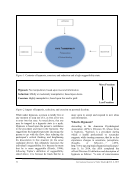
In other words, as Figure 1 depicts, by means of
hypnosis, seduction, or coercion, a state of high
suggestibility can be induced in another. Thus,
this similarity in the outcome can lead to
confusion with regard to the cause that is to say,
hypnosis, seduction, and coercion all lead us to
the same place, but they do so along different
routes and are therefore not the same thing.
The great difference between these ways of
getting to the same level of suggestibility lies in
the ease with which one can get out of each
circumstance. That outcome depends on the way
one takes to get there, and it also has direct
consequences on the person’s freedom (see
Figure 2).
International Journal of Cultic Studies ■ Vol. 6, 2015 51
provincialism and fundamentalism (I will let the
reader judge which category these examples fall
into). Provincialism occurs when you can pay
attention only to some trees without seeing other
trees or the entire forest. Fundamentalism occurs
when you can see only the forest and therefore
want to apply a theory to all cases, without
paying attention to the individuality of each tree.
We may speculate that the line that separates
pathological from nonpathological dissociation
lies in the difficulty or ease with which one can
reach this perceptual integration (this is at least
one of the lines that separates the two there will
surely be others). Thus, pathological dissociation
would be characterized by an incapacity or a
difficulty in being able to change one’s point of
view. Sticking to the example of the trees and
the forest, the person would be trapped in her
perception either of one part or of the whole,
without being able to swap her point of view
from one to the other, or to change viewpoint
without difficulty. In contrast, in
nonpathological dissociation, the person would
be able to easily change her perception of one
part for that of the whole, and vice versa, and
thus achieve perceptual integration.
Critical Thinking
Critical thinking is something we all understand,
and I do not see the need to expand on the
concept further. However, it is important to note
that the increase in dissociation and the decrease
of critical thinking are two sides of the same
coin. Each is enhanced by the other. That is to
say, the more evidence of dissociation, the less
critical thinking will be on display, and the less
critical thinking is evident, the more dissociation
there is. Here lies the essence of suggestion. Let
us look at an example.
A drug addict who has been able to abstain for
some months, and who is in what is considered,
according to Prochaska and Di Clemente (1983),
the maintenance phase, suddenly sees his drug
of preference and craves it (conditioned
abstinence). In the addict’s mind in those
moments, only the good experiences related with
the drug are being considered, despite the fact
that these experiences represent only a tiny
proportion of his story with the drug. In
accordance with our example, the addict sees
only some of the trees in that situation. This is
clearly a dissociation. He sees only a part, which
actually is the smallest part, and does not see the
rest: the long and painful history of disastrous
consequences of his addiction. This high level of
dissociation stimulates a very low level of
critical thinking, since he will derive no
evaluation of the negative consequences related
to the consumption of the drug from
remembering only the good moments associated
with it. In such circumstances, he does not
regard his perspective of consuming the drug as
highly dangerous—an assessment which, in turn,
feeds a high dissociation, in a vicious circle in
which both factors provide feedback to one
another. The floating state of a former cult
member would be another example of this
process.
Different Ways of Eliciting High-
Suggestibility States
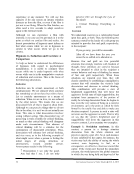
According to Spiegel and Spiegel (2004), there
are three basic ways of putting people into a
high suggestibility state, or trance, as they refer
to it:
a) Hypnosis
b) Seduction
c) Coercion
In other words, as Figure 1 depicts, by means of
hypnosis, seduction, or coercion, a state of high
suggestibility can be induced in another. Thus,
this similarity in the outcome can lead to
confusion with regard to the cause that is to say,
hypnosis, seduction, and coercion all lead us to
the same place, but they do so along different
routes and are therefore not the same thing.
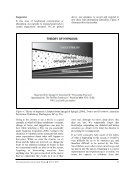
The great difference between these ways of
getting to the same level of suggestibility lies in
the ease with which one can get out of each
circumstance. That outcome depends on the way
one takes to get there, and it also has direct
consequences on the person’s freedom (see
Figure 2).
International Journal of Cultic Studies ■ Vol. 6, 2015 51