Suggestion
In this state of heightened concentration or
absorption, our capacity to respond positively to
certain suggestions increases. Or, as quoted
above, our openness to accept and respond to
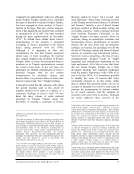
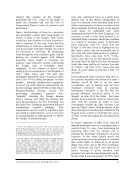
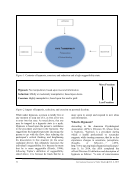
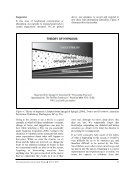
new ideas and information intensifies. Figure 4
illustrates this relationship.
Figure 4. Theory of hypnosis. (Adapted from Spiegel &Spiegel [2004], Trance and Treatment, American
Psychiatric Publishing, Washington, DC (p. 20.)
Going to the cinema to see a movie is a good
example in which all these conditions—consent,
change of focus, and suggestion—are met. In
fact, while watching a film, we are essentially
under hypnosis (Capafons, 2001). Going to the
cinema is a voluntary action (consent) that raises
some expectations about what will happen in
that place. When we enter the cinema, we sit
down and the lights are lowered we change the
focus of our attention (change of focus) so that
we concentrate totally on what is on the screen,
forgetting or dissociating ourselves from
anything else. We get so involved in the movie
that we experience the events in it as if they
were real, although we know, deep down, that
they are not. We temporarily forget that
knowledge, suspending our disbelief and letting
ourselves go, drawn in by what the director is
presenting to us (suggestion).
If we were constantly fully aware of the falsity
of what is happening on the screen, it would be
very difficult for us to let ourselves go, and
therefore difficult to be moved by the film.
Nevertheless, even when we let ourselves go and
are drawn into the movie, forgetting it is a mere
representation and experiencing it as reality, we
retain the capacity to withdraw from that
International Journal of Cultic Studies ■ Vol. 6, 2015 55
In this state of heightened concentration or
absorption, our capacity to respond positively to
certain suggestions increases. Or, as quoted
above, our openness to accept and respond to
new ideas and information intensifies. Figure 4
illustrates this relationship.
Figure 4. Theory of hypnosis. (Adapted from Spiegel &Spiegel [2004], Trance and Treatment, American
Psychiatric Publishing, Washington, DC (p. 20.)
Going to the cinema to see a movie is a good
example in which all these conditions—consent,
change of focus, and suggestion—are met. In
fact, while watching a film, we are essentially
under hypnosis (Capafons, 2001). Going to the
cinema is a voluntary action (consent) that raises
some expectations about what will happen in
that place. When we enter the cinema, we sit
down and the lights are lowered we change the
focus of our attention (change of focus) so that
we concentrate totally on what is on the screen,
forgetting or dissociating ourselves from
anything else. We get so involved in the movie
that we experience the events in it as if they
were real, although we know, deep down, that
they are not. We temporarily forget that
knowledge, suspending our disbelief and letting
ourselves go, drawn in by what the director is
presenting to us (suggestion).
If we were constantly fully aware of the falsity
of what is happening on the screen, it would be
very difficult for us to let ourselves go, and
therefore difficult to be moved by the film.
Nevertheless, even when we let ourselves go and
are drawn into the movie, forgetting it is a mere
representation and experiencing it as reality, we
retain the capacity to withdraw from that
International Journal of Cultic Studies ■ Vol. 6, 2015 55