testifying in court. SIM is designed to
accommodate several different goals. First, it is
layperson-friendly. It succinctly conveys the
relevant dimensions of an influence process, and
it does so in an understandable manner. Second,
it is expert-friendly. The SIM allows the
presentation of the relevant science that supports
mind manipulation. It provides a way to simplify
complex studies and present them more easily.
Third, it is judge-friendly. Judges who research
or preside over undue-influence cases are bound
to discover the SODR test. Because the SIM is
similar to the SODR test, it will more likely be
accepted as an appropriate vehicle for the
presentation of factual and scientific evidence.
Finally, the SIM lends itself to visual learning.
Lawyers can make a chart of the SIM to aid
jurors (and judges) in seeing how they may
assess and understand the evidence. Thus, it
serves as an effective persuasive tool.
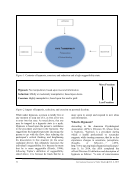
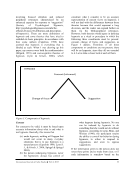
Here is the SIM:
(a) INFLUENCER (Identity and Status)
(b) INFLUENCER’S MOTIVES (Purpose)
(c) INFLUENCER’S METHODS (Techniques)
(d) CIRCUMSTANCES (Timing and Setting)
(e) INFLUENCEE’S RECEPTIVITY/
VULNERABILITY (Individual Differences)
(f) CONSEQUENCES (Results)
In developing the SIM, I was originally inspired
by a portion of a poem in Rudyard Kipling’s
Just So Stories (1902). The poem is “My Six
Servants.” The portion quoted below (italics
added) is taught to journalists as a guide to
writing a complete and compelling story that
will inform and also hold an audience’s
attention. Here it is:
I keep six honest serving-men
They taught me all I knew
Their names are What and Why and
When
And How and Where and Who.
I would apply Kipling’s poem to the SIM in the
following way:
(a) INFLUENCER [WHO]
(b) INFLUENCER’S MOTIVE [WHY]
(c) INFLUENCER’S METHODS [WHAT/
HOW]
(d) CIRCUMSTANCE [WHERE/WHEN]
(e) INFLUENCEE’S RECEPTIVITY/
VULNERABILITY [WHO]
(f) CONSEQUENCES [WHAT]
Experts in undue influence, especially those who
have been trained in the literature of
brainwashing and thought control, are familiar
with many different approaches to understanding
these extremely manipulative processes—for
example, Lifton’s eight criteria for thought
reform (Lifton, 1989) Hassan’s BITE model
(Hassan, 2012) and Singer and Lalich’s six
conditions for thought control (Singer &Lalich,
1995). These approaches can easily be fit into
the SIM for use in courtrooms.
No matter which of the approaches is utilized,
the purpose is to determine whether the
influence process has resulted in what Doctors
Louis J. West and Paul R. Martin colorfully
called “pseudo-identity disorder” (West &
Martin, 1994), or what the law might call
involuntary mental servitude.
Expanded SIM
Time permits only a brief illustration of how one
may utilize the SIM to present expert scientific
evidence in court. This section is intended to be
illustrative, not exhaustive.
(a) INFLUENCER [WHO]
Relationship to the Influencee
–Authority Figure
–Confidential Relationship
–Advisor
–Family Member
(b) INFLUENCER’S MOTIVES (Purpose)
[WHY]
Financial Gain
Behavioral Acquiescence
Ideological Adherence
Ego Gratification
International Journal of Cultic Studies ■ Vol. 6, 2015 77
accommodate several different goals. First, it is
layperson-friendly. It succinctly conveys the
relevant dimensions of an influence process, and
it does so in an understandable manner. Second,
it is expert-friendly. The SIM allows the
presentation of the relevant science that supports
mind manipulation. It provides a way to simplify
complex studies and present them more easily.
Third, it is judge-friendly. Judges who research
or preside over undue-influence cases are bound
to discover the SODR test. Because the SIM is
similar to the SODR test, it will more likely be
accepted as an appropriate vehicle for the
presentation of factual and scientific evidence.
Finally, the SIM lends itself to visual learning.
Lawyers can make a chart of the SIM to aid
jurors (and judges) in seeing how they may
assess and understand the evidence. Thus, it
serves as an effective persuasive tool.
Here is the SIM:
(a) INFLUENCER (Identity and Status)
(b) INFLUENCER’S MOTIVES (Purpose)
(c) INFLUENCER’S METHODS (Techniques)
(d) CIRCUMSTANCES (Timing and Setting)
(e) INFLUENCEE’S RECEPTIVITY/
VULNERABILITY (Individual Differences)
(f) CONSEQUENCES (Results)
In developing the SIM, I was originally inspired
by a portion of a poem in Rudyard Kipling’s
Just So Stories (1902). The poem is “My Six
Servants.” The portion quoted below (italics
added) is taught to journalists as a guide to
writing a complete and compelling story that
will inform and also hold an audience’s
attention. Here it is:
I keep six honest serving-men
They taught me all I knew
Their names are What and Why and
When
And How and Where and Who.
I would apply Kipling’s poem to the SIM in the
following way:
(a) INFLUENCER [WHO]
(b) INFLUENCER’S MOTIVE [WHY]
(c) INFLUENCER’S METHODS [WHAT/
HOW]
(d) CIRCUMSTANCE [WHERE/WHEN]
(e) INFLUENCEE’S RECEPTIVITY/
VULNERABILITY [WHO]
(f) CONSEQUENCES [WHAT]
Experts in undue influence, especially those who
have been trained in the literature of
brainwashing and thought control, are familiar
with many different approaches to understanding
these extremely manipulative processes—for
example, Lifton’s eight criteria for thought
reform (Lifton, 1989) Hassan’s BITE model
(Hassan, 2012) and Singer and Lalich’s six
conditions for thought control (Singer &Lalich,
1995). These approaches can easily be fit into
the SIM for use in courtrooms.
No matter which of the approaches is utilized,
the purpose is to determine whether the
influence process has resulted in what Doctors
Louis J. West and Paul R. Martin colorfully
called “pseudo-identity disorder” (West &
Martin, 1994), or what the law might call
involuntary mental servitude.
Expanded SIM
Time permits only a brief illustration of how one
may utilize the SIM to present expert scientific
evidence in court. This section is intended to be
illustrative, not exhaustive.
(a) INFLUENCER [WHO]
Relationship to the Influencee
–Authority Figure
–Confidential Relationship
–Advisor
–Family Member
(b) INFLUENCER’S MOTIVES (Purpose)
[WHY]
Financial Gain
Behavioral Acquiescence
Ideological Adherence
Ego Gratification
International Journal of Cultic Studies ■ Vol. 6, 2015 77