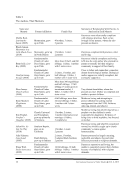
town in Utah predominantly populated by
Mormons). Rhoda Janzen (2010) was from a
Mennonite family, which held prominent church
positions and followed traditional family roles.
Erin Prophet (2009) was the daughter of the
messenger (prophet) of Church Universal and
Triumphant (CUT), Elizabeth Clare Prophet
(1939–2009). CUT combined Christian beliefs
with Eastern traditions and New Age
spiritualism. Jallen Rix (2010) was the
homosexual son of heteronormative Southern
Baptists. Finally, Dutch Reform parents raised
Julia Scheeres (2005) and her five siblings.
Common themes emerged within these
memoirs’ representation of parental behaviors
and emotions. Most religious groups in this
study regulated families through religious
practices, community norms, and widespread
compliance to those practices and norms. Some
understood their parents through unique cultural
tools, which were specific to their religions and
lives after disaffiliation.
I anticipated most authors would claim to have
experienced abuse by their parents or other
religious adherents or both, which they would
attribute to religious demands. Nonetheless, I
found immense variation among authors’
emotional relationships to their parents, which
fit within common themes.
Analyzing Narratives of Subjectivity, Culture,
and Relationality
I conducted a thematic narrative analysis of the
memoirs, in which I attempted to remain true to
each author’s narrative while comparing the
narratives’ differences and common themes.
First, I read each memoir, compiled a summary,
and highlighted initial themes. I then transcribed
sections of text about authors’ understandings
and emotional responses to what they
represented as their parents’ compliance or
noncompliance with religious demands. Other
important themes pertained to subjectivity and
child abuse. My findings were undoubtedly
influenced by my assumptions and experiences
such that other researchers may have focused on
different themes.
Assumptions that I brought to this project were
based partly on my previous work on new
religious movements (NRMs). For instance, I
had expected most authors to present their
parents as incapable of questioning religious
doctrines. I challenged assumptions by watching
for contradictions and alternative representations
by parents. I paid close attention to authors’
representations of relationality, nonunitary
subjectivity, and cultural influences. These
factors were formative in authors’ changing
assessments of their familial relationships in
comparison to their also dynamic conceptions of
a normal family. I use the term normal
throughout this article to denote the authors’
conceptions of normality, which are based on
their personal and ever-changing standards of
evaluation.
People experience the world in dynamic
sociocultural and historical contexts, which
influence their emotions, interpretations of
experiences, and therefore their nonunitary
subjectivity (Bloom, 1998, p. 98 Bruner, 1995,
p. 163). Authors used their cultural context to
interpret events. In religious organizations, this
context centers on doctrines and social
organization. Moreover, interpretations and
emotions interact with identity, which is
relational (meaning constructed in and from
relationships with others [Eakin, 1999]). As
such, the autobiography of the self is also a
biography of the other despite failing to capture
fully the complexity of subjectivity, narrative
offers immense insight into relationships (Day
Sclater, 2003, p. 322 Smith &Watson, 2010,
p. 216).
The author who most openly represented
another’s voice and relational identity was Julia
Scheeres (2005): “I chose to tell my brother’s
story as a memoir because in many ways, our
story is the same” (p. 352). Scheeres identified
as “we” when describing her life with David, her
adopted black brother and best friend. Likewise,
Martha Beck (2005) explained her relational
identity with her father, which formed during an
emotionally repressed “acquaintanceship” in
which he raped her (p. 122). Yet, she identified
with his physical traits, behaviors, and history of
having been sexually abused.
Relationality was central to all discussions of
family history and early childhood. In addition
International Journal of Cultic Studies ■ Vol. 6, 2015 21
Mormons). Rhoda Janzen (2010) was from a
Mennonite family, which held prominent church
positions and followed traditional family roles.
Erin Prophet (2009) was the daughter of the
messenger (prophet) of Church Universal and
Triumphant (CUT), Elizabeth Clare Prophet
(1939–2009). CUT combined Christian beliefs
with Eastern traditions and New Age
spiritualism. Jallen Rix (2010) was the
homosexual son of heteronormative Southern
Baptists. Finally, Dutch Reform parents raised
Julia Scheeres (2005) and her five siblings.
Common themes emerged within these
memoirs’ representation of parental behaviors
and emotions. Most religious groups in this
study regulated families through religious
practices, community norms, and widespread
compliance to those practices and norms. Some
understood their parents through unique cultural
tools, which were specific to their religions and
lives after disaffiliation.
I anticipated most authors would claim to have
experienced abuse by their parents or other
religious adherents or both, which they would
attribute to religious demands. Nonetheless, I
found immense variation among authors’
emotional relationships to their parents, which
fit within common themes.
Analyzing Narratives of Subjectivity, Culture,
and Relationality
I conducted a thematic narrative analysis of the
memoirs, in which I attempted to remain true to
each author’s narrative while comparing the
narratives’ differences and common themes.
First, I read each memoir, compiled a summary,
and highlighted initial themes. I then transcribed
sections of text about authors’ understandings
and emotional responses to what they
represented as their parents’ compliance or
noncompliance with religious demands. Other
important themes pertained to subjectivity and
child abuse. My findings were undoubtedly
influenced by my assumptions and experiences
such that other researchers may have focused on
different themes.
Assumptions that I brought to this project were
based partly on my previous work on new
religious movements (NRMs). For instance, I
had expected most authors to present their
parents as incapable of questioning religious
doctrines. I challenged assumptions by watching
for contradictions and alternative representations
by parents. I paid close attention to authors’
representations of relationality, nonunitary
subjectivity, and cultural influences. These
factors were formative in authors’ changing
assessments of their familial relationships in
comparison to their also dynamic conceptions of
a normal family. I use the term normal
throughout this article to denote the authors’
conceptions of normality, which are based on
their personal and ever-changing standards of
evaluation.
People experience the world in dynamic
sociocultural and historical contexts, which
influence their emotions, interpretations of
experiences, and therefore their nonunitary
subjectivity (Bloom, 1998, p. 98 Bruner, 1995,
p. 163). Authors used their cultural context to
interpret events. In religious organizations, this
context centers on doctrines and social
organization. Moreover, interpretations and
emotions interact with identity, which is
relational (meaning constructed in and from
relationships with others [Eakin, 1999]). As
such, the autobiography of the self is also a
biography of the other despite failing to capture
fully the complexity of subjectivity, narrative
offers immense insight into relationships (Day
Sclater, 2003, p. 322 Smith &Watson, 2010,
p. 216).
The author who most openly represented
another’s voice and relational identity was Julia
Scheeres (2005): “I chose to tell my brother’s
story as a memoir because in many ways, our
story is the same” (p. 352). Scheeres identified
as “we” when describing her life with David, her
adopted black brother and best friend. Likewise,
Martha Beck (2005) explained her relational
identity with her father, which formed during an
emotionally repressed “acquaintanceship” in
which he raped her (p. 122). Yet, she identified
with his physical traits, behaviors, and history of
having been sexually abused.
Relationality was central to all discussions of
family history and early childhood. In addition
International Journal of Cultic Studies ■ Vol. 6, 2015 21