Cultic Studies Journal, Vol. 14, No. 1, 1997, page 85
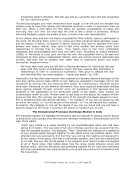
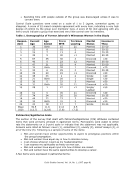
Alcohol Problems 0.20(0.52) 0(0) 1.71 .104
Sexual Abuse 0.40(1.10) 0(0) 1.63 .119
Substance Abuse 0.60(1.27) 0.20(0.89) 1.51 .148
Note: After a Holm multiple test procedure, all tests significant below p=.004 are
interpretable. n=20.
Control Scale
From these data, it appears that WTS exercises a great degree of control over its members
compared to the other religious groups sampled. From working in clinical practice with both
men and women who have exited WTS, and from personal knowledge, it is fair to state that
these aspects of control apply to male as well as female WTS members. Individuals give up
a great deal of personal control in order to be WTS members. Not only does a woman have
to deal with a community gestalt that deemphasizes personal control and decision making
for all members, but also, by virtue of being female, she has considerably less influence in
the congregation and must defer to her husband as her “head,” allowing him the right to
make the decisions in the family regardless of whether or not she agrees with him. While
work outside the home and higher education are allowed, such pursuits are devalued,
especially for women. Women have significantly less autonomy and control in four major
areas of their lives: the primary societal group (WTS), family relationships, job or career in
the “outside” world, and in their internal psychology.
Patriarchal/Egalitarian Scale
When reflecting back on the time they were involved with WTS, women were more likely to
endorse items that indicated patriarchal attitudes. In their current lives, having left the
group, women were much more likely to indicate that they experience more egalitarian
attitudes in their relationships with men. One respondent stated that “the inferiority of
women was perhaps my first problem with the religion, one that I knew I could never
swallow even as a little girl. Of course, then I thought I was condemned to a life of
bitterness and discontent, but since realizing there is life beyond the group, the bitterness
has faded to a memory.” Another wrote that she “felt (the) organ(ization) was an incubation
group for abusive elders --men who abussed (sic) power.” She went on to relate having
been sexually abused by her father, stepfather, and the elders of the congregation. Another
stated that the worst part of being in the group was “being second class as a female,
discouraged against independent thinking/education, (and the) Group‟s obsession with
rules.” One woman wrote that “growing up as a female in the Jehovah‟s Witness
organization kept me from gaining self-esteem, confidence and self-empowerment.”
Another woman stated simply and emphatically, “Misogyny.”
Symptoms Scale
The most common fears reported by the women in the survey were fears of death and/or
destruction of the world by God at Armageddon. Fear of abandonment was also cited in
several cases. Several women reported fears of being harassed, stalked, or having their
children kidnapped by WTS members. One woman stated that her greatest fear after
leaving the group was “that I had sentenced myself and my daughter to death.”
Another was afraid “that I was doomed to failure, misery, that I would never be happy or
have a normal life.” One reported being afraid of “demons --deathly afraid of them.” This
statement may be contextualized by noting how WTS inculcates its membership with a fear
of demons:
Reports from around the world show that Satan and the demons are as malicious
as ever. Some people they strike with illness. Others they harass by robbing them
Alcohol Problems 0.20(0.52) 0(0) 1.71 .104
Sexual Abuse 0.40(1.10) 0(0) 1.63 .119
Substance Abuse 0.60(1.27) 0.20(0.89) 1.51 .148
Note: After a Holm multiple test procedure, all tests significant below p=.004 are
interpretable. n=20.
Control Scale
From these data, it appears that WTS exercises a great degree of control over its members
compared to the other religious groups sampled. From working in clinical practice with both
men and women who have exited WTS, and from personal knowledge, it is fair to state that
these aspects of control apply to male as well as female WTS members. Individuals give up
a great deal of personal control in order to be WTS members. Not only does a woman have
to deal with a community gestalt that deemphasizes personal control and decision making
for all members, but also, by virtue of being female, she has considerably less influence in
the congregation and must defer to her husband as her “head,” allowing him the right to
make the decisions in the family regardless of whether or not she agrees with him. While
work outside the home and higher education are allowed, such pursuits are devalued,
especially for women. Women have significantly less autonomy and control in four major
areas of their lives: the primary societal group (WTS), family relationships, job or career in
the “outside” world, and in their internal psychology.
Patriarchal/Egalitarian Scale
When reflecting back on the time they were involved with WTS, women were more likely to
endorse items that indicated patriarchal attitudes. In their current lives, having left the
group, women were much more likely to indicate that they experience more egalitarian
attitudes in their relationships with men. One respondent stated that “the inferiority of
women was perhaps my first problem with the religion, one that I knew I could never
swallow even as a little girl. Of course, then I thought I was condemned to a life of
bitterness and discontent, but since realizing there is life beyond the group, the bitterness
has faded to a memory.” Another wrote that she “felt (the) organ(ization) was an incubation
group for abusive elders --men who abussed (sic) power.” She went on to relate having
been sexually abused by her father, stepfather, and the elders of the congregation. Another
stated that the worst part of being in the group was “being second class as a female,
discouraged against independent thinking/education, (and the) Group‟s obsession with
rules.” One woman wrote that “growing up as a female in the Jehovah‟s Witness
organization kept me from gaining self-esteem, confidence and self-empowerment.”
Another woman stated simply and emphatically, “Misogyny.”
Symptoms Scale
The most common fears reported by the women in the survey were fears of death and/or
destruction of the world by God at Armageddon. Fear of abandonment was also cited in
several cases. Several women reported fears of being harassed, stalked, or having their
children kidnapped by WTS members. One woman stated that her greatest fear after
leaving the group was “that I had sentenced myself and my daughter to death.”
Another was afraid “that I was doomed to failure, misery, that I would never be happy or
have a normal life.” One reported being afraid of “demons --deathly afraid of them.” This
statement may be contextualized by noting how WTS inculcates its membership with a fear
of demons:
Reports from around the world show that Satan and the demons are as malicious
as ever. Some people they strike with illness. Others they harass by robbing them