Cultic Studies Journal, Vol. 14, No. 1, 1997, page 13
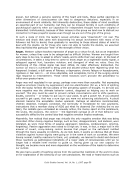
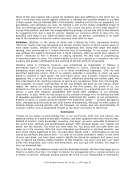
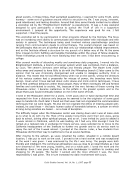
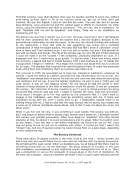
been in an environment of sexual control or direct sexual abuse. By this I mean that until
the cult‟s hidden agenda has been exposed, cult members or former cult members can
make little progress. Tearing apart and examining bit by bit the cult‟s covert program of
manipulation is critical to getting to the heart of the matter.
How is that done?
There is not one simple answer since each cult is different, and even within the same cult,
conditions may vary at different times and different locations. Equally important, every
person‟s experience is so individual, as is each person‟s recovery. But as much as cults
might differ from one another, in certain ways, they are similar. When the ideological veil is
stripped away, cults look very much alike because of their use of classic thought-reform
techniques and processes (colloquially, brainwashing). That is why in support groups of
former cult members, participants may come from groups that on the surface appear to be
vastly different (for example, from ultra-conservative Bible-based to radical left-wing
political to intensely interpersonal psychotherapeutic), yet they understand one another
quite easily because, across all types of cults, the control techniques more or less boil down
to the same familiar few.
Together, the former cult member and I begin to look at the system of influence to which
she was subjected. If she was involved in a group I‟m not already familiar with, I do
whatever I can to educate myself about that particular group, the leader, and the
underlying belief system. That way I can work as an interactive partner in her exploration.
Other tools I use are (1) suggesting related readings, including handouts, article reprints,
and books (2) together viewing and discussing videotapes on cults, psychological cons,
hypnosis, and related material and (3) assigning homework.
One helpful task is for the woman to do a chronology of her time in the cult. I usually advise
not doing this in great detail, but starting with broad outlines by year or by month. She is to
reconstruct as best she can what was going on, where she was living, what work or
“practice” the group was engaged in, what policies were in place, what the leader was
doing, what her level of involvement was, and so forth. Long-term cult members often have
trouble piecing together a chronology. But as the person reflects on her time in the cult,
more and more of the experience comes back to her, and eventually she is able to come up
with a specific sequence of events. This exercise serves at least four functions: (1) it gives
substance to what is often literally a “mush” in the woman‟s brain about what went on, (2)
it exposes manipulative patterns of behavior on the part of the cult leadership, (3) it
demystifies the woman‟s experiences and the power of the cult leader, and (4) it keeps the
person focused.
I also ask recovering cult members to do some reading to help orient our discussions and
their growing understanding of what happened to them. In addition to whatever might be
available on the particular group, select chapters from or summaries of the work of Robert
Jay Lifton, Edgar Schein, and Margaret Thaler Singer are the most helpful. Lifton, Schein,
and Singer are the early researchers who studied the type of psychological influence found
in cultic, or thought-reform environments.
Lifton‟s (1961) book Thought Reform and the Psychology of Totalism, based on his study of
brainwashing in Communist China, outlines eight psychological themes identified by him as
crucial to the creation of a totalist environment. These themes are milieu control, mystical
manipulation, demand for purity, the cult of confession, the “sacred science,” loading the
language, doctrine over person, and dispensing of existence.
Schein (Schein, Schneier, &Barker, 1961) wrote about coercive persuasion, using a model
of three stages: unfreezing, changing, and refreezing. According to Schein, the goal of the
group process is to reshape attitudes and behavior by destabilizing a person‟s sense of self
been in an environment of sexual control or direct sexual abuse. By this I mean that until
the cult‟s hidden agenda has been exposed, cult members or former cult members can
make little progress. Tearing apart and examining bit by bit the cult‟s covert program of
manipulation is critical to getting to the heart of the matter.
How is that done?
There is not one simple answer since each cult is different, and even within the same cult,
conditions may vary at different times and different locations. Equally important, every
person‟s experience is so individual, as is each person‟s recovery. But as much as cults
might differ from one another, in certain ways, they are similar. When the ideological veil is
stripped away, cults look very much alike because of their use of classic thought-reform
techniques and processes (colloquially, brainwashing). That is why in support groups of
former cult members, participants may come from groups that on the surface appear to be
vastly different (for example, from ultra-conservative Bible-based to radical left-wing
political to intensely interpersonal psychotherapeutic), yet they understand one another
quite easily because, across all types of cults, the control techniques more or less boil down
to the same familiar few.
Together, the former cult member and I begin to look at the system of influence to which
she was subjected. If she was involved in a group I‟m not already familiar with, I do
whatever I can to educate myself about that particular group, the leader, and the
underlying belief system. That way I can work as an interactive partner in her exploration.
Other tools I use are (1) suggesting related readings, including handouts, article reprints,
and books (2) together viewing and discussing videotapes on cults, psychological cons,
hypnosis, and related material and (3) assigning homework.
One helpful task is for the woman to do a chronology of her time in the cult. I usually advise
not doing this in great detail, but starting with broad outlines by year or by month. She is to
reconstruct as best she can what was going on, where she was living, what work or
“practice” the group was engaged in, what policies were in place, what the leader was
doing, what her level of involvement was, and so forth. Long-term cult members often have
trouble piecing together a chronology. But as the person reflects on her time in the cult,
more and more of the experience comes back to her, and eventually she is able to come up
with a specific sequence of events. This exercise serves at least four functions: (1) it gives
substance to what is often literally a “mush” in the woman‟s brain about what went on, (2)
it exposes manipulative patterns of behavior on the part of the cult leadership, (3) it
demystifies the woman‟s experiences and the power of the cult leader, and (4) it keeps the
person focused.
I also ask recovering cult members to do some reading to help orient our discussions and
their growing understanding of what happened to them. In addition to whatever might be
available on the particular group, select chapters from or summaries of the work of Robert
Jay Lifton, Edgar Schein, and Margaret Thaler Singer are the most helpful. Lifton, Schein,
and Singer are the early researchers who studied the type of psychological influence found
in cultic, or thought-reform environments.
Lifton‟s (1961) book Thought Reform and the Psychology of Totalism, based on his study of
brainwashing in Communist China, outlines eight psychological themes identified by him as
crucial to the creation of a totalist environment. These themes are milieu control, mystical
manipulation, demand for purity, the cult of confession, the “sacred science,” loading the
language, doctrine over person, and dispensing of existence.
Schein (Schein, Schneier, &Barker, 1961) wrote about coercive persuasion, using a model
of three stages: unfreezing, changing, and refreezing. According to Schein, the goal of the
group process is to reshape attitudes and behavior by destabilizing a person‟s sense of self