Cultic Studies Journal, Vol. 14, No. 1, 1997, page 52
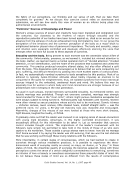
cannot understand why you don‟t leave him, you fear that if you do, the worst will happen.
With an abusive husband, the fear is of dying --not being able to survive without the man,
or, in some cases, even fear dying at his hands. With a spiritual teacher, it is soul death that
is feared. This is not a rational process, but has roots deep in the mysteries of our
existence. Once you are cut off from your own vital resources for living, you come to believe
you must have your surrogate god‟s support, approval, and reflection to go on. For some,
the attachment appears to be more to the group than the leader, but this, too, disguises the
true situation. Behind the group always stands the leader, whose standards for behavior
must be met for continued acceptance by the group.
***
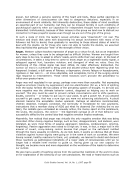
Many people have commented on the paradigm shift we in the West are going through. We
see this transition taking place in the hearts and minds of individual people, such as
ourselves. We have learned about the vulnerability of the idealistic mind, the unsavory and
irresistible attraction of the delusional charismatic, the dangers of certitude about the great
unknowables --birth, death, meaning, absolute values. While we all yearn for answers to
the basic questions of existence, we now know we must ultimately discover the answers
ourselves. In this age when the foundations of institutions and ways of thinking that have
supported us for 3,000 years are crumbling, we are learning to recognize the signs of the
free fall through space that accompany losing those old certitudes. We can also understand
with what determination the human personality seeks to hang on to these traditions of
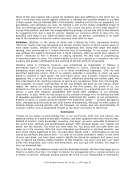
thinking, behavior, and feeling. We know why the evangelical Christian movements have
gained force in these times, as well as the “fringe” or “new age” religious movements. These
apparent opposites are startlingly alike and in some ways serve similar purposes in offering
doctrines that answer all questions, grant a sense of superiority over nonbelievers, and
establish instant communities. They also often shut down the at times overwhelming
creative wellsprings of the new times into which we are being catapulted. Some of us have
been challenged through experiences of exploitation and betrayal to open to these scary,
creative forces, to follow their lead without the direction of those who have gone before.
The appeal of the existing traditions is great, the habit of authoritarian thinking well set. For
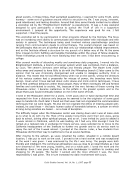
too long we have felt safe in the tower of ideas and like-minded souls. The experience of
waking to our unwitting captivity, the misuse of our talents to do harm, the dangerous
blinders of belief disguised as critical thought, has thrown us out of the comfortable tower of
doctrinaire safety into the dark night of creative tumult. We hope that someone,
somewhere, in a destructive relationship with another person or a group, someone who is
beginning to see but cannot yet act, will gain a tiny bit of resolve from our shared thoughts.
We encourage you to reach outside the relationship to the perceptions of people who care
about you in the world. Please remember that invisible prisons have the most heavily
fortified walls. If you are in a thought prison, you will need help from the outside to get out.
End Notes
1. We use the masculine pronoun throughout because our experience was with a man
and, anecdotally, most self-appointed leaders seem to be men, although we realize that
the role of perpetrator can be played by either a man or woman.
2. Herman (1992) believes that under stress the threats of the perpetrator become less
veiled. He may then show his tyrannical, desperate side. One woman who openly
continued seeing a friend who had left was told that her action was “criminal” and would
likely be punished by higher forces placing her mother in a car accident. Again, the more
explicit forms of threat were rare. As we look back, when the leader started to make
these threats, his art form was slipping, his methods of control were becoming too
obvious. For some, this obvious coercion made it easier to break the spell, to move
through the confusion and the panic engendered by the fear induction and to leave.
cannot understand why you don‟t leave him, you fear that if you do, the worst will happen.
With an abusive husband, the fear is of dying --not being able to survive without the man,
or, in some cases, even fear dying at his hands. With a spiritual teacher, it is soul death that
is feared. This is not a rational process, but has roots deep in the mysteries of our
existence. Once you are cut off from your own vital resources for living, you come to believe
you must have your surrogate god‟s support, approval, and reflection to go on. For some,
the attachment appears to be more to the group than the leader, but this, too, disguises the
true situation. Behind the group always stands the leader, whose standards for behavior
must be met for continued acceptance by the group.
***
Many people have commented on the paradigm shift we in the West are going through. We
see this transition taking place in the hearts and minds of individual people, such as
ourselves. We have learned about the vulnerability of the idealistic mind, the unsavory and
irresistible attraction of the delusional charismatic, the dangers of certitude about the great
unknowables --birth, death, meaning, absolute values. While we all yearn for answers to
the basic questions of existence, we now know we must ultimately discover the answers
ourselves. In this age when the foundations of institutions and ways of thinking that have
supported us for 3,000 years are crumbling, we are learning to recognize the signs of the
free fall through space that accompany losing those old certitudes. We can also understand
with what determination the human personality seeks to hang on to these traditions of
thinking, behavior, and feeling. We know why the evangelical Christian movements have
gained force in these times, as well as the “fringe” or “new age” religious movements. These
apparent opposites are startlingly alike and in some ways serve similar purposes in offering
doctrines that answer all questions, grant a sense of superiority over nonbelievers, and
establish instant communities. They also often shut down the at times overwhelming
creative wellsprings of the new times into which we are being catapulted. Some of us have
been challenged through experiences of exploitation and betrayal to open to these scary,
creative forces, to follow their lead without the direction of those who have gone before.
The appeal of the existing traditions is great, the habit of authoritarian thinking well set. For
too long we have felt safe in the tower of ideas and like-minded souls. The experience of
waking to our unwitting captivity, the misuse of our talents to do harm, the dangerous
blinders of belief disguised as critical thought, has thrown us out of the comfortable tower of
doctrinaire safety into the dark night of creative tumult. We hope that someone,
somewhere, in a destructive relationship with another person or a group, someone who is
beginning to see but cannot yet act, will gain a tiny bit of resolve from our shared thoughts.
We encourage you to reach outside the relationship to the perceptions of people who care
about you in the world. Please remember that invisible prisons have the most heavily
fortified walls. If you are in a thought prison, you will need help from the outside to get out.
End Notes
1. We use the masculine pronoun throughout because our experience was with a man
and, anecdotally, most self-appointed leaders seem to be men, although we realize that
the role of perpetrator can be played by either a man or woman.
2. Herman (1992) believes that under stress the threats of the perpetrator become less
veiled. He may then show his tyrannical, desperate side. One woman who openly
continued seeing a friend who had left was told that her action was “criminal” and would
likely be punished by higher forces placing her mother in a car accident. Again, the more
explicit forms of threat were rare. As we look back, when the leader started to make
these threats, his art form was slipping, his methods of control were becoming too
obvious. For some, this obvious coercion made it easier to break the spell, to move
through the confusion and the panic engendered by the fear induction and to leave.