Cultic Studies Journal, Vol. 14, No. 1, 1997, page 35
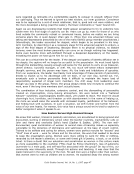
Several of the mothers had at least a small break in their isolation. This break in isolation
ranged from my own case, where another cult member began talking with me to Helen,
whose husband confided suicidal thoughts and doubts about the leader to Anne, who had
fellow cult members actively trying to help her get out. In Mary‟s case, her estranged
children represented a point of connection to the outside world. “At the end, although I was
sure I was going to leave, the cult voice inside me was saying, “„I might as well die if I can‟t
make it in here.‟ But then a voice of reason came in over the cult voice and said, „But there
are other realities. I could have been just a mother --there‟s nothing wrong with that.‟”
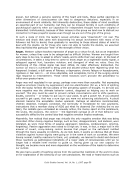
In many cases, then, concern for her children‟s welfare broke through the grip of the cult,
giving the mother a kind of strength. Helen said, “It wasn‟t even about God, or good or evil
or faith or sin. It‟s about a bond that I think is primary to everything else: the very basis of
everything that is. If Brother could have broken my love for my kids, he could have broken
me forever.” She goes on, “In the end, my leaving was about being the right kind of mother
and losing my soul, or saving my soul and being the wrong kind of mother. I truly felt there
would be dire consequences if I left. But I had to stop the abuse of my children. I knew that
I couldn‟t change the dynamics of the cult by staying. I had to leave.”
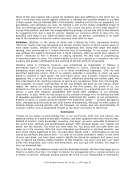
It is important to remember, however, that many mothers are unable to leave cults. The
most well-known example, perhaps, is Jonestown. In that case, though, it is clear that by
the time of the mass deaths, a great deal of physical coercion was also in place. For months
prior to the mass poisonings, the mothers at Jonestown had been trapped in the jungle with
their children and without money, transport, or passports. At the very end, an armed guard
surrounded the cult members as they administered poison to their children and themselves,
or had it forced upon them (Feinsod, 1981). Can this be called suicide? These mothers had
no way to escape.
The mothers interviewed here did retain a strong bond with their children through the cult
experience. (Laurel‟s example is more complex as she now is unable to have contact with
her child however, she clearly continues to have an emotional bond toward her). Eventually
the mothers were able to act on the mother-child bond and move to protect their children
given a combination of (1) a continued threat to their child‟s, or their own, well-being (2)
some outside support or connection to the non-cult world and (3) a gradual return of
critical thought, allowing them to evaluate the group‟s inconsistencies. It would be valuable
to conduct further research to study those mothers who are not ever able to leave a cult,
despite ongoing maltreatment of their children.
Recovery
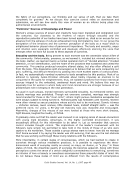
Coming out of a cult with children is a Herculean task. Not only does one have to rebuild
one‟s own life, belief systems, one‟s very self, but also one has to care for the children,
perhaps navigate a divorce and custody battle, deal with a spouse still in the cult, or rebuild
a marriage from the ground up. The mother and children‟s community is gone, and the
children lose friends and adults in the cult who were close to them. Often the mother faces
serious financial problems and frequently has to find housing. No matter how you look at it,
the task of survival is huge.
All the mothers interviewed for this article suffered fairly severe depressions after leaving
(with the possible exception of Laurel who moved straight into an intensive personal-growth
group). One woman broke down, attempted suicide, and was hospitalized for an extended
period. For myself, I felt that I wanted to break down but that I couldn‟t, I had to hold on
for the children. This feeling was shared by some of the other mothers: we had to find
reserves of strength we didn‟t know we had. Clara said, “I sometimes thought [that what
enabled me to leave] was the mother lion energy in me” (Deikman, 1990, p. 38). Anne and
Jill, on the other hand, felt they had neglected their children during the initial recovery
Several of the mothers had at least a small break in their isolation. This break in isolation
ranged from my own case, where another cult member began talking with me to Helen,
whose husband confided suicidal thoughts and doubts about the leader to Anne, who had
fellow cult members actively trying to help her get out. In Mary‟s case, her estranged
children represented a point of connection to the outside world. “At the end, although I was
sure I was going to leave, the cult voice inside me was saying, “„I might as well die if I can‟t
make it in here.‟ But then a voice of reason came in over the cult voice and said, „But there
are other realities. I could have been just a mother --there‟s nothing wrong with that.‟”
In many cases, then, concern for her children‟s welfare broke through the grip of the cult,
giving the mother a kind of strength. Helen said, “It wasn‟t even about God, or good or evil
or faith or sin. It‟s about a bond that I think is primary to everything else: the very basis of
everything that is. If Brother could have broken my love for my kids, he could have broken
me forever.” She goes on, “In the end, my leaving was about being the right kind of mother
and losing my soul, or saving my soul and being the wrong kind of mother. I truly felt there
would be dire consequences if I left. But I had to stop the abuse of my children. I knew that
I couldn‟t change the dynamics of the cult by staying. I had to leave.”
It is important to remember, however, that many mothers are unable to leave cults. The
most well-known example, perhaps, is Jonestown. In that case, though, it is clear that by
the time of the mass deaths, a great deal of physical coercion was also in place. For months
prior to the mass poisonings, the mothers at Jonestown had been trapped in the jungle with
their children and without money, transport, or passports. At the very end, an armed guard
surrounded the cult members as they administered poison to their children and themselves,
or had it forced upon them (Feinsod, 1981). Can this be called suicide? These mothers had
no way to escape.
The mothers interviewed here did retain a strong bond with their children through the cult
experience. (Laurel‟s example is more complex as she now is unable to have contact with
her child however, she clearly continues to have an emotional bond toward her). Eventually
the mothers were able to act on the mother-child bond and move to protect their children
given a combination of (1) a continued threat to their child‟s, or their own, well-being (2)
some outside support or connection to the non-cult world and (3) a gradual return of
critical thought, allowing them to evaluate the group‟s inconsistencies. It would be valuable
to conduct further research to study those mothers who are not ever able to leave a cult,
despite ongoing maltreatment of their children.
Recovery
Coming out of a cult with children is a Herculean task. Not only does one have to rebuild
one‟s own life, belief systems, one‟s very self, but also one has to care for the children,
perhaps navigate a divorce and custody battle, deal with a spouse still in the cult, or rebuild
a marriage from the ground up. The mother and children‟s community is gone, and the
children lose friends and adults in the cult who were close to them. Often the mother faces
serious financial problems and frequently has to find housing. No matter how you look at it,
the task of survival is huge.
All the mothers interviewed for this article suffered fairly severe depressions after leaving
(with the possible exception of Laurel who moved straight into an intensive personal-growth
group). One woman broke down, attempted suicide, and was hospitalized for an extended
period. For myself, I felt that I wanted to break down but that I couldn‟t, I had to hold on
for the children. This feeling was shared by some of the other mothers: we had to find
reserves of strength we didn‟t know we had. Clara said, “I sometimes thought [that what
enabled me to leave] was the mother lion energy in me” (Deikman, 1990, p. 38). Anne and
Jill, on the other hand, felt they had neglected their children during the initial recovery