Cultic Studies Journal, Vol. 14, No. 1, 1997, page 103
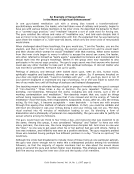
According to Herman, even the resolution of the developmental conflicts the individual has
made during childhood and adolescence may come undone, causing the individual to relive
basic struggles related to intimacy, autonomy, initiative, competence, and identity. By
extension, traumatic events destroy the connection between the individual and the rest of
the world. Trauma seems to exaggerate our common stereotypes about men and women:
men who were abused in childhood are more likely to take out their aggressions on others,
whereas women are more likely to be victimized by others or injure themselves. At the most
extreme, survivors of childhood abuse may attack their own children or fail to protect them.
Paradoxically, the social response to traumatized men and women may be opposite, yet
equally damaging. When PTSD is a result of combat, our society‟s inclination is to tolerate
men who are emotionally detached, yet uncontrollably aggressive. This response can
compound the damages they have experienced in war. Those who care the most about him
may inadvertently exaggerate a traumatized veteran‟s “sense of shame, inadequacy, and
alienation” by accepting his emotional withdrawal and angry outbursts as normal.
Conversely, women who experience PTSD as a result of sexual or domestic abuse may find
their struggles similarly exaggerated by the narrow tolerance of those around them --
society gives women little permission either to withdraw or to express their feelings.
Families and friends may not be generally supportive of their need to express anger, or they
may not support the survivor‟s need to reestablish a sense of autonomy. And because of our
culture‟s deeply embedded standards of male entitlement, many acts that women
experience as terrorizing violations may not be regarded as such, even by close family and
friends.
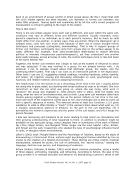
One of the worst mistakes we can make is to interpret the symptoms of post-traumatic
distress as part of the victim‟s personality, because to do so is to condemn the individual to
a “diminished life, tormented by memory and bounded by helplessness and fear.” Even in
the context of my daughter‟s struggles with her father, at 17 she had a number of friends
and significant teachers and counselors who supported her, and she was generally full of
life, optimism, and emotion. Today, her world rarely extends beyond her baby, her
boyfriend, his family, and his friends her ability to trust is even more limited. She shows
little emotion unless excessively provoked. And unless consciously engaged, she almost
always looks sad. Those who know her now accept her current behaviors as who she is
rather than a result of what’s happened to her.
As a society, we must publicly acknowledge when a person has been traumatized and
assume responsibility to help that individual overcome the effects of the traumatic
experience(s). Our culture‟s tendency to blame the victim is so deep that it has negatively
affected the direction of psychological inquiry, interfering with the understanding and
diagnosis of a post-traumatic syndrome. Herman urges for a new definition of the syndrome
that follows upon prolonged, repeated trauma --complex post-traumatic stress disorder.
And, as with so many traumas, children are the most deeply affected. Herman contrasts the
magnified impact of repeated trauma on children with its effect on adults. Chronic trauma
on children can de-form that personality, causing lifelong effects. Evidence seems to support
the view that chronic trauma and abuse in childhood is a primary factor leading a person to
seek psychiatric treatment as an adult.
In the second part of the book, Herman focuses on the therapist‟s role in helping victims of
trauma recover. She delineates three essential stages of recovery --establishing a safe
environment, supporting the process of remembrance and mourning, and helping the victim
reestablish trust --within herself and the larger community. Recovery must occur in the
context of the victim‟s relationships with others, including the important therapeutic
relationship. And unlike a more traditional medical model of therapy in which the therapist
According to Herman, even the resolution of the developmental conflicts the individual has
made during childhood and adolescence may come undone, causing the individual to relive
basic struggles related to intimacy, autonomy, initiative, competence, and identity. By
extension, traumatic events destroy the connection between the individual and the rest of
the world. Trauma seems to exaggerate our common stereotypes about men and women:
men who were abused in childhood are more likely to take out their aggressions on others,
whereas women are more likely to be victimized by others or injure themselves. At the most
extreme, survivors of childhood abuse may attack their own children or fail to protect them.
Paradoxically, the social response to traumatized men and women may be opposite, yet
equally damaging. When PTSD is a result of combat, our society‟s inclination is to tolerate
men who are emotionally detached, yet uncontrollably aggressive. This response can
compound the damages they have experienced in war. Those who care the most about him
may inadvertently exaggerate a traumatized veteran‟s “sense of shame, inadequacy, and
alienation” by accepting his emotional withdrawal and angry outbursts as normal.
Conversely, women who experience PTSD as a result of sexual or domestic abuse may find
their struggles similarly exaggerated by the narrow tolerance of those around them --
society gives women little permission either to withdraw or to express their feelings.
Families and friends may not be generally supportive of their need to express anger, or they
may not support the survivor‟s need to reestablish a sense of autonomy. And because of our
culture‟s deeply embedded standards of male entitlement, many acts that women
experience as terrorizing violations may not be regarded as such, even by close family and
friends.
One of the worst mistakes we can make is to interpret the symptoms of post-traumatic
distress as part of the victim‟s personality, because to do so is to condemn the individual to
a “diminished life, tormented by memory and bounded by helplessness and fear.” Even in
the context of my daughter‟s struggles with her father, at 17 she had a number of friends
and significant teachers and counselors who supported her, and she was generally full of
life, optimism, and emotion. Today, her world rarely extends beyond her baby, her
boyfriend, his family, and his friends her ability to trust is even more limited. She shows
little emotion unless excessively provoked. And unless consciously engaged, she almost
always looks sad. Those who know her now accept her current behaviors as who she is
rather than a result of what’s happened to her.
As a society, we must publicly acknowledge when a person has been traumatized and
assume responsibility to help that individual overcome the effects of the traumatic
experience(s). Our culture‟s tendency to blame the victim is so deep that it has negatively
affected the direction of psychological inquiry, interfering with the understanding and
diagnosis of a post-traumatic syndrome. Herman urges for a new definition of the syndrome
that follows upon prolonged, repeated trauma --complex post-traumatic stress disorder.
And, as with so many traumas, children are the most deeply affected. Herman contrasts the
magnified impact of repeated trauma on children with its effect on adults. Chronic trauma
on children can de-form that personality, causing lifelong effects. Evidence seems to support
the view that chronic trauma and abuse in childhood is a primary factor leading a person to
seek psychiatric treatment as an adult.
In the second part of the book, Herman focuses on the therapist‟s role in helping victims of
trauma recover. She delineates three essential stages of recovery --establishing a safe
environment, supporting the process of remembrance and mourning, and helping the victim
reestablish trust --within herself and the larger community. Recovery must occur in the
context of the victim‟s relationships with others, including the important therapeutic
relationship. And unlike a more traditional medical model of therapy in which the therapist