Cultic Studies Journal, Vol. 14, No. 1, 1997, page 78
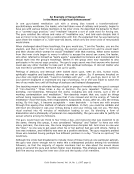
The biblical attitude toward human feelings is one of great suspicion. Feelings like
anger, jealousy, and fear are condemned as of the flesh and of the devil … feelings
are more likely to be punished than heard. Conflict is considered sinful instead of
an opportunity for learning…. Individuals can learn self-hatred for having feelings,
as well as helplessness for not knowing what to do. (1993, p. 120)
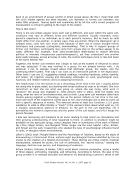
In a high-control environment, the only solution for conflict and cognitive dissonance is to
repress the feelings and beliefs that do not “fit,” or to abandon the external definition of self
(as defined by the group‟s ideals) and develop an internally-based belief system. Repression
as a solution does not actually eradicate the problem of conflicting feelings and thoughts,
however. In the short run, repression creates a sense of superficial comfort, enabling the
individual to return to the status quo to maintain membership and relationships within the
group and to avoid the messy and frightening process of reexamining one‟s values.
Repressed issues do not disappear however they are simply buried, like toxic waste.
Buried issues invariably reappear, usually at inconvenient times (for the high-control group
member, any time is inconvenient). The longer these issues remain repressed, the more
toxic and potentially disruptive their reemergence. Repression usually leads to some form of
anxiety, depression, or other form of emotional/mental dysfunction. At the very least,
repressing conflict consumes a great deal of psychological energy, which has the tendency
to become generalized --that is, one‟s life is not partially influenced by repression instead,
all areas of emotional and intellectual experience are affected. The woman who pushes
away all feelings of dissatisfaction or pain will have a difficult time experiencing true joy and
satisfaction. The woman who consistently avoids intellectual questioning will gradually lose
her ability to think critically.
As repressed issues fester like a wound that has closed but never healed, dangerous
psychological and behavioral symptoms can appear. These symptoms can include substance
abuse, eating disorders, sexual acting out, obsessions, phobias, personality disorders,
depression, and suicide. These types of symptoms, unless biologically based, are an
expression of unresolved issues emerging, disguised as symptoms of mental illness.
Because repressed issues are so unacceptable and frightening, they tend to be experienced
in less difficult or more bearable ways. For example, the sexually abused child may develop
an eating disorder or become suicidal without consciously connecting this with her
experience of sexual abuse. Her unconscious self is pressing her to resolve the emotional
and psychological damage by creating symptoms, while her conscious experience may be
completely disconnected from the memory of being abused. Likewise, the high-control
group member who represses doubts or unacceptable feelings may develop symptoms such
as phobias, depression, anxiety, or compulsions. These symptoms serve to express
cognitive dissonance and conflictual feelings while enabling the member to avoid consciously
confronting dangerous doubts or feelings.
If cognitive dissonance cannot be reconciled with the group‟s ideals, the member is placed
in a position of developing psychological problems, or struggling with the possibility of
abandoning an external definition of self and developing an internally-based belief system.
In a group that is not high-control in nature, disagreement with the party line is not so
problematic. For example, within the Republican Party, some members are pro-choice even
though the general consensus of the group is anti-abortion yet, these members do not risk
expulsion from the group. They may remain Republicans. In the Catholic Church, members
may support the ordination of women or openly disagree with the church‟s policy on birth
control, yet continue to remain practicing Catholics in good standing. In a high-control
group, such diversity is not acceptable. For a WTS member, any divergence from the norm
can result in serious consequences. Those who express doubts about doctrinal issues (even
in private) risk being “reported” by their peers to the local Elders. They are then “counseled”
intensively to bring them back into line with the “understanding” promulgated by the
The biblical attitude toward human feelings is one of great suspicion. Feelings like
anger, jealousy, and fear are condemned as of the flesh and of the devil … feelings
are more likely to be punished than heard. Conflict is considered sinful instead of
an opportunity for learning…. Individuals can learn self-hatred for having feelings,
as well as helplessness for not knowing what to do. (1993, p. 120)
In a high-control environment, the only solution for conflict and cognitive dissonance is to
repress the feelings and beliefs that do not “fit,” or to abandon the external definition of self
(as defined by the group‟s ideals) and develop an internally-based belief system. Repression
as a solution does not actually eradicate the problem of conflicting feelings and thoughts,
however. In the short run, repression creates a sense of superficial comfort, enabling the
individual to return to the status quo to maintain membership and relationships within the
group and to avoid the messy and frightening process of reexamining one‟s values.
Repressed issues do not disappear however they are simply buried, like toxic waste.
Buried issues invariably reappear, usually at inconvenient times (for the high-control group
member, any time is inconvenient). The longer these issues remain repressed, the more
toxic and potentially disruptive their reemergence. Repression usually leads to some form of
anxiety, depression, or other form of emotional/mental dysfunction. At the very least,
repressing conflict consumes a great deal of psychological energy, which has the tendency
to become generalized --that is, one‟s life is not partially influenced by repression instead,
all areas of emotional and intellectual experience are affected. The woman who pushes
away all feelings of dissatisfaction or pain will have a difficult time experiencing true joy and
satisfaction. The woman who consistently avoids intellectual questioning will gradually lose
her ability to think critically.
As repressed issues fester like a wound that has closed but never healed, dangerous
psychological and behavioral symptoms can appear. These symptoms can include substance
abuse, eating disorders, sexual acting out, obsessions, phobias, personality disorders,
depression, and suicide. These types of symptoms, unless biologically based, are an
expression of unresolved issues emerging, disguised as symptoms of mental illness.
Because repressed issues are so unacceptable and frightening, they tend to be experienced
in less difficult or more bearable ways. For example, the sexually abused child may develop
an eating disorder or become suicidal without consciously connecting this with her
experience of sexual abuse. Her unconscious self is pressing her to resolve the emotional
and psychological damage by creating symptoms, while her conscious experience may be
completely disconnected from the memory of being abused. Likewise, the high-control
group member who represses doubts or unacceptable feelings may develop symptoms such
as phobias, depression, anxiety, or compulsions. These symptoms serve to express
cognitive dissonance and conflictual feelings while enabling the member to avoid consciously
confronting dangerous doubts or feelings.
If cognitive dissonance cannot be reconciled with the group‟s ideals, the member is placed
in a position of developing psychological problems, or struggling with the possibility of
abandoning an external definition of self and developing an internally-based belief system.
In a group that is not high-control in nature, disagreement with the party line is not so
problematic. For example, within the Republican Party, some members are pro-choice even
though the general consensus of the group is anti-abortion yet, these members do not risk
expulsion from the group. They may remain Republicans. In the Catholic Church, members
may support the ordination of women or openly disagree with the church‟s policy on birth
control, yet continue to remain practicing Catholics in good standing. In a high-control
group, such diversity is not acceptable. For a WTS member, any divergence from the norm
can result in serious consequences. Those who express doubts about doctrinal issues (even
in private) risk being “reported” by their peers to the local Elders. They are then “counseled”
intensively to bring them back into line with the “understanding” promulgated by the