Cultic Studies Journal, Vol. 14, No. 1, 1997, page 11
An Example of Sexual Abuse
in the Name of Spiritual Enhancement5
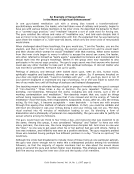
In one guru-based meditation cult with a strong bias toward a transformational-
psychotherapy worldview, the leader, who had taken vows of celibacy and poverty, began to
have sex with various female members in his inner circle. He described his behavior to them
as a “coveted yoga practice,” and “meditate” became a sort of code word for having sex.
The guru extolled the virtues and value of “meditative sex,” and told each disciple that it
was an honor to be invited into a relationship with him. He explained that he was bestowing
upon them the wisdom of a 7,000-year-old secret, which only the inner circle of renunciates
would share.
When challenged about these teachings, the guru would say, “I am the Teacher, you are the
student, and that is that.” In the evening, the women sat around him and he would teach
and then choose which woman he would “meditate” with that evening. When some women
from the inner circle began to marry in efforts to escape the secret sex scene, the leader,
who often referred to himself as “God‟s agent,” expanded his horizons and incorporated his
sexual style into the group‟s teachings. Others in the group were now expected to also
participate in his secret yogic practice. The guru‟s yogic secret was that anyone who desired
could ask any other member to take part in this spiritual technique. It did not matter who
was married or partnered everyone was up for grabs.
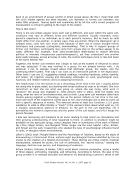
Feelings of jealousy and betrayal were looked down upon, seen as sins, human traits,
spiritually negative and backward divorce was not an option. So, if someone knocked on
your door one night and said, “I want to meditate with you” --off, you‟d go, like it or not. If
your partner displayed or expressed any sign of jealousy, he or she was made to watch the
two of you make love until all feelings of jealousy and betrayal disappeared.
One teaching meant to alleviate feelings of guilt or pangs of morality was the guru‟s concept
of “non-doership.” Three times a day at darshan, the guru repeated: “Celibacy, non-
doership, non-ownership. Renounce the world, including sex and money. Live a life of
working contemplation and meditation.” Non-doership meant that you could do things
without being responsible. The idea was that if one relaxed and let the energy of “natural
meditation” move the body, then responsibility evaporated. It was, after all, only the energy
acting. By this logic, it became acceptable --even desirable --to have sex with anyone
through this agency-free method of natural meditation. In fact, you could be celibate and
still have sex because it was your energy doing it and your energy was not you. The daily
ritual evolved into 45 minutes of meditation leading to sex. By blending a form of
dissociation and a philosophy of personal non-responsibility, the guru was able to justify his
sexual scheme among his followers.
The guru would have sex three to four times a day, and everyone else was expected to do
the same. Among this group, it was considered “religious” and “better” to have sex with
many partners the more sex, the more magnanimous disciples felt. And since no one was
the “doer,” no one was to get upset when his or her partner had sex with others. Falling in
love was verboten, and infidelity was seen as a positive attribute. The guru regularly praised
those who boasted having perhaps five different partners in a day. “You‟re so spiritual,” he
would say.
Although the circle had broadened to include most of those living at one particular ashram,
the guru was clever enough not to make this a widespread practice among his worldwide
followers, so that the majority of regular members had no idea about the sexual abuse
going on around the guru and certain higher level disciples. This strategy served to reinforce
both the secrecy among the inner sex circle and the loyalty of all members.
An Example of Sexual Abuse
in the Name of Spiritual Enhancement5
In one guru-based meditation cult with a strong bias toward a transformational-
psychotherapy worldview, the leader, who had taken vows of celibacy and poverty, began to
have sex with various female members in his inner circle. He described his behavior to them
as a “coveted yoga practice,” and “meditate” became a sort of code word for having sex.
The guru extolled the virtues and value of “meditative sex,” and told each disciple that it
was an honor to be invited into a relationship with him. He explained that he was bestowing
upon them the wisdom of a 7,000-year-old secret, which only the inner circle of renunciates
would share.
When challenged about these teachings, the guru would say, “I am the Teacher, you are the
student, and that is that.” In the evening, the women sat around him and he would teach
and then choose which woman he would “meditate” with that evening. When some women
from the inner circle began to marry in efforts to escape the secret sex scene, the leader,
who often referred to himself as “God‟s agent,” expanded his horizons and incorporated his
sexual style into the group‟s teachings. Others in the group were now expected to also
participate in his secret yogic practice. The guru‟s yogic secret was that anyone who desired
could ask any other member to take part in this spiritual technique. It did not matter who
was married or partnered everyone was up for grabs.
Feelings of jealousy and betrayal were looked down upon, seen as sins, human traits,
spiritually negative and backward divorce was not an option. So, if someone knocked on
your door one night and said, “I want to meditate with you” --off, you‟d go, like it or not. If
your partner displayed or expressed any sign of jealousy, he or she was made to watch the
two of you make love until all feelings of jealousy and betrayal disappeared.
One teaching meant to alleviate feelings of guilt or pangs of morality was the guru‟s concept
of “non-doership.” Three times a day at darshan, the guru repeated: “Celibacy, non-
doership, non-ownership. Renounce the world, including sex and money. Live a life of
working contemplation and meditation.” Non-doership meant that you could do things
without being responsible. The idea was that if one relaxed and let the energy of “natural
meditation” move the body, then responsibility evaporated. It was, after all, only the energy
acting. By this logic, it became acceptable --even desirable --to have sex with anyone
through this agency-free method of natural meditation. In fact, you could be celibate and
still have sex because it was your energy doing it and your energy was not you. The daily
ritual evolved into 45 minutes of meditation leading to sex. By blending a form of
dissociation and a philosophy of personal non-responsibility, the guru was able to justify his
sexual scheme among his followers.
The guru would have sex three to four times a day, and everyone else was expected to do
the same. Among this group, it was considered “religious” and “better” to have sex with
many partners the more sex, the more magnanimous disciples felt. And since no one was
the “doer,” no one was to get upset when his or her partner had sex with others. Falling in
love was verboten, and infidelity was seen as a positive attribute. The guru regularly praised
those who boasted having perhaps five different partners in a day. “You‟re so spiritual,” he
would say.
Although the circle had broadened to include most of those living at one particular ashram,
the guru was clever enough not to make this a widespread practice among his worldwide
followers, so that the majority of regular members had no idea about the sexual abuse
going on around the guru and certain higher level disciples. This strategy served to reinforce
both the secrecy among the inner sex circle and the loyalty of all members.