Cultic Studies Journal, Vol. 14, No. 1, 1997, page 104
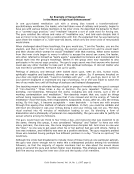
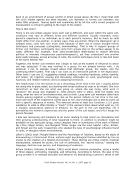
is in control, the need for victims of trauma to be empowered to control their own behavior
is central to their successful recovery.
The challenges Herman poses for professionals are not easy. Because the “traumatic
syndromes are complex disorders, requiring complex treatment,” both therapist and victim
must commit to work completely through each stage of recovery and the course of
treatment must address all the various components in the unique way that works for each
individual client. She addresses the requirements for effective treatment of trauma at each
stage thoroughly, professionally, and with deep sensitivity to the issues involved for both
therapist and client. Again, I know how important this is. The ongoing support I receive
from a psychologist who embodies the empathetic, validating therapeutic approach Herman
describes is essential as I continue to address my own crisis of faith relative to my
daughter‟s life.
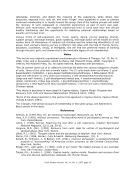
In the broader context, this book‟s content and message are of equal import to
professionals who work with traumatized individuals, to those individuals themselves, and to
the family members and friends of those victims.
Sharon Hamm
Loveland, Colorado
These reviews are an electronic version of reviews originally published in Cultic Studies Journal, 1997, Volume 14,
Number 1, pages 155-1169. Please keep in mind that the pagination of this electronic reprint differs from that of
the bound volume. This fact could affect how you enter bibliographic information in papers that you may write.
is in control, the need for victims of trauma to be empowered to control their own behavior
is central to their successful recovery.
The challenges Herman poses for professionals are not easy. Because the “traumatic
syndromes are complex disorders, requiring complex treatment,” both therapist and victim
must commit to work completely through each stage of recovery and the course of
treatment must address all the various components in the unique way that works for each
individual client. She addresses the requirements for effective treatment of trauma at each
stage thoroughly, professionally, and with deep sensitivity to the issues involved for both
therapist and client. Again, I know how important this is. The ongoing support I receive
from a psychologist who embodies the empathetic, validating therapeutic approach Herman
describes is essential as I continue to address my own crisis of faith relative to my
daughter‟s life.
In the broader context, this book‟s content and message are of equal import to
professionals who work with traumatized individuals, to those individuals themselves, and to
the family members and friends of those victims.
Sharon Hamm
Loveland, Colorado
These reviews are an electronic version of reviews originally published in Cultic Studies Journal, 1997, Volume 14,
Number 1, pages 155-1169. Please keep in mind that the pagination of this electronic reprint differs from that of
the bound volume. This fact could affect how you enter bibliographic information in papers that you may write.