Cultic Studies Journal, Vol. 14, No. 1, 1997, page 68
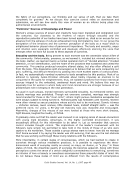
kingdom in 1914. Since that time the group has predicted the end of the world numerous
times (Franz, 1991), and has made its primary focus to convert as many people as it can
before this end-time occurrence. Jehovah‟s Witnesses believe that only they will survive
when God‟s great cataclysm arrives and that they will have the privilege of living on a
perfect earth throughout eternity. Despite numerous failed prophecies as to the date of
Armageddon, Jehovah‟s Witnesses continues to be a large and successful religious group,
numbering more than five million members in 233 countries in 1996 (Watchtower Society,
1997, p. 40).
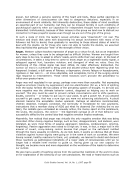
Women in WTS occupy a position of decreased personal power relative to men in the group.
Women are commonly exhorted to “remain in submission” to their husbands, and are
banned from instructing baptized male members about spiritual matters and from
addressing the congregation from the pulpit. A woman is regarded as a “weaker vessel” who
should manage her household “under her husband‟s approval and direction,” owing to her
“duty of submission to her husband” (Watchtower Society, 1971, p. 1665). The seminal
WTS text just cited goes on to define a wife‟s role as “caring for the family --prepare
nutritious meals, keep the home clean and neat and share in instructing their children --
subjecting themselves to their own husbands” (p. 242).
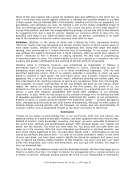
In addition to a relative lack of power compared to their male compatriots in the
congregation and in relationship with their husbands in the home, women as well as men
must cope with a community gestalt that discourages “independent thinking” (“Fight
Against,” 1983), mistrusts higher education, controls access to information critical of the
group, restricts members from expressing doubts, discourages diversity, and severely
punishes nonconformists.
Not all groups exert this level of control on their members. In many groups, both religious
and otherwise, guidelines for living and doctrinal wisdom are provided, yet individuals may
retain a great deal of control over their lives on many levels. In a high-control group, the
individual relinquishes her control to the group‟s zeitgeist. Individuals are seen as incapable
of directing their own lives and are in constant need of direction and structure from those
who are more capable and wise or who are more in touch with “God‟s will.”
In speaking about the structure of fundamentalist families in general, which some might
consider to be a form of high-control group, one author relates her experience:
The primary goal of relationships in a rigidly religious family centers around
control, because it is believed that people cannot be trusted. Obedience is stressed
as a primary value. Using biblical support, fundamentalist families are usually
patriarchal. Women are subject to their husbands. I was told that there had to be a
hierarchy, otherwise how would decisions be made? The implication was that
without such a control system there would be conflict and chaos. (Winell, 1993, p.
119)
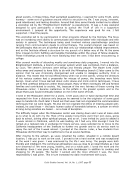
The first author of this article defines a high-control group by the following characteristics:
1. Members experience negative consequences for nonconformist behavior or attitudes
(such as questioning doctrine or disagreeing with the party line).
2. Information is controlled, especially if critical of the group.
3. Leadership is absolute and not bound by checks and balances.
4. Individual behavior is excessively limited by rules and regulations (legalism).
5. Outsiders are generally viewed as dangerous or evil, and associations with outsiders
are primarily in order to convert them.
6. Members are required to give up their own interests or make sacrifices in favor of
group activities.
7. Members leaving the group are punished or shunned.
kingdom in 1914. Since that time the group has predicted the end of the world numerous
times (Franz, 1991), and has made its primary focus to convert as many people as it can
before this end-time occurrence. Jehovah‟s Witnesses believe that only they will survive
when God‟s great cataclysm arrives and that they will have the privilege of living on a
perfect earth throughout eternity. Despite numerous failed prophecies as to the date of
Armageddon, Jehovah‟s Witnesses continues to be a large and successful religious group,
numbering more than five million members in 233 countries in 1996 (Watchtower Society,
1997, p. 40).
Women in WTS occupy a position of decreased personal power relative to men in the group.
Women are commonly exhorted to “remain in submission” to their husbands, and are
banned from instructing baptized male members about spiritual matters and from
addressing the congregation from the pulpit. A woman is regarded as a “weaker vessel” who
should manage her household “under her husband‟s approval and direction,” owing to her
“duty of submission to her husband” (Watchtower Society, 1971, p. 1665). The seminal
WTS text just cited goes on to define a wife‟s role as “caring for the family --prepare
nutritious meals, keep the home clean and neat and share in instructing their children --
subjecting themselves to their own husbands” (p. 242).
In addition to a relative lack of power compared to their male compatriots in the
congregation and in relationship with their husbands in the home, women as well as men
must cope with a community gestalt that discourages “independent thinking” (“Fight
Against,” 1983), mistrusts higher education, controls access to information critical of the
group, restricts members from expressing doubts, discourages diversity, and severely
punishes nonconformists.
Not all groups exert this level of control on their members. In many groups, both religious
and otherwise, guidelines for living and doctrinal wisdom are provided, yet individuals may
retain a great deal of control over their lives on many levels. In a high-control group, the
individual relinquishes her control to the group‟s zeitgeist. Individuals are seen as incapable
of directing their own lives and are in constant need of direction and structure from those
who are more capable and wise or who are more in touch with “God‟s will.”
In speaking about the structure of fundamentalist families in general, which some might
consider to be a form of high-control group, one author relates her experience:
The primary goal of relationships in a rigidly religious family centers around
control, because it is believed that people cannot be trusted. Obedience is stressed
as a primary value. Using biblical support, fundamentalist families are usually
patriarchal. Women are subject to their husbands. I was told that there had to be a
hierarchy, otherwise how would decisions be made? The implication was that
without such a control system there would be conflict and chaos. (Winell, 1993, p.
119)
The first author of this article defines a high-control group by the following characteristics:
1. Members experience negative consequences for nonconformist behavior or attitudes
(such as questioning doctrine or disagreeing with the party line).
2. Information is controlled, especially if critical of the group.
3. Leadership is absolute and not bound by checks and balances.
4. Individual behavior is excessively limited by rules and regulations (legalism).
5. Outsiders are generally viewed as dangerous or evil, and associations with outsiders
are primarily in order to convert them.
6. Members are required to give up their own interests or make sacrifices in favor of
group activities.
7. Members leaving the group are punished or shunned.