Symptoms Scale
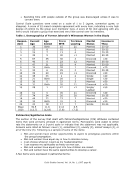
The Symptoms Scale demonstrated high internal consistency for both the respondents‟
retrospective reports (alpha=.91) and their current reports (alpha=.93). The retrospective
scores were significantly higher than the current scores: t (19)=11.34, p .001. Next, a set
of 33 paired samples t tests were run to compare specific symptoms reported currently and
retrospectively. After a Holm (1979) multiple test procedure to hold the setwise probability
of a Type I error at .05, all t tests significant below p=.004 were interpretable. Table 2
(below) gives the results of these tests. All significant tests indicated that the specific
problem was worse during membership in WTS.
Discussion
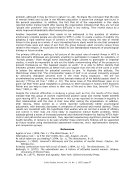
The survey had several statistically significant results. The former members rated WTS as a
high-control group, whereas the comparison group did not describe their mainstream
churches as high-control groups. The former members reported their attitudes had become
significantly more egalitarian (less patriarchal), and reported less symptoms overall after
leaving the group. The respondents indicated that having left WTS, they experienced the
following symptoms less frequently: worthlessness, low self-esteem, difficulty expressing
emotions, feeling stupid, feeling like a failure, anxiety, anhedonia, uncertainty of
preferences, difficulty concentrating, depression, difficulty with friendships, uncertainty, lack
of trust, hopelessness, lack of self-trust, self-blame, phobias, envy, sleep problems,
domestic violence, and isolation.
These results have some limitations, however. The scales used in the survey were not
validated therefore, it is only presumed that they accurately measure the constructs they
were designed to measure. There are a variety of possible reasons that these scales may
not be valid, such as participants misinterpreting some of the items. Respondents were
asked to recall how they would have answered in the past. On average, participants recalled
how they felt 6.5 years earlier. Human memory is not always accurate therefore, these
retrospective reports may not be accurate. Finally, the purpose of the survey was apparent.
Participants could have skewed their answers to support the study‟s hypotheses, which
could have exaggerated or driven the results of the study.
0
10
20
30
40
50
60
70
80
90
100
Retrospective Current
Note. High scores indicate egalitarian attitudes and low scores indicate patriarchal attitudes.
Figure 1. Mean (+SD) Patriarchal/Egalitarian Scores
Egaltarian
Attitudes
The Symptoms Scale demonstrated high internal consistency for both the respondents‟
retrospective reports (alpha=.91) and their current reports (alpha=.93). The retrospective
scores were significantly higher than the current scores: t (19)=11.34, p .001. Next, a set
of 33 paired samples t tests were run to compare specific symptoms reported currently and
retrospectively. After a Holm (1979) multiple test procedure to hold the setwise probability
of a Type I error at .05, all t tests significant below p=.004 were interpretable. Table 2
(below) gives the results of these tests. All significant tests indicated that the specific
problem was worse during membership in WTS.
Discussion
The survey had several statistically significant results. The former members rated WTS as a
high-control group, whereas the comparison group did not describe their mainstream
churches as high-control groups. The former members reported their attitudes had become
significantly more egalitarian (less patriarchal), and reported less symptoms overall after
leaving the group. The respondents indicated that having left WTS, they experienced the
following symptoms less frequently: worthlessness, low self-esteem, difficulty expressing
emotions, feeling stupid, feeling like a failure, anxiety, anhedonia, uncertainty of
preferences, difficulty concentrating, depression, difficulty with friendships, uncertainty, lack
of trust, hopelessness, lack of self-trust, self-blame, phobias, envy, sleep problems,
domestic violence, and isolation.
These results have some limitations, however. The scales used in the survey were not
validated therefore, it is only presumed that they accurately measure the constructs they
were designed to measure. There are a variety of possible reasons that these scales may
not be valid, such as participants misinterpreting some of the items. Respondents were
asked to recall how they would have answered in the past. On average, participants recalled
how they felt 6.5 years earlier. Human memory is not always accurate therefore, these
retrospective reports may not be accurate. Finally, the purpose of the survey was apparent.
Participants could have skewed their answers to support the study‟s hypotheses, which
could have exaggerated or driven the results of the study.
0
10
20
30
40
50
60
70
80
90
100
Retrospective Current
Note. High scores indicate egalitarian attitudes and low scores indicate patriarchal attitudes.
Figure 1. Mean (+SD) Patriarchal/Egalitarian Scores
Egaltarian
Attitudes