Cultic Studies Journal, Vol. 14, No. 1, 1997, page 82
I am comfortable having a man make decisions for me.
Men have more power in the group/congregation.
Symptoms Scale
Participants also answered 33 questions about their relative emotional distress while in the
group and their present levels of distress after having left the group. Questions addressed
such symptoms as anxiety, substance abuse, domestic violence, job problems, depression,
sleep problems, sexual dysfunction, low-self esteem, and compulsions, as well as whether
they had difficulty expressing emotions, lacked trust in others, and felt angry, stupid,
envious. Their experiences of these problems were rated as follows: not at all (0),
occasionally (1), sometimes (2), quite a bit (3), or all the time (4).
Results
Statistical tests were utilized to compare the differences between former Witnesses‟ scores
and the comparison group‟s scores on the Control Scale between the former Witnesses‟
retrospective and current scores on the Patriarchal Scale and between the former
Witnesses‟ retrospective and current scores on the Symptoms Scale. Because none of the
psychometric properties of these scales are known, Cronbach‟s alpha, a measure of internal
consistency (reliability), was calculated when appropriate. The reliability of a scale is
important because it determines the maximum validity of a scale. If a scale is not reliable, it
cannot be valid.
Control Scale
The 22 Control Scale items used an ordinal rating scale (agree, somewhat agree, or
disagree). Because Cronbach‟s alpha requires interval data, it was not appropriate for this
scale. A Mann-Whitney U test compared the ex-Witnesses‟ (n=20) answers to those of the
comparison group (n=16). The former Witnesses scored significantly lower (indicating
greater group control): U=0, z=5.13, p.001. In fact, there was no overlap between the
two groups‟ scores. The women from mainstream religious groups produced scores ranging
from 45 through 66, with a median of 59. Women who had been WTS members produced
scores ranging from 22 through 27, with a median of 23. Former Witnesses reported that
WTS is a high-control group, whereas members of mainstream groups did not report such
about their churches.
Patriarchal/Egalitarian Scale
Several participants gave the answer “not applicable” (NA) on some of the P/E Scale items.
This happened, for example, when single women were asked about their husbands. Because
a response of zero would indicate less than 1 (never) on the rating scale, all NA responses
were replaced with the group mean for that item. To assess reliability, Cronbach‟s alpha was
calculated twice, once for respondents‟ current scores, and once for their retrospective
scores on the P/E Scale. This scale demonstrated moderate reliability for participants‟
retrospective scores (alpha=.74), and somewhat higher reliability for their current scores
(alpha=.85). A paired samples t test was utilized to compare the former Witnesses‟ current
scores on the P/E scale with their retrospective scores. As can be seen in Figure 1, the
women‟s current attitudes were significantly more egalitarian and less patriarchal than were
their attitudes while members of WTS: t (19)=8.49, p.001.
I am comfortable having a man make decisions for me.
Men have more power in the group/congregation.
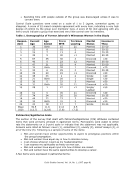
Symptoms Scale
Participants also answered 33 questions about their relative emotional distress while in the
group and their present levels of distress after having left the group. Questions addressed
such symptoms as anxiety, substance abuse, domestic violence, job problems, depression,
sleep problems, sexual dysfunction, low-self esteem, and compulsions, as well as whether
they had difficulty expressing emotions, lacked trust in others, and felt angry, stupid,
envious. Their experiences of these problems were rated as follows: not at all (0),
occasionally (1), sometimes (2), quite a bit (3), or all the time (4).
Results
Statistical tests were utilized to compare the differences between former Witnesses‟ scores
and the comparison group‟s scores on the Control Scale between the former Witnesses‟
retrospective and current scores on the Patriarchal Scale and between the former
Witnesses‟ retrospective and current scores on the Symptoms Scale. Because none of the
psychometric properties of these scales are known, Cronbach‟s alpha, a measure of internal
consistency (reliability), was calculated when appropriate. The reliability of a scale is
important because it determines the maximum validity of a scale. If a scale is not reliable, it
cannot be valid.
Control Scale
The 22 Control Scale items used an ordinal rating scale (agree, somewhat agree, or
disagree). Because Cronbach‟s alpha requires interval data, it was not appropriate for this
scale. A Mann-Whitney U test compared the ex-Witnesses‟ (n=20) answers to those of the
comparison group (n=16). The former Witnesses scored significantly lower (indicating
greater group control): U=0, z=5.13, p.001. In fact, there was no overlap between the
two groups‟ scores. The women from mainstream religious groups produced scores ranging
from 45 through 66, with a median of 59. Women who had been WTS members produced
scores ranging from 22 through 27, with a median of 23. Former Witnesses reported that
WTS is a high-control group, whereas members of mainstream groups did not report such
about their churches.
Patriarchal/Egalitarian Scale
Several participants gave the answer “not applicable” (NA) on some of the P/E Scale items.
This happened, for example, when single women were asked about their husbands. Because
a response of zero would indicate less than 1 (never) on the rating scale, all NA responses
were replaced with the group mean for that item. To assess reliability, Cronbach‟s alpha was
calculated twice, once for respondents‟ current scores, and once for their retrospective
scores on the P/E Scale. This scale demonstrated moderate reliability for participants‟
retrospective scores (alpha=.74), and somewhat higher reliability for their current scores
(alpha=.85). A paired samples t test was utilized to compare the former Witnesses‟ current
scores on the P/E scale with their retrospective scores. As can be seen in Figure 1, the
women‟s current attitudes were significantly more egalitarian and less patriarchal than were
their attitudes while members of WTS: t (19)=8.49, p.001.