Cultic Studies Journal, Vol. 9, No. 2, 1992, Page 79
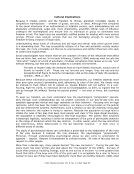
The report states that “brainwashing” does occur in cults but offers little in the way of
specifics. An extensive biography of the Reverend Mr. Moon says little more about
brainwashing than its being an allegation of his “enemies.” The Bhagwan‟s 100+ Rolls Royces
are implied to represent the end results of “freedom of choice.” Meanwhile, there is an
extended treatise about the Essenic sect of the Dead Sea Scrolls, while Scientology is
summarized in two benign sentences. All of this unfortunate vagueness may be related to the
inability of the Essenes to sue their critics for libel since they all died some time ago.
The weaknesses of this book outweigh its merits. It is pricey at $12 since 12 of its 70 pages
list the names of GAP psychiatrists and committees.
John Hochman, M.D.
Assistant Clinical Professor of Psychiatry, UCLA School of Medicine
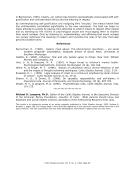
Cults and Personality. F. J. MacHovec. Charles C. Thomas, Springfield, IL, 1989,
195 pages.
Dr. MacHovec, a licensed clinical psychologist who has treated ex-cult members and survivors
of post-traumatic stress syndrome (PTSD) for the past three decades, has studied a variety of
religions, rituals, and practices. The resulting cross-cultural perspective provides an
interesting background for his discussion of cult personalities and experiences.
Initially, MacHovec distinguishes criminal, harmful or destructive, and constructive cults on
the one hand, and religious/psychotherapeutic, political, and faddist cults on the other, giving
definitions and examples of each. He also ties the practices of cults throughout history to
current practices. The characteristics of harmful cults that he lists and defines (pp. 24) are
those on which there is substantial agreement among professionals. (However, in
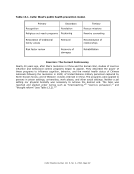
distinguishing between traditional religions and contemporary cults [pp. 30-31], he adapted a
table from Schwartz &Kaslow [1982, The Cult Phenomenon: Historical, Sociological, and
Familial Factors Contributing to Their Development and Appeal. New York: Haworth Press]
which was omitted from the extensive reference list.)
In examining the “personality” aspect of the title, MacHovec discusses personalities of both
the cult leaders and recruits/members. He suggests that our high-speed, high-tech life-style
leads too many people to relax or suspend critical judgment, making them more vulnerable to
charismatic and/or exploitative figures.
MacHovec draws on the work of traditional psychological theorists as well as that of
sociologists and others to delineate the ways in which harmful cults “during recruitment and
indoctrination” manipulate human needs. The omission, however, of the perspective of such
sociologists as Brock Kilbourne and Thomas Robbins keeps the presentation from being as
balanced as some readers might prefer. In addition, the author summarizes the Vatican and
Jewish responses to cult activity. The strength of MacHovec‟s book lies in the manner in which
he integrates the material from his multiple sources, both ancient and modern.
MacHovec examined not only those groups that we normally consider cults but also satanic
cults, witchcraft, and Afro-Caribbean cultlike religions. These, too, respond to human needs
for belief systems, ritual, and “magical” solutions. His presentations of the ways in which
these responses hurt cult members and group followers, and of the therapeutic and
deprogramming techniques used to reorient and restrengthen ex-cult members, also utilize a
good breadth of sources (although the omission of Saul Levine‟s [1984, Radical Departures.
New York: Harcourt, Brace, Jovanovich] work is surprising here). Noteworthy also is his
discussion of child and animal abuse, which is supplemented in the Appendix by a model
animal-protection act. Sources of additional information on cults are also provided in the
Appendix.
The report states that “brainwashing” does occur in cults but offers little in the way of
specifics. An extensive biography of the Reverend Mr. Moon says little more about
brainwashing than its being an allegation of his “enemies.” The Bhagwan‟s 100+ Rolls Royces
are implied to represent the end results of “freedom of choice.” Meanwhile, there is an
extended treatise about the Essenic sect of the Dead Sea Scrolls, while Scientology is
summarized in two benign sentences. All of this unfortunate vagueness may be related to the
inability of the Essenes to sue their critics for libel since they all died some time ago.
The weaknesses of this book outweigh its merits. It is pricey at $12 since 12 of its 70 pages
list the names of GAP psychiatrists and committees.
John Hochman, M.D.
Assistant Clinical Professor of Psychiatry, UCLA School of Medicine
Cults and Personality. F. J. MacHovec. Charles C. Thomas, Springfield, IL, 1989,
195 pages.
Dr. MacHovec, a licensed clinical psychologist who has treated ex-cult members and survivors
of post-traumatic stress syndrome (PTSD) for the past three decades, has studied a variety of
religions, rituals, and practices. The resulting cross-cultural perspective provides an
interesting background for his discussion of cult personalities and experiences.
Initially, MacHovec distinguishes criminal, harmful or destructive, and constructive cults on
the one hand, and religious/psychotherapeutic, political, and faddist cults on the other, giving
definitions and examples of each. He also ties the practices of cults throughout history to
current practices. The characteristics of harmful cults that he lists and defines (pp. 24) are
those on which there is substantial agreement among professionals. (However, in
distinguishing between traditional religions and contemporary cults [pp. 30-31], he adapted a
table from Schwartz &Kaslow [1982, The Cult Phenomenon: Historical, Sociological, and
Familial Factors Contributing to Their Development and Appeal. New York: Haworth Press]
which was omitted from the extensive reference list.)
In examining the “personality” aspect of the title, MacHovec discusses personalities of both
the cult leaders and recruits/members. He suggests that our high-speed, high-tech life-style
leads too many people to relax or suspend critical judgment, making them more vulnerable to
charismatic and/or exploitative figures.
MacHovec draws on the work of traditional psychological theorists as well as that of
sociologists and others to delineate the ways in which harmful cults “during recruitment and
indoctrination” manipulate human needs. The omission, however, of the perspective of such
sociologists as Brock Kilbourne and Thomas Robbins keeps the presentation from being as
balanced as some readers might prefer. In addition, the author summarizes the Vatican and
Jewish responses to cult activity. The strength of MacHovec‟s book lies in the manner in which
he integrates the material from his multiple sources, both ancient and modern.
MacHovec examined not only those groups that we normally consider cults but also satanic
cults, witchcraft, and Afro-Caribbean cultlike religions. These, too, respond to human needs
for belief systems, ritual, and “magical” solutions. His presentations of the ways in which
these responses hurt cult members and group followers, and of the therapeutic and
deprogramming techniques used to reorient and restrengthen ex-cult members, also utilize a
good breadth of sources (although the omission of Saul Levine‟s [1984, Radical Departures.
New York: Harcourt, Brace, Jovanovich] work is surprising here). Noteworthy also is his
discussion of child and animal abuse, which is supplemented in the Appendix by a model
animal-protection act. Sources of additional information on cults are also provided in the
Appendix.