Cultic Studies Journal, Vol. 9, No. 2, 1992, Page 67
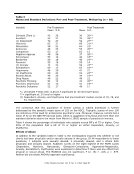
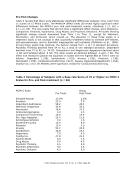
Dependent as the highest scale. Another 5 clients had Dependent as the second highest
scale (7.5%). And yet after treatment only 14 of 66 clients had Dependent as the highest
(21.2%) and 3 had Dependent as the second highest (4.5%) scale. Thus, after treatment
17 (25.8%) of the clients had Dependent as the first or second highest score on the first
eight scales of the MCMI-I, compared to 37 (56.1%) before treatment. In comparison, 24 of
66 (36.4%) of the clients had Compulsive-Conforming as the first or second highest scale at
Time I, whereas at Time II 25 of the 66 subjects (37.8%) still had Compulsive-Conforming
as the first or second highest scale.
There are only three possible explanations for these elevations: (1) cultic groups and/or
helping organizations tend to attract dependent-compulsive types, who for some unknown
reason achieve remarkable decreases in Dependent after 10-14 days of treatment (2) cultic
groups tend to produce and/or exacerbate dependent-compulsive types or (3) cultic groups
tend to harm dependent-compulsive types, who as a result of being harmed are more likely
to seek help from cult educational organizations. Regardless of which of these three
explanations or combination thereof is true, something sets the cultic environment apart
from other environments.
The change from pre- to post-treatment personality configuration, particularly the striking
drop in Dependent, supports explanation two. If the admission Dependent score reflected a
true personality dimension, one would not expect the dramatic change that occurs after a
treatment program averaging 10 to 14 days. One would expect such a change, however, if
the clinically derived theories of induced dependency as the distinguishing feature of cultic
environments were correct. Elevated Dependent scores at admission would reflect an
artificially induced personality change that, as clinical lore suggests, would respond readily
to intervention. This point of view is supported by Yeakley‟s (1988) finding that cult
members‟ scores on the MBTI converge toward a single type. The distribution of type scores
in non-cultic groups, on the other hand, was normal and showed no tendency toward
convergence, whereas in cultic groups “present and future distributions deviate increasingly
from the normal distribution” (p. 34). Therefore, it seems reasonable to conclude that
pressures toward increasing dependency may exist in the cult population.
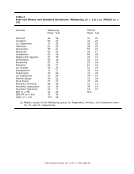
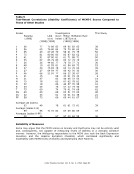
The overall lack of personality profile stability as measured by test-retest correlations (see
Table 5) suggests that other aspects of cultists‟ personalities are also likely to change while
in the cult and to reorganize dramatically after leaving and seeking treatment. Further study
is clearly needed.
Implications for Treatment
That symptom scales such as Anxiety and Depression decrease substantially after treatment
is gratifying but not surprising. The Wellspring program is intensive, consisting of 4-6 hours
daily of individual counseling, group counseling, and didactic workshops. In addition there
are many informal discussions with other former cultists and the staff (of which a majority
themselves are former members), as well as time for independent study, reading, and
viewing or listening to Wellspring‟s collection of video- and audiotapes related to cultic
phenomena. Typically the program lasts 14 days. In addition to the therapy and didactic
hours, there is adequate time for rest and recreation, such as swimming hiking, fishing,
using the Ohio University athletic facilities, movies, malls, and restaurants.
The program is intensive, but also specialized. Much of the early segment of the treatment
program is geared to increasing ex-members‟ understanding about the dynamics of thought
reform and helping them explore how their group practiced thought reform and how the
thought reform program affected their personality and their relationship to the world outside
the cult. Thus, Wellspring uses a model that assumes that the cultic environment adversely
affects members. At its core it is educational, even though much therapeutic activity occurs.
Dependent as the highest scale. Another 5 clients had Dependent as the second highest
scale (7.5%). And yet after treatment only 14 of 66 clients had Dependent as the highest
(21.2%) and 3 had Dependent as the second highest (4.5%) scale. Thus, after treatment
17 (25.8%) of the clients had Dependent as the first or second highest score on the first
eight scales of the MCMI-I, compared to 37 (56.1%) before treatment. In comparison, 24 of
66 (36.4%) of the clients had Compulsive-Conforming as the first or second highest scale at
Time I, whereas at Time II 25 of the 66 subjects (37.8%) still had Compulsive-Conforming
as the first or second highest scale.
There are only three possible explanations for these elevations: (1) cultic groups and/or
helping organizations tend to attract dependent-compulsive types, who for some unknown
reason achieve remarkable decreases in Dependent after 10-14 days of treatment (2) cultic
groups tend to produce and/or exacerbate dependent-compulsive types or (3) cultic groups
tend to harm dependent-compulsive types, who as a result of being harmed are more likely
to seek help from cult educational organizations. Regardless of which of these three
explanations or combination thereof is true, something sets the cultic environment apart
from other environments.
The change from pre- to post-treatment personality configuration, particularly the striking
drop in Dependent, supports explanation two. If the admission Dependent score reflected a
true personality dimension, one would not expect the dramatic change that occurs after a
treatment program averaging 10 to 14 days. One would expect such a change, however, if
the clinically derived theories of induced dependency as the distinguishing feature of cultic
environments were correct. Elevated Dependent scores at admission would reflect an
artificially induced personality change that, as clinical lore suggests, would respond readily
to intervention. This point of view is supported by Yeakley‟s (1988) finding that cult
members‟ scores on the MBTI converge toward a single type. The distribution of type scores
in non-cultic groups, on the other hand, was normal and showed no tendency toward
convergence, whereas in cultic groups “present and future distributions deviate increasingly
from the normal distribution” (p. 34). Therefore, it seems reasonable to conclude that
pressures toward increasing dependency may exist in the cult population.
The overall lack of personality profile stability as measured by test-retest correlations (see
Table 5) suggests that other aspects of cultists‟ personalities are also likely to change while
in the cult and to reorganize dramatically after leaving and seeking treatment. Further study
is clearly needed.
Implications for Treatment
That symptom scales such as Anxiety and Depression decrease substantially after treatment
is gratifying but not surprising. The Wellspring program is intensive, consisting of 4-6 hours
daily of individual counseling, group counseling, and didactic workshops. In addition there
are many informal discussions with other former cultists and the staff (of which a majority
themselves are former members), as well as time for independent study, reading, and
viewing or listening to Wellspring‟s collection of video- and audiotapes related to cultic
phenomena. Typically the program lasts 14 days. In addition to the therapy and didactic
hours, there is adequate time for rest and recreation, such as swimming hiking, fishing,
using the Ohio University athletic facilities, movies, malls, and restaurants.
The program is intensive, but also specialized. Much of the early segment of the treatment
program is geared to increasing ex-members‟ understanding about the dynamics of thought
reform and helping them explore how their group practiced thought reform and how the
thought reform program affected their personality and their relationship to the world outside
the cult. Thus, Wellspring uses a model that assumes that the cultic environment adversely
affects members. At its core it is educational, even though much therapeutic activity occurs.