Cultic Studies Journal, Vol. 9, No. 2, 1992, Page 41
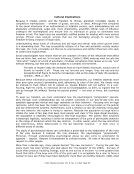
Jody was a 19-year-old woman referred for psychiatric evaluation because of her
increasing scholastic difficulties and alienation from her family. Jody had attended a
number of colleges and was currently enrolled at a university in the New York area.
She had enrolled in courses primarily in Irish studies and had announced to her
parents that she was planning to take a sabbatical in Ireland to study Druidic religion
and culture more intensively. She planned to become a priestess.
Unlike adolescents who dabble in Satanism, Jody (and others interested in Wicca) came from
an intact family. Her family had none of the overtones of abuse (physical or sexual) or
substance abuse and none of the lack of continuity that often appears to pervade the family
background of the dabbler/devotee of Satanism. However, her father was described as distant
and detached and Jody and her mother appeared to have formed an intense alliance directed
against the father.
Indeed, for Jody as for other practitioners of Wicca, identity issues appeared to be particularly
important. Many of her early sessions were devoted to her expressing her anger and
resentment toward male authorities/father, whom she perceived as being idealized as an
aspect of the patriarchal bias of mainstream religion. Jody appeared to derive a sense of
support from attendance at covens and a sense of potency from participation in ritual
celebrations often organized around the Druidic/Celtic calendar.
Dinnage (1989) has noted that Wicca is particularly seductive because it provides its initiates
with a sense of order in a world of chance: all actions can now be perceived as aspects of an
underlying order. Moreover, because magic involves the concrete manipulation of objects
represented in symbolic terms, the individual‟s sense of control is enhanced. As Jody was
encouraged to examine her sense of resentment toward her father, and her sense of
powerlessness to affect her relationship with him, she seemed to require participation in
Wicca less and less. She retained an interest in a nonmainstream form of religion, but she
was able to accept remaining at college and pursuing her studies in a less remote
environment.
In a very real sense, in a world in which computers have relegated objects to being symbolic
representations, operations that magically and concretely deal with these representations in
other contexts have gained a certain plausibility. While a reliance on “magic(k)” may
represent a regression to a state of infantile omnipotence, as the case of Jody illustrates, it
does not always have these dire psychopathological implications. As Dinnage (1989) has
noted, many “witches” do not operate on this level in many significant aspects of their lives.
Rather their use of magic creates a sense of ordering and continuity which enables them to
function, as do indeed all paradigms that enable individuals to order otherwise disparate
events into meaningful patterns.
The Horror, the Horror
Stephen King is the most popular author utilizing the occult in his work. His popularity marks
the presence of the paradox which has already been noted: a technologically driven world
seeking refuge within the ordered world of the occult. King‟s prodigious and varied output
defies easy analysis. Its very quantity has necessarily ensured that it is of uneven artistic
consistency. Certain themes, however, are particularly relevant.
For King‟s protagonists, things are not what they seem to be like a Magritte, the material
world is a facade. Thus, even the most reassuring icons, such as the St. Bernard dog in Cujo,
as well as icons redolent of nostalgia, such as the 1957 Chevrolet in Christine, undergo a
malignant degeneration. As critics have noted, King‟s work reflects an obsessive attempt to
undo childhood terrors in which objects possessed their own mysterious lives and independent
character. Even in his most ambitious novels, such as The Stand, his adolescent protagonists
are forced to confront an adult world that has lost all sense of compassion and constancy.
Jody was a 19-year-old woman referred for psychiatric evaluation because of her
increasing scholastic difficulties and alienation from her family. Jody had attended a
number of colleges and was currently enrolled at a university in the New York area.
She had enrolled in courses primarily in Irish studies and had announced to her
parents that she was planning to take a sabbatical in Ireland to study Druidic religion
and culture more intensively. She planned to become a priestess.
Unlike adolescents who dabble in Satanism, Jody (and others interested in Wicca) came from
an intact family. Her family had none of the overtones of abuse (physical or sexual) or
substance abuse and none of the lack of continuity that often appears to pervade the family
background of the dabbler/devotee of Satanism. However, her father was described as distant
and detached and Jody and her mother appeared to have formed an intense alliance directed
against the father.
Indeed, for Jody as for other practitioners of Wicca, identity issues appeared to be particularly
important. Many of her early sessions were devoted to her expressing her anger and
resentment toward male authorities/father, whom she perceived as being idealized as an
aspect of the patriarchal bias of mainstream religion. Jody appeared to derive a sense of
support from attendance at covens and a sense of potency from participation in ritual
celebrations often organized around the Druidic/Celtic calendar.
Dinnage (1989) has noted that Wicca is particularly seductive because it provides its initiates
with a sense of order in a world of chance: all actions can now be perceived as aspects of an
underlying order. Moreover, because magic involves the concrete manipulation of objects
represented in symbolic terms, the individual‟s sense of control is enhanced. As Jody was
encouraged to examine her sense of resentment toward her father, and her sense of
powerlessness to affect her relationship with him, she seemed to require participation in
Wicca less and less. She retained an interest in a nonmainstream form of religion, but she
was able to accept remaining at college and pursuing her studies in a less remote
environment.
In a very real sense, in a world in which computers have relegated objects to being symbolic
representations, operations that magically and concretely deal with these representations in
other contexts have gained a certain plausibility. While a reliance on “magic(k)” may
represent a regression to a state of infantile omnipotence, as the case of Jody illustrates, it
does not always have these dire psychopathological implications. As Dinnage (1989) has
noted, many “witches” do not operate on this level in many significant aspects of their lives.
Rather their use of magic creates a sense of ordering and continuity which enables them to
function, as do indeed all paradigms that enable individuals to order otherwise disparate
events into meaningful patterns.
The Horror, the Horror
Stephen King is the most popular author utilizing the occult in his work. His popularity marks
the presence of the paradox which has already been noted: a technologically driven world
seeking refuge within the ordered world of the occult. King‟s prodigious and varied output
defies easy analysis. Its very quantity has necessarily ensured that it is of uneven artistic
consistency. Certain themes, however, are particularly relevant.
For King‟s protagonists, things are not what they seem to be like a Magritte, the material
world is a facade. Thus, even the most reassuring icons, such as the St. Bernard dog in Cujo,
as well as icons redolent of nostalgia, such as the 1957 Chevrolet in Christine, undergo a
malignant degeneration. As critics have noted, King‟s work reflects an obsessive attempt to
undo childhood terrors in which objects possessed their own mysterious lives and independent
character. Even in his most ambitious novels, such as The Stand, his adolescent protagonists
are forced to confront an adult world that has lost all sense of compassion and constancy.