Cultic Studies Journal, Vol. 9, No. 2, 1992, Page 19
Looking at how individual or group behavioral pathology is dealt with by society, West has
recently emphasized two ways that humans avoid understanding and thereby avoid taking
responsibility for pathological behavior that threatens society: (1) blaming the victim and (2)
trying to understand a group phenomenon by emphasizing its similarities to characteristics of
other groups, rather than analyzing the crucial differences between them (e.g., totalist cults
compared to established religions).
West has had no trouble throughout the years separating the dangers of exploitative cults
from the positive effects of healthy group experience. He and Singer40 clearly specified the
differences between cults and communes. A week after the Jonestown massacre, West and
Delgado noted that it is possible to distinguish dangerous cults from other organizations:
In fact few, if any, social institutions claiming First Amendment protection use
conditioning techniques as intense, deceptive, or pervasive as those employed by
many contemporary cults. ...The distinction between established religions and new
religious groups is not difficult to make --religions are created for the good of their
members. Cults --appear to exist for the good of their leaders.41
Not only must the potential to exploit be present, but exploitation must be used for a group to
be classified as a “cult” under West‟s definition.
In the discussion of his chapter “Cults, Liberty, and Mind Control,”42 West explained why we
blame rape victims and other victims for what others have done to them, using the People‟s
Temple as an example. If harm can hit anyone randomly, then we all are potential victims.
However, if the victim was responsible for bringing the harm to himself, he is different from
us, so we feel safe from harm. In trying to help people understand that Patricia Hearst was a
victim rather than a spoiled little rich girl who enjoyed her rebellious time with the Sym-
bionese Liberation Army, West often points out that she was guilty of three things: being a
Hearst, being a woman, and surviving her ordeal. To this day, some publications in the cult
literature,43-45 base their hypotheses on the assumption that people join cults willingly, under
conditions of fully informed consent, thus, becoming themselves responsible for the harm to
them that results from cult involvement.
Having struggled with these issues intellectually for some time, the opportunity to put the
disparate concepts into a cohesive theory came about in 1981. West and Emmer Addis were
invited to Bonn, Germany, to participate in the International Conference on the Effects of New
Totalitarian Religious and Pseudo-Religious Movements on Society and Health. Addis had
completed her paper before the trip commenced. West, in his characteristic fashion, had not
put one word on paper in preparation for his presentation. About 8 hours into the 11-hour
flight, West pulled a piece of paper out of his pocket and jotted down the outline for his paper,
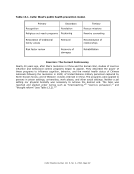
“Cults: A Public Health Approach,” which he presented as a summary of the conference, and
which was published initially in German in the conference proceedings.46
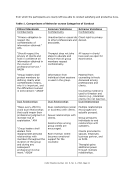
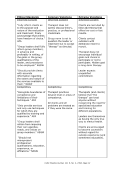
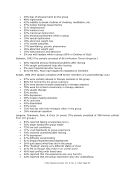
Jolly West‟s facility with the language, his use of alliteration as a mnemonic device, and his
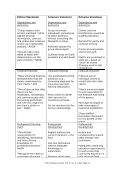
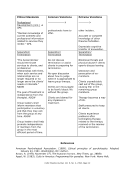
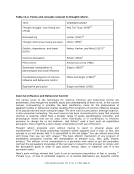
ability to organize his thoughts were apparent in the outline. Under the three headings of Pri-
mary, Secondary, and Tertiary Prevention, he included four topics each (see Table 13.1). To
this day, no one has conceptualized the psychosocial problem of cults and how to deal with
them as clearly and concisely as West did in that paper, a revised version of which was sub-
sequently published by the American Psychiatric Association.47
military populations both inside and outside of prison settings is voluminous. Readers are referred to the works of
Albert D. Biderman,50 Lawrence E. Hinkle3, Robert J. Lifton2, Edgar Schein3, Julius Segal3, Margaret Thaler Singer89,
Martin K. Whyte3, and Harold Wolfe.3
Looking at how individual or group behavioral pathology is dealt with by society, West has
recently emphasized two ways that humans avoid understanding and thereby avoid taking
responsibility for pathological behavior that threatens society: (1) blaming the victim and (2)
trying to understand a group phenomenon by emphasizing its similarities to characteristics of
other groups, rather than analyzing the crucial differences between them (e.g., totalist cults
compared to established religions).
West has had no trouble throughout the years separating the dangers of exploitative cults
from the positive effects of healthy group experience. He and Singer40 clearly specified the
differences between cults and communes. A week after the Jonestown massacre, West and
Delgado noted that it is possible to distinguish dangerous cults from other organizations:
In fact few, if any, social institutions claiming First Amendment protection use
conditioning techniques as intense, deceptive, or pervasive as those employed by
many contemporary cults. ...The distinction between established religions and new
religious groups is not difficult to make --religions are created for the good of their
members. Cults --appear to exist for the good of their leaders.41
Not only must the potential to exploit be present, but exploitation must be used for a group to
be classified as a “cult” under West‟s definition.
In the discussion of his chapter “Cults, Liberty, and Mind Control,”42 West explained why we
blame rape victims and other victims for what others have done to them, using the People‟s
Temple as an example. If harm can hit anyone randomly, then we all are potential victims.
However, if the victim was responsible for bringing the harm to himself, he is different from
us, so we feel safe from harm. In trying to help people understand that Patricia Hearst was a
victim rather than a spoiled little rich girl who enjoyed her rebellious time with the Sym-
bionese Liberation Army, West often points out that she was guilty of three things: being a
Hearst, being a woman, and surviving her ordeal. To this day, some publications in the cult
literature,43-45 base their hypotheses on the assumption that people join cults willingly, under
conditions of fully informed consent, thus, becoming themselves responsible for the harm to
them that results from cult involvement.
Having struggled with these issues intellectually for some time, the opportunity to put the
disparate concepts into a cohesive theory came about in 1981. West and Emmer Addis were
invited to Bonn, Germany, to participate in the International Conference on the Effects of New
Totalitarian Religious and Pseudo-Religious Movements on Society and Health. Addis had
completed her paper before the trip commenced. West, in his characteristic fashion, had not
put one word on paper in preparation for his presentation. About 8 hours into the 11-hour
flight, West pulled a piece of paper out of his pocket and jotted down the outline for his paper,
“Cults: A Public Health Approach,” which he presented as a summary of the conference, and
which was published initially in German in the conference proceedings.46
Jolly West‟s facility with the language, his use of alliteration as a mnemonic device, and his
ability to organize his thoughts were apparent in the outline. Under the three headings of Pri-
mary, Secondary, and Tertiary Prevention, he included four topics each (see Table 13.1). To
this day, no one has conceptualized the psychosocial problem of cults and how to deal with
them as clearly and concisely as West did in that paper, a revised version of which was sub-
sequently published by the American Psychiatric Association.47
military populations both inside and outside of prison settings is voluminous. Readers are referred to the works of
Albert D. Biderman,50 Lawrence E. Hinkle3, Robert J. Lifton2, Edgar Schein3, Julius Segal3, Margaret Thaler Singer89,
Martin K. Whyte3, and Harold Wolfe.3