Cultic Studies Journal, Vol. 9, No. 2, 1992, Page 56
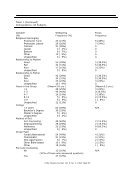
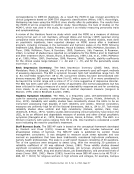
(78% of those who answered the question)
Unknown 66 (52%)
Measures
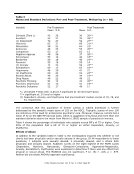
Milton Clinical Multiaxal Inventory. The Million Clinical Multiaxial Inventory ([MCMI-I],
Choca, Shanley &Van Denburg, 1992) is a self-report inventory designed to assess
personality and clinical symptoms of psychiatric patients. It is currently considered to be an
extremely popular instrument of this genre (Piotrowski &Keller, 1989, Piotrowski &Lubin,
1989, 1990). The score used for the MCMI is the Base Rate (BR), A BR of 35 was
established as the median score for normal or nonpsychiatric populations. A BR of 60 was
set as the median for psychiatric populations. BRs of 75 or higher were considered anchor
points for the presence of a particular disorder. A BR of 85 or higher was defined as
representing the most predominant characteristic. Thus, any score over a BR of 75 would
indicate a high probability that a subject would indeed possess the disorder represented by
the scale in question. On the MCMI-1, all BR scores are adjusted to take into consideration
the likelihood that subjects would tend to either deny or inflate reporting of certain
personality or emotional symptoms.
The MCMI is distributed in other countries and has been translated into several languages
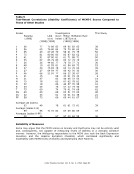
(Luteijn, 1990, Simonsen &Mortensen, 1990). Test-retest reliabilities range from the low
60s to the low 90s (Choca et al., 1992). As to validity, Gibertini, Brandenburg, and Retzlaff
(1986) noted that the MCMI-I scales varied widely as to their usefulness in accurately
pinpointing diagnosis. Positive predictive power (PPP) ranged from 19% to 84%. The PPP
index is determined
by the magnitude of the sensitivity and specificity of the test and the
prevalence of the disorder in the population. When the sensitivity and
specificity of the test are very high (e.g., 90%), the PPP and the NPP
[negative predictive power] indexes are optimal. However, as prevalence
decreases, so does PPP. In populations with very few disordered cases, even
tests with high specificity and sensitivity can have low predictive power.
Overall diagnostic power, an index representing the proportion of correct
classifications, also varies in its usefulness as disorder prevalence rates vary.
(Choca et al., 1992, p.38)
The MCMI includes the following clinical symptom scales: Anxiety, Somatoform, Hypomanic,
Dysthymic, Alcohol Abuse, Drug Abuse, Psychotic Thinking, Psychotic Depression, and
Psychotic Delusions. The following scales reflect more enduring personality traits than the
symptom scales: Schizoid (Asocial), Avoidant, Dependent (Submissive), Histrionic
(Gregarious), Narcissistic, Antisocial (Aggressive), compulsive (Conforming), and Passive-
Aggressive (Negativistic).
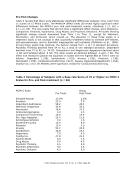
With the MCMI-1, Gibertini et al. (1986) found that eight scales were rated as having good
PPP, that is, 70% or more: Avoidant, Dependent, Histrionic, Negativistic, Borderline,
Anxiety, Dysthymia, and Drug Abuse. Nine scales were rated fair (50% -69%): Schizoid,
Narcissistic, Antisocial, Compulsive, Schizotypal, Paranoid, Somatoform, Hypomania, and
Alcohol Abuse. Three scales were rated poor (below 50%): Psychotic Thinking, Psychotic
Depression, and Psychotic Delusions. The scales were also rated according to their ability to
predict the „most predominant syndrome‟ and the results showed that five scales were rated
as good: Avoidant, Schizotypal, Paranoid, Anxiety, and Dysthymia.
Other studies have shown the scale to have rather high negative predictive power (NFP),
that is, low test scores were rarely false negatives (Gibertini et al., 1986). These
investigators also found that the MCMI has fairly high diagnostic power. Choca et al.‟s
(1992) review of the MCMI found a number of studies that are critical of the MCMI and its
(78% of those who answered the question)
Unknown 66 (52%)
Measures
Milton Clinical Multiaxal Inventory. The Million Clinical Multiaxial Inventory ([MCMI-I],
Choca, Shanley &Van Denburg, 1992) is a self-report inventory designed to assess
personality and clinical symptoms of psychiatric patients. It is currently considered to be an
extremely popular instrument of this genre (Piotrowski &Keller, 1989, Piotrowski &Lubin,
1989, 1990). The score used for the MCMI is the Base Rate (BR), A BR of 35 was
established as the median score for normal or nonpsychiatric populations. A BR of 60 was
set as the median for psychiatric populations. BRs of 75 or higher were considered anchor
points for the presence of a particular disorder. A BR of 85 or higher was defined as
representing the most predominant characteristic. Thus, any score over a BR of 75 would
indicate a high probability that a subject would indeed possess the disorder represented by
the scale in question. On the MCMI-1, all BR scores are adjusted to take into consideration
the likelihood that subjects would tend to either deny or inflate reporting of certain
personality or emotional symptoms.
The MCMI is distributed in other countries and has been translated into several languages
(Luteijn, 1990, Simonsen &Mortensen, 1990). Test-retest reliabilities range from the low
60s to the low 90s (Choca et al., 1992). As to validity, Gibertini, Brandenburg, and Retzlaff
(1986) noted that the MCMI-I scales varied widely as to their usefulness in accurately
pinpointing diagnosis. Positive predictive power (PPP) ranged from 19% to 84%. The PPP
index is determined
by the magnitude of the sensitivity and specificity of the test and the
prevalence of the disorder in the population. When the sensitivity and
specificity of the test are very high (e.g., 90%), the PPP and the NPP
[negative predictive power] indexes are optimal. However, as prevalence
decreases, so does PPP. In populations with very few disordered cases, even
tests with high specificity and sensitivity can have low predictive power.
Overall diagnostic power, an index representing the proportion of correct
classifications, also varies in its usefulness as disorder prevalence rates vary.
(Choca et al., 1992, p.38)
The MCMI includes the following clinical symptom scales: Anxiety, Somatoform, Hypomanic,
Dysthymic, Alcohol Abuse, Drug Abuse, Psychotic Thinking, Psychotic Depression, and
Psychotic Delusions. The following scales reflect more enduring personality traits than the
symptom scales: Schizoid (Asocial), Avoidant, Dependent (Submissive), Histrionic
(Gregarious), Narcissistic, Antisocial (Aggressive), compulsive (Conforming), and Passive-
Aggressive (Negativistic).
With the MCMI-1, Gibertini et al. (1986) found that eight scales were rated as having good
PPP, that is, 70% or more: Avoidant, Dependent, Histrionic, Negativistic, Borderline,
Anxiety, Dysthymia, and Drug Abuse. Nine scales were rated fair (50% -69%): Schizoid,
Narcissistic, Antisocial, Compulsive, Schizotypal, Paranoid, Somatoform, Hypomania, and
Alcohol Abuse. Three scales were rated poor (below 50%): Psychotic Thinking, Psychotic
Depression, and Psychotic Delusions. The scales were also rated according to their ability to
predict the „most predominant syndrome‟ and the results showed that five scales were rated
as good: Avoidant, Schizotypal, Paranoid, Anxiety, and Dysthymia.
Other studies have shown the scale to have rather high negative predictive power (NFP),
that is, low test scores were rarely false negatives (Gibertini et al., 1986). These
investigators also found that the MCMI has fairly high diagnostic power. Choca et al.‟s
(1992) review of the MCMI found a number of studies that are critical of the MCMI and its