Cultic Studies Journal, Vol. 9, No. 2, 1992, Page 48
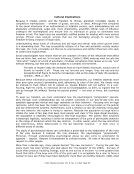
contrition. To deny or ignore this vital ethical dimension is to deny or ignore the heart of
psychological abuse and to short-change abuse victims seeking help. (Part of what makes
child abuse --psychological as well as physical --so reprehensible is that young children
often have not yet had an opportunity to develop a mature enough sense of right and wrong
to feel moral outrage. Indeed, the psychological abuse may permanently damage their
capacity to internalize a sense of right and wrong.)
Condemning certain actions as culpable does not mean that one cannot show understanding
and compassion for culpable persons. Rosedale (1989) points out that the law distinguishes
between culpability and exculpability, that is, diminished or nullified liability due to special
circumstances. To help clarify the relationship between these two concepts in matters
involving psychological abuse, he proposes a continuum of intent in which culpability and
exculpability vary inversely and are not mutually exclusive. Thus, a cult member who, under
the psychological influence of others, psychologically abuses a new recruit is culpable for his
actions, although his or her culpability is diminished --is exculpated to some extent --by
the psychological abuse to which he himself is subjected.
Rosedale‟s formulation is echoed in a psychological analysis by Shaver and Drown (1986).
These researchers conclude that much of the empirical literature on self-blame is equivocal
because researchers have not distinguished blame from responsibility and causality. Shaver
and Drown say that
the cause of an event is that antecedent, or subset of antecedents, that is sufficient
for the occurrence of the effect...responsibility is a label applied to the outcome of a
process...by a perceiver who takes several different dimensions into account...blame
is the attribution made after the perceiver assesses and does not accept the validity
of the offending person‟s justification (disagreement that the act was morally wrong)
or excuse (claim of mitigation of one sort or another) for an effect that the perceiver
believes was intentionally brought about. (p. 701)
Distinguishing between causality, responsibility, and blame and between culpability and
exculpability can help mental health professionals avoid becoming “salesmen for the victim
industry.” The politicization of victim concerns has too often resulted in simplistic
formulations in which victims are portrayed as helpless pawns of individual or corporate
villains. Such distortions may bring media attention --and even government funding --but
in the long run they interfere with treatment and preventive efforts.
Treatment should also distinguish between recovery and healing. “Recovery” refers to a
return to a state from which one has fallen --or been “pushed” in the case of victims.
“Healing” refers to a restoration of a state of health in one who was in some way diseased
or troubled. The distinction is subtle but important. A troubled person may be made more
troubled by a victimizer. Recovery from the victimization would entail a return to the
original troubled state. Healing would then involve a movement from the original troubled
state to an untroubled one. A person who was “pushed” from an untroubled to a troubled
state would merely have to return to that state, that is, recover. I stress this subtle
distinction because victim groups often assume that recovery is all that is needed, that is,
they underestimate the number of people who were troubled before victimization, whereas
helping professionals often overestimate the number of people who were so troubled and
underestimate the role of psychological manipulation. Professionals, then, must guard
against blaming the victim (i.e., assuming that the person‟s distress results only, or even
mainly, from inner motivations), whereas victim groups must guard against overprotecting
the victim (i.e., assuming that all distress results from the actions of the victimizer).
contrition. To deny or ignore this vital ethical dimension is to deny or ignore the heart of
psychological abuse and to short-change abuse victims seeking help. (Part of what makes
child abuse --psychological as well as physical --so reprehensible is that young children
often have not yet had an opportunity to develop a mature enough sense of right and wrong
to feel moral outrage. Indeed, the psychological abuse may permanently damage their
capacity to internalize a sense of right and wrong.)
Condemning certain actions as culpable does not mean that one cannot show understanding
and compassion for culpable persons. Rosedale (1989) points out that the law distinguishes
between culpability and exculpability, that is, diminished or nullified liability due to special
circumstances. To help clarify the relationship between these two concepts in matters
involving psychological abuse, he proposes a continuum of intent in which culpability and
exculpability vary inversely and are not mutually exclusive. Thus, a cult member who, under
the psychological influence of others, psychologically abuses a new recruit is culpable for his
actions, although his or her culpability is diminished --is exculpated to some extent --by
the psychological abuse to which he himself is subjected.
Rosedale‟s formulation is echoed in a psychological analysis by Shaver and Drown (1986).
These researchers conclude that much of the empirical literature on self-blame is equivocal
because researchers have not distinguished blame from responsibility and causality. Shaver
and Drown say that
the cause of an event is that antecedent, or subset of antecedents, that is sufficient
for the occurrence of the effect...responsibility is a label applied to the outcome of a
process...by a perceiver who takes several different dimensions into account...blame
is the attribution made after the perceiver assesses and does not accept the validity
of the offending person‟s justification (disagreement that the act was morally wrong)
or excuse (claim of mitigation of one sort or another) for an effect that the perceiver
believes was intentionally brought about. (p. 701)
Distinguishing between causality, responsibility, and blame and between culpability and
exculpability can help mental health professionals avoid becoming “salesmen for the victim
industry.” The politicization of victim concerns has too often resulted in simplistic
formulations in which victims are portrayed as helpless pawns of individual or corporate
villains. Such distortions may bring media attention --and even government funding --but
in the long run they interfere with treatment and preventive efforts.
Treatment should also distinguish between recovery and healing. “Recovery” refers to a
return to a state from which one has fallen --or been “pushed” in the case of victims.
“Healing” refers to a restoration of a state of health in one who was in some way diseased
or troubled. The distinction is subtle but important. A troubled person may be made more
troubled by a victimizer. Recovery from the victimization would entail a return to the
original troubled state. Healing would then involve a movement from the original troubled
state to an untroubled one. A person who was “pushed” from an untroubled to a troubled
state would merely have to return to that state, that is, recover. I stress this subtle
distinction because victim groups often assume that recovery is all that is needed, that is,
they underestimate the number of people who were troubled before victimization, whereas
helping professionals often overestimate the number of people who were so troubled and
underestimate the role of psychological manipulation. Professionals, then, must guard
against blaming the victim (i.e., assuming that the person‟s distress results only, or even
mainly, from inner motivations), whereas victim groups must guard against overprotecting
the victim (i.e., assuming that all distress results from the actions of the victimizer).