Cultic Studies Journal, Vol. 9, No. 2, 1992, Page 58
Crusade for Christ, Young Life, and so forth. Scores greater than 70 indicate burnout scores
greater than 140 reflect severe burnout.
Clinical Interviews. Two semi-structured interviews developed at Wellspring were
employed in this study. The first inquires into family of origin, general relationships,
occupational history, sexual attitudes and practices, mental status, suicide potential,
depression, intelligence, and memory function. The second interview deals with the cult
experience: personality changes, why the person left, changes in affect related to cult
involvement, changes in family relationships, years in group, and so forth.
Procedures
The interview and test battery described in the previous section are given routinely to new
clients at Wellspring. Because some clients are especially confused or exhausted, not
everyone completes the battery during the first day of their stay. As part of its followup with
clients, Wellspring administers the MCMI approximately six months after a client completes
the Wellspring program. Sixty-six of the 111 subjects completed the followup test battery.
Thirteen members of FOCUS, the ex-member support group, completed the MCMI at an ex-
member workshop. No other measures were administered to this population, with the
exception of the demographics questionnaire.
Analysis
Three MANOVA‟s were run on the Millon scales to determine: (1) differences, if any,
between ex-cultists who sought treatment (Wellspring clients) and those who did not
(FOCUS group) (2) differences in scores on the MCMI between those Wellspring clients who
responded to the followup survey and those who did not (3) differences between the MCMI
scores at the beginning of the Wellspring treatment program (Time 1) and the retest that
occurred approximately six months after treatment (Time 11). Means, medians, and
standard deviations were also calculated and tabulated for the variables under study, by
group. Data were analyzed by Statistical Package for the Social Sciences (SPSS, Inc. Staff,
1990).
Results
Comparison of Subject Samples
The MANOVA showed no significant difference on MCMI Time I scores between those who
received treatment at Wellspring and the FOCUS members [F =(1,11) =1.00, p =.450].
There was also no significant difference at Time I between those who did and those who did
not respond to the followup survey [F (1,11) =.695, p =.741].
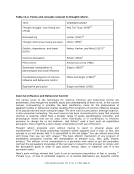
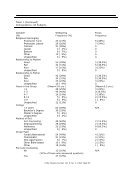
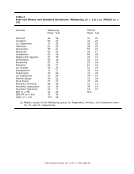
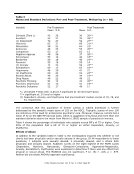
Table 2 provides the post-cult means and standard deviations of the Wellspring and FOCUS
groups on the MCMI and the Wellspring group‟s scores on the Beck Depression Inventory,
Hopkins Symptom Checklist, and Staff Burnout Scale for Time I. Both groups showed
elevations on Anxiety, Dysthymia, and Somatoform. The Wellspring group had an elevated
score on Dependent. The apparently lower Dependent score of the FOCUS group is
intriguing, and univariate analysis found a statistically significant difference [F =(1,122) =
4.43, p =.037].
Nature and Level of Distress
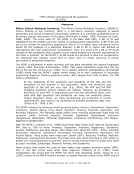
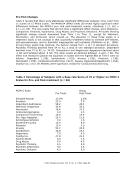
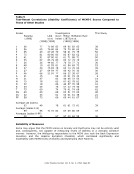
Table 3 gives the means and standard deviations on all of the MCMI scales for Time I and
Time II for those Wellspring subjects who participated in both testings. Anxiety has a Time I
mean score of 74, Dysthymia 69, and Dependent 72. Two scales, Dependent and Anxiety,
have Time I population median scores with BR‟s above 75 (both have median scores of 79).
Dysthymia has a Time I BR median of 73.
Crusade for Christ, Young Life, and so forth. Scores greater than 70 indicate burnout scores
greater than 140 reflect severe burnout.
Clinical Interviews. Two semi-structured interviews developed at Wellspring were
employed in this study. The first inquires into family of origin, general relationships,
occupational history, sexual attitudes and practices, mental status, suicide potential,
depression, intelligence, and memory function. The second interview deals with the cult
experience: personality changes, why the person left, changes in affect related to cult
involvement, changes in family relationships, years in group, and so forth.
Procedures
The interview and test battery described in the previous section are given routinely to new
clients at Wellspring. Because some clients are especially confused or exhausted, not
everyone completes the battery during the first day of their stay. As part of its followup with
clients, Wellspring administers the MCMI approximately six months after a client completes
the Wellspring program. Sixty-six of the 111 subjects completed the followup test battery.
Thirteen members of FOCUS, the ex-member support group, completed the MCMI at an ex-
member workshop. No other measures were administered to this population, with the
exception of the demographics questionnaire.
Analysis
Three MANOVA‟s were run on the Millon scales to determine: (1) differences, if any,
between ex-cultists who sought treatment (Wellspring clients) and those who did not
(FOCUS group) (2) differences in scores on the MCMI between those Wellspring clients who
responded to the followup survey and those who did not (3) differences between the MCMI
scores at the beginning of the Wellspring treatment program (Time 1) and the retest that
occurred approximately six months after treatment (Time 11). Means, medians, and
standard deviations were also calculated and tabulated for the variables under study, by
group. Data were analyzed by Statistical Package for the Social Sciences (SPSS, Inc. Staff,
1990).
Results
Comparison of Subject Samples
The MANOVA showed no significant difference on MCMI Time I scores between those who
received treatment at Wellspring and the FOCUS members [F =(1,11) =1.00, p =.450].
There was also no significant difference at Time I between those who did and those who did
not respond to the followup survey [F (1,11) =.695, p =.741].
Table 2 provides the post-cult means and standard deviations of the Wellspring and FOCUS
groups on the MCMI and the Wellspring group‟s scores on the Beck Depression Inventory,
Hopkins Symptom Checklist, and Staff Burnout Scale for Time I. Both groups showed
elevations on Anxiety, Dysthymia, and Somatoform. The Wellspring group had an elevated
score on Dependent. The apparently lower Dependent score of the FOCUS group is
intriguing, and univariate analysis found a statistically significant difference [F =(1,122) =
4.43, p =.037].
Nature and Level of Distress
Table 3 gives the means and standard deviations on all of the MCMI scales for Time I and
Time II for those Wellspring subjects who participated in both testings. Anxiety has a Time I
mean score of 74, Dysthymia 69, and Dependent 72. Two scales, Dependent and Anxiety,
have Time I population median scores with BR‟s above 75 (both have median scores of 79).
Dysthymia has a Time I BR median of 73.