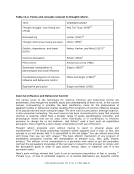
Cultic Studies Journal, Vol. 9, No. 2, 1992, Page 44
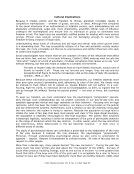
an alcoholic blackout. Subsequent investigation proves that it was impossible for Robert to
have committed the crime.
Case Four. Emma and Jonathan befriend one of their son‟s friends and his father, who
is supposedly temporarily out of work because of a delay in his research funding. This man
pretends to be an M.D. doing research at Stanford. Over a short period of time he convinces
the young couple that their oldest boy is suffering from childhood schizophrenia and
prescribes a treatment program that leads to the couple‟s being reported to authorities for
child abuse. They had been turned in by Emma‟s mother, who was horrified by the changes
she had observed in her daughter and son-in-law and by the “discipline” they were using on
her grandson.
Case Five. Tricia and Chuck fall in love in their early twenties. For the first year they
are very happy. Gradually, however, Chuck becomes more and more critical of Tricia. In
time he begins to beat her. Each time they make up he is very loving. Chuck convinces
Tricia that she is a terribly deficient wife and deserves the beatings, which continue to
escalate. During one row, neighbors call police, who find Tricia near death.
Case Six. Denise is the 23-year-old secretary of an overbearing attorney, Jim. A
perfectionist, she is very skilled and has had attractive job offers from other attorneys. Jim
begins to pick at her work, making a fuss over small errors. He complains to her about the
tough time he is having economically and convinces her that he is being kind to permit her
to continue working. She comes to believe that nobody else would put up with her
incompetence. Jim persuades her to take a pay cut and postpone her vacation. Denise‟s
friends are unable to get her to see that she is being mistreated. Jim insists that they are
merely trying to make her feel good and don‟t have the courage to tell her the truth.
Case Seven. Robert, a hyperactive fourth-grader, repeatedly gets on his teacher‟s “nerves.”
In her frustration she begins to call Robert “problem child” in front of the class and takes
obvious delight in pointing out his classroom mistakes. With the subtle encouragement of
the teacher, other children begin to tease Robert. Robert‟s behavior becomes more
aggressive. The teacher tells the school psychologist that the boy is too emotionally
disturbed to participate in a normal classroom.
These hypothetical cases are very different from each other. Yet they have an important
common theme. Each person, if we were to fill in the details, could be shown to have been
victimized by someone unethically employing psychological techniques of persuasion and
control. Although some cases involve physical abuse, all are examples of psychological
abuse.
Definitions
Psychological abuse can, of course, vary in severity from slight to severe, with the milder
forms perhaps being called psychological harassment or neglect. It can occur in families,
religious groups, schools, psychotherapy, fraternities, courtrooms, police stations, the
workplace, and other settings. Mental health professionals who study the more serious
forms of psychological abuse usually classify it under other headings, for example,
enmeshed families, spouse abuse, religious and psychotherapy cults, coerced confessions,
high-pressure salesmanship, sexual harassment, and so forth. Although the phenomena
under consideration are rarely classified as psychological abuse, some researchers, mostly
in the child abuse field, have employed the term, or the related term, “psychological
maltreatment.” A useful definition coming out of child abuse research is the following:)
Psychological maltreatment of children and youth consists of acts of omission
and commission which are judged by community standards and professional
expertise to be psychologically damaging. Such acts are committed by
individuals, singly or collectively, who by their characteristics (e.g., age,
an alcoholic blackout. Subsequent investigation proves that it was impossible for Robert to
have committed the crime.
Case Four. Emma and Jonathan befriend one of their son‟s friends and his father, who
is supposedly temporarily out of work because of a delay in his research funding. This man
pretends to be an M.D. doing research at Stanford. Over a short period of time he convinces
the young couple that their oldest boy is suffering from childhood schizophrenia and
prescribes a treatment program that leads to the couple‟s being reported to authorities for
child abuse. They had been turned in by Emma‟s mother, who was horrified by the changes
she had observed in her daughter and son-in-law and by the “discipline” they were using on
her grandson.
Case Five. Tricia and Chuck fall in love in their early twenties. For the first year they
are very happy. Gradually, however, Chuck becomes more and more critical of Tricia. In
time he begins to beat her. Each time they make up he is very loving. Chuck convinces
Tricia that she is a terribly deficient wife and deserves the beatings, which continue to
escalate. During one row, neighbors call police, who find Tricia near death.
Case Six. Denise is the 23-year-old secretary of an overbearing attorney, Jim. A
perfectionist, she is very skilled and has had attractive job offers from other attorneys. Jim
begins to pick at her work, making a fuss over small errors. He complains to her about the
tough time he is having economically and convinces her that he is being kind to permit her
to continue working. She comes to believe that nobody else would put up with her
incompetence. Jim persuades her to take a pay cut and postpone her vacation. Denise‟s
friends are unable to get her to see that she is being mistreated. Jim insists that they are
merely trying to make her feel good and don‟t have the courage to tell her the truth.
Case Seven. Robert, a hyperactive fourth-grader, repeatedly gets on his teacher‟s “nerves.”
In her frustration she begins to call Robert “problem child” in front of the class and takes
obvious delight in pointing out his classroom mistakes. With the subtle encouragement of
the teacher, other children begin to tease Robert. Robert‟s behavior becomes more
aggressive. The teacher tells the school psychologist that the boy is too emotionally
disturbed to participate in a normal classroom.
These hypothetical cases are very different from each other. Yet they have an important
common theme. Each person, if we were to fill in the details, could be shown to have been
victimized by someone unethically employing psychological techniques of persuasion and
control. Although some cases involve physical abuse, all are examples of psychological
abuse.
Definitions
Psychological abuse can, of course, vary in severity from slight to severe, with the milder
forms perhaps being called psychological harassment or neglect. It can occur in families,
religious groups, schools, psychotherapy, fraternities, courtrooms, police stations, the
workplace, and other settings. Mental health professionals who study the more serious
forms of psychological abuse usually classify it under other headings, for example,
enmeshed families, spouse abuse, religious and psychotherapy cults, coerced confessions,
high-pressure salesmanship, sexual harassment, and so forth. Although the phenomena
under consideration are rarely classified as psychological abuse, some researchers, mostly
in the child abuse field, have employed the term, or the related term, “psychological
maltreatment.” A useful definition coming out of child abuse research is the following:)
Psychological maltreatment of children and youth consists of acts of omission
and commission which are judged by community standards and professional
expertise to be psychologically damaging. Such acts are committed by
individuals, singly or collectively, who by their characteristics (e.g., age,