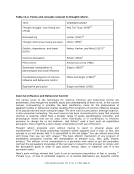
Cultic Studies Journal, Vol. 9, No. 2, 1992, Page 3
Psychotherapy Cults: An Ethical Analysis
Kim Boland
Lewis &Clark College
Portland, Oregon
Gordon Lindbloom, Ph.D.
Lewis &Clark College
Portland, Oregon
Abstract
A disparate literature on groups characterized as psychotherapy cults was analyzed.
The reported practices of these groups were examined as regards confidentiality and
privacy, dual relationships, informed consent, autonomy and dependency, therapist
competence and limitations, financial practices, professional education, and
separation and termination. The contraventions of standards of ethical conduct
reported by observers typically go far beyond commonly discussed violations of
ethical standards. They appear to create a new gestalt of practice and belief that
directly opposes the intended protections of privacy and autonomy that form the
basis of ethical codes in the mental health professions. Potential benefits of more
analyses of this kind are suggested.
Recent years have brought growing attention to issues of ethical conduct among mental
health practitioners. Most of the resulting literature has focused on defining and clarifying
consensus standards on salient problems in psychotherapy, such as the issues of sexual
contact between therapist and client. However, little systematic attention has been given to
more extreme situations where psychotherapy becomes a pretext for major intrusions in
clients‟ lives, and violations of common ethical standards are extensive and persistent.
This investigation offers an analysis of conduct associated with groups that have been loosely
characterized as psychotherapy cults. It summarizes practices that have been documented in
a scattered literature, and places them within the framework of ethical standards and
guidelines that are generally accepted in the mental health professions. This has been done in
the hope that it will provide a basis for analyzing the practices of such groups and will
stimulate more systematic inquiry. Descriptions of specific aspects of conduct in groups
labeled as psychotherapy cults are collated and evaluated. This analysis does not classify any
group, but does offer a first-level definition of criteria that might be used for defining the
status of groups under scrutiny. The emphasis chosen for this study was a first definition of
types of conduct and the extent to which they appear to contravene prevailing standards of
ethical practice in counseling and psychotherapy.
What Is a Psychotherapy Cult?
The concept of a cult has been associated in the public media with tightly knit, deviant
religious groups. Their practices have been analyzed in terms of Chinese thought-reform
techniques (Lifton, 1961 Singer &Ofshe, 1990), the physical alteration of the central nervous
system (Clark, 1979), the development of an “indoctrinee syndrome” (Barnes, 1978 Rambo,
1982 West &Singer, 1982), the effects of charisma (Newman, 1983), attachment to the
leader (Deutsch, 1980), a socialization process (Long &Hadden, 1983), group dynamics and
formation of group fantasies (Halperin, 1982), and mind control (Hassan, 1988). A spiritual
ideology has been commonly seen as a powerful binding force for participants. Cults are
described as using powerful and deceptive methods for bringing converts under their control,
Psychotherapy Cults: An Ethical Analysis
Kim Boland
Lewis &Clark College
Portland, Oregon
Gordon Lindbloom, Ph.D.
Lewis &Clark College
Portland, Oregon
Abstract
A disparate literature on groups characterized as psychotherapy cults was analyzed.
The reported practices of these groups were examined as regards confidentiality and
privacy, dual relationships, informed consent, autonomy and dependency, therapist
competence and limitations, financial practices, professional education, and
separation and termination. The contraventions of standards of ethical conduct
reported by observers typically go far beyond commonly discussed violations of
ethical standards. They appear to create a new gestalt of practice and belief that
directly opposes the intended protections of privacy and autonomy that form the
basis of ethical codes in the mental health professions. Potential benefits of more
analyses of this kind are suggested.
Recent years have brought growing attention to issues of ethical conduct among mental
health practitioners. Most of the resulting literature has focused on defining and clarifying
consensus standards on salient problems in psychotherapy, such as the issues of sexual
contact between therapist and client. However, little systematic attention has been given to
more extreme situations where psychotherapy becomes a pretext for major intrusions in
clients‟ lives, and violations of common ethical standards are extensive and persistent.
This investigation offers an analysis of conduct associated with groups that have been loosely
characterized as psychotherapy cults. It summarizes practices that have been documented in
a scattered literature, and places them within the framework of ethical standards and
guidelines that are generally accepted in the mental health professions. This has been done in
the hope that it will provide a basis for analyzing the practices of such groups and will
stimulate more systematic inquiry. Descriptions of specific aspects of conduct in groups
labeled as psychotherapy cults are collated and evaluated. This analysis does not classify any
group, but does offer a first-level definition of criteria that might be used for defining the
status of groups under scrutiny. The emphasis chosen for this study was a first definition of
types of conduct and the extent to which they appear to contravene prevailing standards of
ethical practice in counseling and psychotherapy.
What Is a Psychotherapy Cult?
The concept of a cult has been associated in the public media with tightly knit, deviant
religious groups. Their practices have been analyzed in terms of Chinese thought-reform
techniques (Lifton, 1961 Singer &Ofshe, 1990), the physical alteration of the central nervous
system (Clark, 1979), the development of an “indoctrinee syndrome” (Barnes, 1978 Rambo,
1982 West &Singer, 1982), the effects of charisma (Newman, 1983), attachment to the
leader (Deutsch, 1980), a socialization process (Long &Hadden, 1983), group dynamics and
formation of group fantasies (Halperin, 1982), and mind control (Hassan, 1988). A spiritual
ideology has been commonly seen as a powerful binding force for participants. Cults are
described as using powerful and deceptive methods for bringing converts under their control,