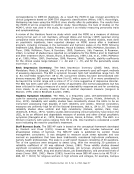
Cultic Studies Journal, Vol. 9, No. 2, 1992, Page 51
Post-Cult Symptoms As Measured by the MCMI Before and
After Residential Treatment
Paul R. Martin, Ph.D.
Wellspring Retreat and Resource Center
Michael D. Langone, Ph.D.
American Family Foundation
Arthur A. Dole, Ph.D.
University of Pennsylvania
Jeffrey Wiltrout
Department of Psychology
Ohio University
Abstract
Two groups of former cultists were administered the MCMI and other
psychological tests in order to assess the nature and magnitude of post-cult
psychological problems. One group consisted of 13 former cultists who
attended an educational conference on cults. The other group was made up of
Ill former cultists who attended a residential treatment center. In order to
evaluate the effectiveness of this treatment, 66 members of the latter group
participated in a six-month followup. Post-cult distress at initial testing was
high and did not differ between groups. Pre-post evaluations of the treatment
group indicated a strong treatment effect. Marked personality configuration
shifts in the MCMI profile after treatment occurred. Results appear to support
the view that dissociative processes are central to the cult experience.
Cults are exploitatively manipulative groups that utilize thought reform programs (Ofshe &
Singer, 1986 Singer &Ofshe,1990) to subordinate members‟ well-being to the goals of
leaders (Langone, in press). Clinical investigations of former members of cultic and related
groups indicate that cult involvement results in a significant level of distress for this
population (Clark, 1979 Goldberg &Goldberg, 1982 Hochman, 1984 Schwartz, 1985
Singer, 1978, 1987 Spero, 1982 Swartling &Swartling, 1992 Temerlin &Temerlin, 1982
West &Singer, 1980). According to clinicians, the most common symptoms ex- cultists
experience are emotional volatility, dissociative symptoms such as “floating” (a
phenomenon similar to drug flashbacks), depression, loneliness, guilt, inability to
concentrate, indecisiveness, difficulty communicating, fear of retribution, fatigue, a sense of
a spiritual-religious-philosophical void, career confusion, and conflicts with family.
The handful of studies that have collected statistical data on ex-cultists have, by and large,
supported clinical observations. Among the statistical findings bearing on distress are the
following:
Conway, Siegelman, Carmichael, &Coggins, 1986 (The sample consisted of 353ex-cultists
from 48 different groups. Because subjects reported on “lasting effects,” symptom reports
may reflect in-cult as well as post-cult difficulties.)
75% depression
68% loneliness
68% anger toward group leader
59% guilt feelings regarding leaving the group
59% feelings of humiliation/embarrassment
52% suicidal tendencies
Post-Cult Symptoms As Measured by the MCMI Before and
After Residential Treatment
Paul R. Martin, Ph.D.
Wellspring Retreat and Resource Center
Michael D. Langone, Ph.D.
American Family Foundation
Arthur A. Dole, Ph.D.
University of Pennsylvania
Jeffrey Wiltrout
Department of Psychology
Ohio University
Abstract
Two groups of former cultists were administered the MCMI and other
psychological tests in order to assess the nature and magnitude of post-cult
psychological problems. One group consisted of 13 former cultists who
attended an educational conference on cults. The other group was made up of
Ill former cultists who attended a residential treatment center. In order to
evaluate the effectiveness of this treatment, 66 members of the latter group
participated in a six-month followup. Post-cult distress at initial testing was
high and did not differ between groups. Pre-post evaluations of the treatment
group indicated a strong treatment effect. Marked personality configuration
shifts in the MCMI profile after treatment occurred. Results appear to support
the view that dissociative processes are central to the cult experience.
Cults are exploitatively manipulative groups that utilize thought reform programs (Ofshe &
Singer, 1986 Singer &Ofshe,1990) to subordinate members‟ well-being to the goals of
leaders (Langone, in press). Clinical investigations of former members of cultic and related
groups indicate that cult involvement results in a significant level of distress for this
population (Clark, 1979 Goldberg &Goldberg, 1982 Hochman, 1984 Schwartz, 1985
Singer, 1978, 1987 Spero, 1982 Swartling &Swartling, 1992 Temerlin &Temerlin, 1982
West &Singer, 1980). According to clinicians, the most common symptoms ex- cultists
experience are emotional volatility, dissociative symptoms such as “floating” (a
phenomenon similar to drug flashbacks), depression, loneliness, guilt, inability to
concentrate, indecisiveness, difficulty communicating, fear of retribution, fatigue, a sense of
a spiritual-religious-philosophical void, career confusion, and conflicts with family.
The handful of studies that have collected statistical data on ex-cultists have, by and large,
supported clinical observations. Among the statistical findings bearing on distress are the
following:
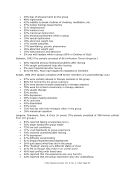
Conway, Siegelman, Carmichael, &Coggins, 1986 (The sample consisted of 353ex-cultists
from 48 different groups. Because subjects reported on “lasting effects,” symptom reports
may reflect in-cult as well as post-cult difficulties.)
75% depression
68% loneliness
68% anger toward group leader
59% guilt feelings regarding leaving the group
59% feelings of humiliation/embarrassment
52% suicidal tendencies