Cultic Studies Journal, Vol. 9, No. 2, 1992, Page 74
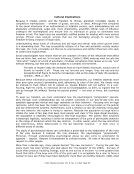
The hero of that story is himself two parts god and one part man. The latter was inherited
from his father‟s side and that inheritance included mortality. Gilgamesh undertook a journey
in search of wisdom and immortality. Since the trip proved to be unsuccessful, he was forced
to accept his mortality. Crossing over the waters of death, he found Utnapishtim, who had
succeeded in entering the assembly of the gods. He asked him, “How shall I find the life for
which I am searching? ...Tell me truly, how was it that you came to enter the company of the
gods and to possess everlasting life?” Utnapishtim replied, “I will reveal to you a mystery: I
will tell you a secret of the gods. Build a boat, abandon possessions and look for life despise
worldly goods and save your soul alive” (1960, The Epic of Gilgamesh, N. K. Sandare, Trans.,
pp. 106-107. Baltimore: Penguin Classics).
Diem, concluding The Gnostic Mystery, observes: “To gauge accurately when, where, and how
the cultural pipeline through time operated would be of great interest and value to sociology
in general and religious studies in particular, since then we could have some inkling of how
theological ideas and spiritual practices evolve.”
Within the limits it sets for itself, this book is a praiseworthy effort to comprehend something
of the strangely persistent movement which promises mankind a path through the “no-man‟s
land” that lies between the contending forces of light and darkness. It may not be that very
many readers of the Cultic Studies Journal will budget the time to probe into the ancient
history of gnostics but, for those who do, it may prove to be a necessary step toward
understanding the modern forms into which it has evolved. The shepherding movement, for
example, is characteristically elitist and promises special insights for those who enlist in its
war against evil. In the subtlety of its manipulation, however, it has come a long way from its
origins.
The techniques of manipulation have been refined for our technological age. Where they are
employed to advance influence in the religious realm, they falsify religion. In that case, the
judgment is verified that “along with a lack of respect for other persons the deepest source of
all manipulation is the lust for power.”
Rev. Walter Debold
Assistant Professor of Religious Studies
Seton Hall University
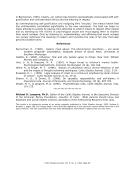
Orthodoxy and Heresy: A Biblical Guide to Doctrinal Discernment. R.M.
Bowman. Baker Book House, Grand Rapids, MI, 1992.
This is a brief book with fewer than 100 pages of text in 12 short chapters, two appendices, a
short glossary, a four-column scripture index, and a two-page subject index. It is a book
about heretical Christian sects for evangelical Christians, with limited application outside this
context.
Orthodoxy is “the right standard of doctrine” heresy is “any doctrine the Bible explicitly labels
as destructive, damning error,...not to be tolerated” or that “utterly contradicts essential
truth” (p. 80). The Bible is the only infallible, definite standard, the norm of all norms. Nine
“enemies of truth” are listed with six heresies (revelation, God, Christ, salvation, the church,
the future). It is said there are “thousands of clever distortions of Christian theology that
deserve the label heresy,” which are “becoming more subtle, more deceiving” (p. 80).
Helpful guidelines are provided: know what you want, ask about affiliations and a doctrinal
statement, study the founder and leaders, check references (three are given). We can “learn
discernment” by growing in faith, love, and holiness knowing scripture thinking logically and
sensitively studying a variety of orthodox Christian traditions and questionable teachings and
groups, including “what they say about it themselves” treating this “with both respect and
The hero of that story is himself two parts god and one part man. The latter was inherited
from his father‟s side and that inheritance included mortality. Gilgamesh undertook a journey
in search of wisdom and immortality. Since the trip proved to be unsuccessful, he was forced
to accept his mortality. Crossing over the waters of death, he found Utnapishtim, who had
succeeded in entering the assembly of the gods. He asked him, “How shall I find the life for
which I am searching? ...Tell me truly, how was it that you came to enter the company of the
gods and to possess everlasting life?” Utnapishtim replied, “I will reveal to you a mystery: I
will tell you a secret of the gods. Build a boat, abandon possessions and look for life despise
worldly goods and save your soul alive” (1960, The Epic of Gilgamesh, N. K. Sandare, Trans.,
pp. 106-107. Baltimore: Penguin Classics).
Diem, concluding The Gnostic Mystery, observes: “To gauge accurately when, where, and how
the cultural pipeline through time operated would be of great interest and value to sociology
in general and religious studies in particular, since then we could have some inkling of how
theological ideas and spiritual practices evolve.”
Within the limits it sets for itself, this book is a praiseworthy effort to comprehend something
of the strangely persistent movement which promises mankind a path through the “no-man‟s
land” that lies between the contending forces of light and darkness. It may not be that very
many readers of the Cultic Studies Journal will budget the time to probe into the ancient
history of gnostics but, for those who do, it may prove to be a necessary step toward
understanding the modern forms into which it has evolved. The shepherding movement, for
example, is characteristically elitist and promises special insights for those who enlist in its
war against evil. In the subtlety of its manipulation, however, it has come a long way from its
origins.
The techniques of manipulation have been refined for our technological age. Where they are
employed to advance influence in the religious realm, they falsify religion. In that case, the
judgment is verified that “along with a lack of respect for other persons the deepest source of
all manipulation is the lust for power.”
Rev. Walter Debold
Assistant Professor of Religious Studies
Seton Hall University
Orthodoxy and Heresy: A Biblical Guide to Doctrinal Discernment. R.M.
Bowman. Baker Book House, Grand Rapids, MI, 1992.
This is a brief book with fewer than 100 pages of text in 12 short chapters, two appendices, a
short glossary, a four-column scripture index, and a two-page subject index. It is a book
about heretical Christian sects for evangelical Christians, with limited application outside this
context.
Orthodoxy is “the right standard of doctrine” heresy is “any doctrine the Bible explicitly labels
as destructive, damning error,...not to be tolerated” or that “utterly contradicts essential
truth” (p. 80). The Bible is the only infallible, definite standard, the norm of all norms. Nine
“enemies of truth” are listed with six heresies (revelation, God, Christ, salvation, the church,
the future). It is said there are “thousands of clever distortions of Christian theology that
deserve the label heresy,” which are “becoming more subtle, more deceiving” (p. 80).
Helpful guidelines are provided: know what you want, ask about affiliations and a doctrinal
statement, study the founder and leaders, check references (three are given). We can “learn
discernment” by growing in faith, love, and holiness knowing scripture thinking logically and
sensitively studying a variety of orthodox Christian traditions and questionable teachings and
groups, including “what they say about it themselves” treating this “with both respect and